The biggest difference between a rapid-firing furnace and a conventional furnace is not the maximum temperature, but the way heat is transferred into the material.
In a conventional furnace, the temperature typically rises at a relatively stable rate, allowing the material to absorb heat gradually and more uniformly over time. In contrast, a rapid-firing furnace is designed with very low thermal inertia, using high-power heating elements and lightweight insulation materials to achieve significantly faster heating rates.
Some rapid-firing furnace systems can complete an entire firing cycle in just a few tens of minutes, including both the heating and cooling stages. This greatly reduces production time, especially in processes that require continuous cycling or high-speed material research.
Rapid-firing furnaces are becoming increasingly popular thanks to their major advantage in processing speed and their suitability for applications such as:
Material research
R&D laboratories
Dental zirconia
Electronic materials
Small-sample sintering
Why can’t many materials withstand high heating rates?
Not all materials can tolerate rapid temperature increases. In many cases, the faster the firing process, the greater the material deviation, and in some situations, an entire batch can fail even when the furnace temperature is perfectly accurate.
Inside the furnace, the temperature may rise extremely quickly, but the material itself does not absorb heat at the same rate. When heat is applied too aggressively, the outer layer of the material heats up and expands first while the core remains relatively cool. This temperature difference creates internal thermal gradients and significant mechanical stress within the material.
For materials with low thermal conductivity, such as ceramics, refractory materials, or zirconia, this effect becomes particularly pronounced. Many products may appear nearly flawless on the outside, while microscopic cracks or structural damage have already formed internally after firing. Even with the same glaze formulation, clay composition, and firing temperature, noticeable differences in color and quality can still occur between batches.
When metal components are heated too rapidly, certain surface areas are exposed to heat earlier than others. Under high-temperature conditions, this temperature imbalance causes oxidation to occur unevenly, forming different oxide layers across the material surface. In stainless steel, tool steel, or components with complex geometries, discoloration, slight deformation, or variations in mechanical properties may appear even when the furnace temperature strictly follows the programmed settings.
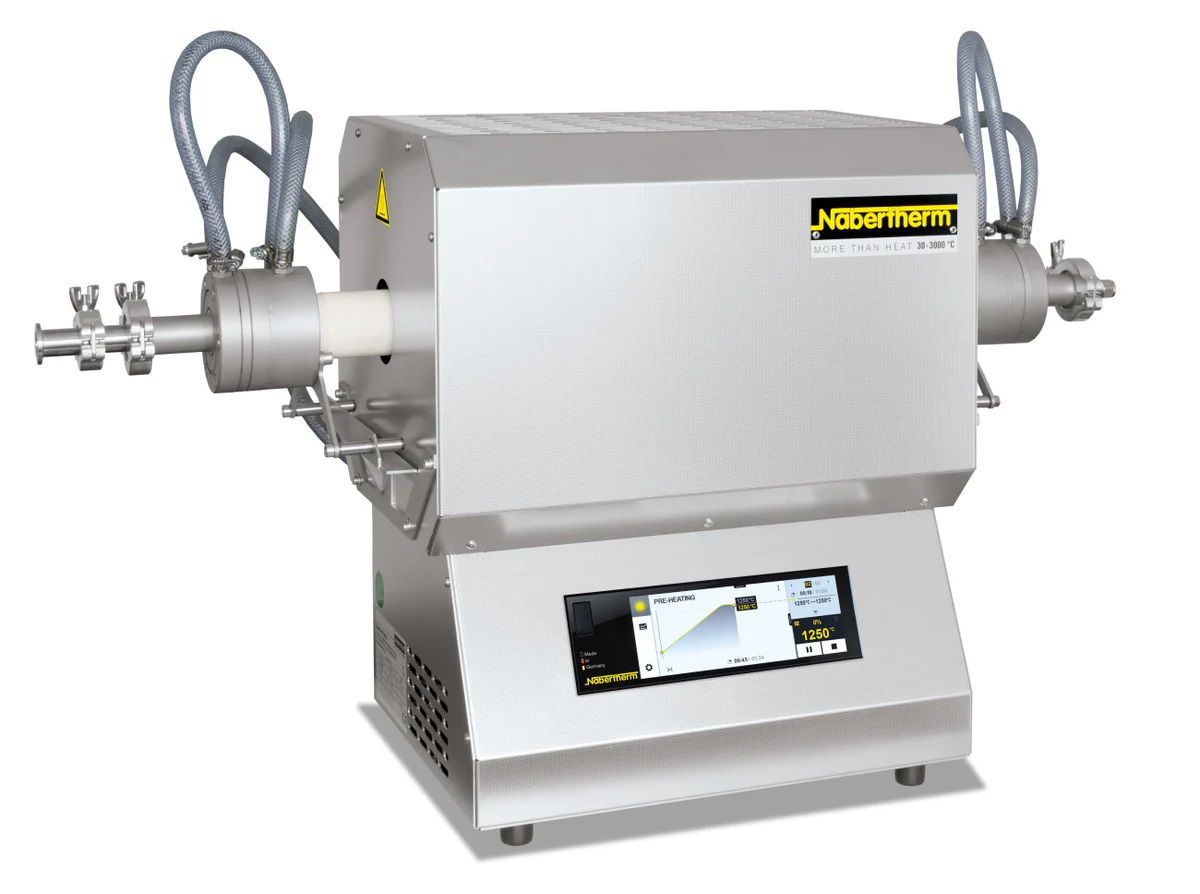
Nabertherm Furnaces
Suggested rapid-firing furnace models
NABERTHERM L1/12: Features a compact 1-liter chamber with fast heating capability, suitable for sample testing, ashing, or thermal profile research in laboratory environments.
NABERTHERM LS 25/13: Designed with low thermal inertia, strong heating performance, and very short cycle times. Its 25-liter chamber is well suited for engineering material research and high-speed ceramic firing.
NABERTHERM RD 30/200/11: Provides extremely high heating rates thanks to heating elements positioned directly around the heating zone. This 30 mm tube furnace is commonly used in advanced material research, technical ceramics, and thermal processes requiring rapid thermal response.