What is an Amplifier? Applications of modern money-making devices in audio systems
Amplifier is a device that amplifies audio signals, providing power to one or more active speakers. Unlike receivers in home audio systems, this device does not integrate features such as receiving radio waves, switching between inputs, or processing image and sound signals. In terms of operation, in addition to the on/off switch, a conventional power amplifier only has a knob to adjust the output signal intensity, similar to the volume control function.
Amplifier channel configuration
Amplifiers are designed with a variety of channel options, from a single-channel configuration (also known as a monoblock) to a two-channel configuration for stereo systems. In multi-channel systems such as surround sound, the device can have five, seven, or even more channels. When nine channels are needed, a seven-channel amplifier can be combined with a two-channel device. If the system requires up to 11 channels, a common configuration is to use a seven-channel device with two separate two-channel amplifiers. Alternatively, each channel can be set up with a separate monoblock, but this will require a large number of amplifiers.
Amplifier connection instructions
To transmit audio signals to the power amplifier, a separate preamplifier or dedicated audio signal decoder (often called an AV preamp or processor) is required. These devices take on the role of decoding or processing the input signal, then transmitting the signal to the power amplifier. From here, the amplifier will amplify and transfer the signal to the speaker system. The connection usually uses an analog signal through the RCA line-out port. With more advanced systems, a balanced XLR connection is also often used to ensure more stable signal quality.
Combine Amplifier with Home Theater Receiver
In home theater systems, the receiver typically has a built-in amplifier to power the speaker system. However, some high-end models also feature a preamp output, allowing the user to connect one or more separate power amplifiers to achieve higher output levels than the built-in amplifier is capable of.
For receivers that support multi-zone functionality, the preamp outputs for Zone 2, Zone 3, or Zone 4 can be used to feed the signal to external power amplifiers. These amplifiers will be responsible for powering the speaker systems in different areas of the space, while the main zone is still controlled by the built-in amplifier.
For example, a 7.1-channel receiver can simultaneously operate a 7.1-channel system in the main zone and send a two-channel signal to a secondary zone via a separate preamp output. The user can then utilize an additional amplifier to power the speaker system in the second zone, flexibly and efficiently expanding the multi-room audiovisual experience.
Reasons to use Amplifier in home theater system
In most home theater systems today, the AV receiver plays a central role: it handles the connections, converts the signals from the sources, processes the audio (and sometimes the video), and provides power to the speaker system. This is quite a task for a single device.
Many users tend to separate the signal processing and power output into two independent devices, namely using a preamp or a dedicated AV processor combined with a power amplifier. This brings a number of benefits worth considering:
Amplifiers generate a significant amount of heat during operation. Separating the amplifier circuit and power supply from the main unit saves space and improves heat dissipation, especially in systems that require high power.
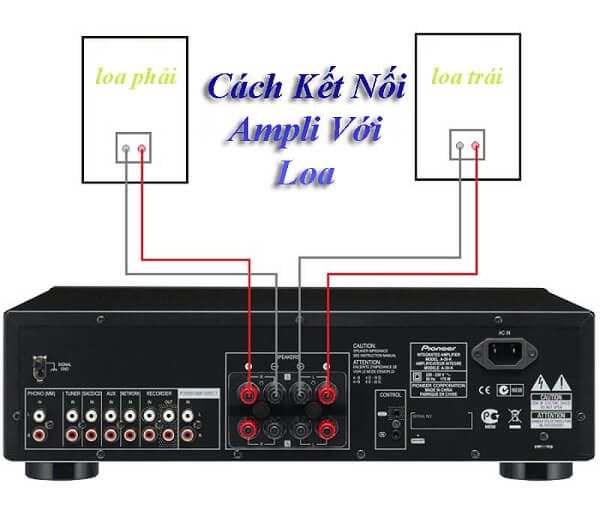
While using separate preamps and power amplifiers will result in more components and more complicated wiring, the trade-off is greater setup flexibility. Amplifiers typically have a longer lifespan than preamps, which can become obsolete quickly due to the constant change in connection standards and signal formats.
In some cases, older AV receivers still have amplifiers that work just fine. However, because they no longer meet current technological standards, users are forced to replace the entire unit, including the still-good amplifier, just to update to new signal processing features.
Summary of customer questions
1. I already have an AV receiver, do I need an amplifier?
If you feel that your speaker system is not performing to its full potential, or you want to upgrade your sound performance without replacing your current receiver, adding a separate power amplifier is a good option.
2. Does an amplifier improve sound quality, or just make the speakers louder?
Amplifiers not only increase output power, but also help control sound better, especially with high-end speakers or in large listening spaces, thereby improving overall performance quality.
3. Is it complicated to connect an amplifier if I am not technically savvy?
Actually, connecting an amplifier is quite simple if your receiver has a pre-out port. Just an RCA or XLR cable to connect from the preamp to the amplifier is enough, no complicated setup required.
4. Is the amplifier compatible with all speakers?
Most amplifiers can be paired with many different types of speakers, as long as the power and impedance are suitable. Choosing the right parameters will help protect the device and achieve optimal efficiency.
Conclude
The above is an overview to help you better understand the role, configuration, connection method and reasons to use amplifiers in home audio systems. Investing in a suitable separate power amplifier not only helps the system operate more stably but also opens up the possibility of flexible upgrades according to actual needs, especially in complex listening spaces or requiring high performance.