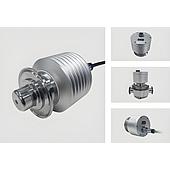
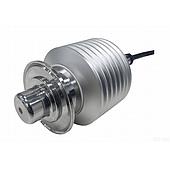
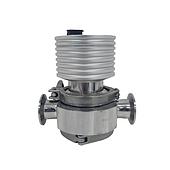
Choosing between a daytime and a nighttime EL detector begins with one practical question: where and when will inspections take place? Both systems support EL imaging for photovoltaic module assessment, but they are designed around different operating environments. A daytime EL detector is intended for work where ambient light is present, while a nighttime EL detector is intended for dark conditions where light interference can be controlled.
For teams responsible for solar site maintenance, rooftop inspections, incoming module checks, or laboratory quality work, this distinction affects workflow, scheduling, and the preparation required before measurement. The right choice depends on the inspection environment, the need for mobility, desired imaging conditions, and functional priorities.
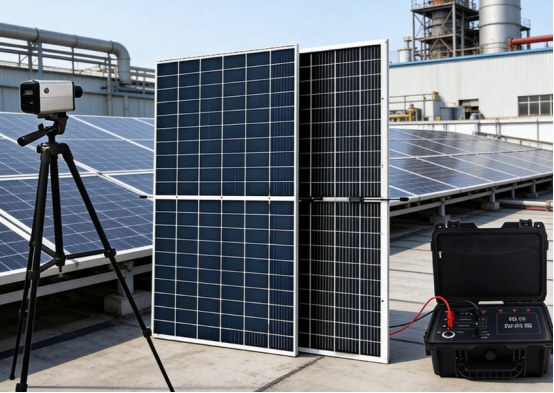
Key Difference Between Daytime and Nighttime EL Detectors
The primary difference is environmental adaptability. Daytime EL detection is designed to operate in daytime conditions by filtering ambient-light interference. Nighttime EL detection relies on a dark inspection environment to reduce the impact of surrounding light on imaging.
According to the available product information, the CHN SPEC daytime EL detector uses a hyperspectral filtering system and does not require a darkroom. This makes it suited to complex outdoor conditions, including sunlight and rainy weather. Its shutter time is adjustable from 10 to 20,000 us, allowing the setting to be adapted to ambient light conditions.
The CHN SPEC nighttime EL detector is intended for nighttime use or indoor dark environments. A temporary darkroom is required when ambient light must be excluded. Its stated shutter-time range is 15 to 100,000 us. This option is positioned for applications where controlled dark conditions are available and imaging precision is a central requirement.
When a Daytime EL Detector Is the Better Fit
A daytime EL detector is a practical option when inspection work cannot be limited to night or a dark indoor area. It can reduce the preparation associated with creating a temporary darkroom and can support a more flexible inspection schedule.
Outdoor operation and maintenance
Outdoor power-station O&M often requires inspection teams to work during normal daytime hours. In this setting, the ability to manage ambient light is important. A daytime EL detector can support field-based assessment without requiring the team to wait until after dark.
Distributed rooftop inspections
Rooftop projects may have restricted site access or limited working windows. A daytime solution can be appropriate when inspection needs to be completed during a scheduled visit. The available information also states that the CHN SPEC daytime EL detector supports both module and string measurements and can be operated by one person.
Fast sampling and mobile workflows
For incoming module sampling or other tasks that benefit from rapid, mobile checks, minimizing environmental setup can improve workflow continuity. A daytime EL detector may be preferable when operational flexibility and timely inspections are more important than maintaining a fully dark imaging environment.
When a Nighttime EL Detector Is the Better Fit
A nighttime EL detector is best considered when the inspection environment can be reliably darkened and the work can be scheduled accordingly. It is suited to users who can control ambient light and whose workflow prioritizes imaging under dark conditions.
Laboratory research and development
Laboratory R&D is commonly performed in controlled spaces where a dark environment can be arranged. In this type of workflow, the environmental limitation of a nighttime detector may be less significant because inspection conditions are planned in advance.
High-end module quality inspection
Where module quality inspection is conducted indoors or at night, a nighttime EL detector can be a relevant choice. The available information describes this type of detector as focused on high-precision imaging, provided that ambient light is managed through a dark inspection environment.
Comparing Operating Conditions and Workflow
| Selection factor | Daytime EL detector | Nighttime EL detector |
|---|---|---|
| Ambient-light conditions | Designed to filter ambient-light interference | Requires a dark environment |
| Darkroom requirement | No darkroom required | Temporary darkroom may be required |
| Stated shutter-time range | 10–20,000 us | 15–100,000 us |
| Typical use setting | Outdoor, mobile, daytime inspection | Nighttime or controlled indoor inspection |
| Functional emphasis | Flexible field operation; daytime PL mode is supported | Imaging in controlled dark conditions |
The comparison is not simply about selecting the detector with the broadest feature set. It is about matching the equipment to the actual inspection process. A field team may gain more value from daytime capability if access, weather, and work schedules change frequently. A laboratory may instead favor a nighttime system if a dark environment is already part of its quality-control process.
How to Select an EL Detector for Your Application
Use the following questions to structure the decision:
- Will inspections be performed outdoors during the day? If yes, a daytime EL detector should be prioritized because it is designed to address ambient-light conditions.
- Is a dark indoor area or nighttime working window consistently available? If yes, a nighttime EL detector may suit the workflow.
- Does the work require frequent movement between modules, strings, or sites? Mobile field work generally benefits from a solution that does not depend on darkroom setup.
- Is the inspection focused on laboratory R&D or controlled quality inspection? A nighttime detector can be considered where the environment is controllable.
- Which functions are necessary for the team? The available information states that the daytime EL detector also supports daytime PL detection mode, which may be relevant for users seeking broader capability.
- What preparation can the team accommodate? Consider the time, space, and process needed to create and maintain dark conditions for nighttime EL imaging.
Making a Practical Decision
Select a daytime EL detector when the priority is outdoor mobility, daytime availability, and inspection without darkroom construction. This approach is aligned with power-station O&M, distributed rooftop work, and fast module sampling where the inspection environment is not fully controllable.
Select a nighttime EL detector when inspections can be performed at night or in a controlled indoor dark environment. This approach is aligned with laboratory R&D and module quality inspection processes that can accommodate environmental setup.
Before finalizing a choice, define the operating location, expected inspection volume, scheduling constraints, and required measurement workflow. Evaluating these factors first helps ensure that the selected EL detector supports the way the team actually works.