Not all chemicals require the same type of storage cabinet. Whether a chemical storage cabinet is necessary depends on the chemical's hazard classification, storage quantity, and the working environment.
Storing Hazardous Chemicals
Hazardous chemicals such as flammable, corrosive, oxidizing, toxic, or vapor-releasing substances should be stored in a dedicated storage area. Keeping these chemicals on standard shelving increases the risk of leaks, spills, breakage, or unintended contact with incompatible substances.
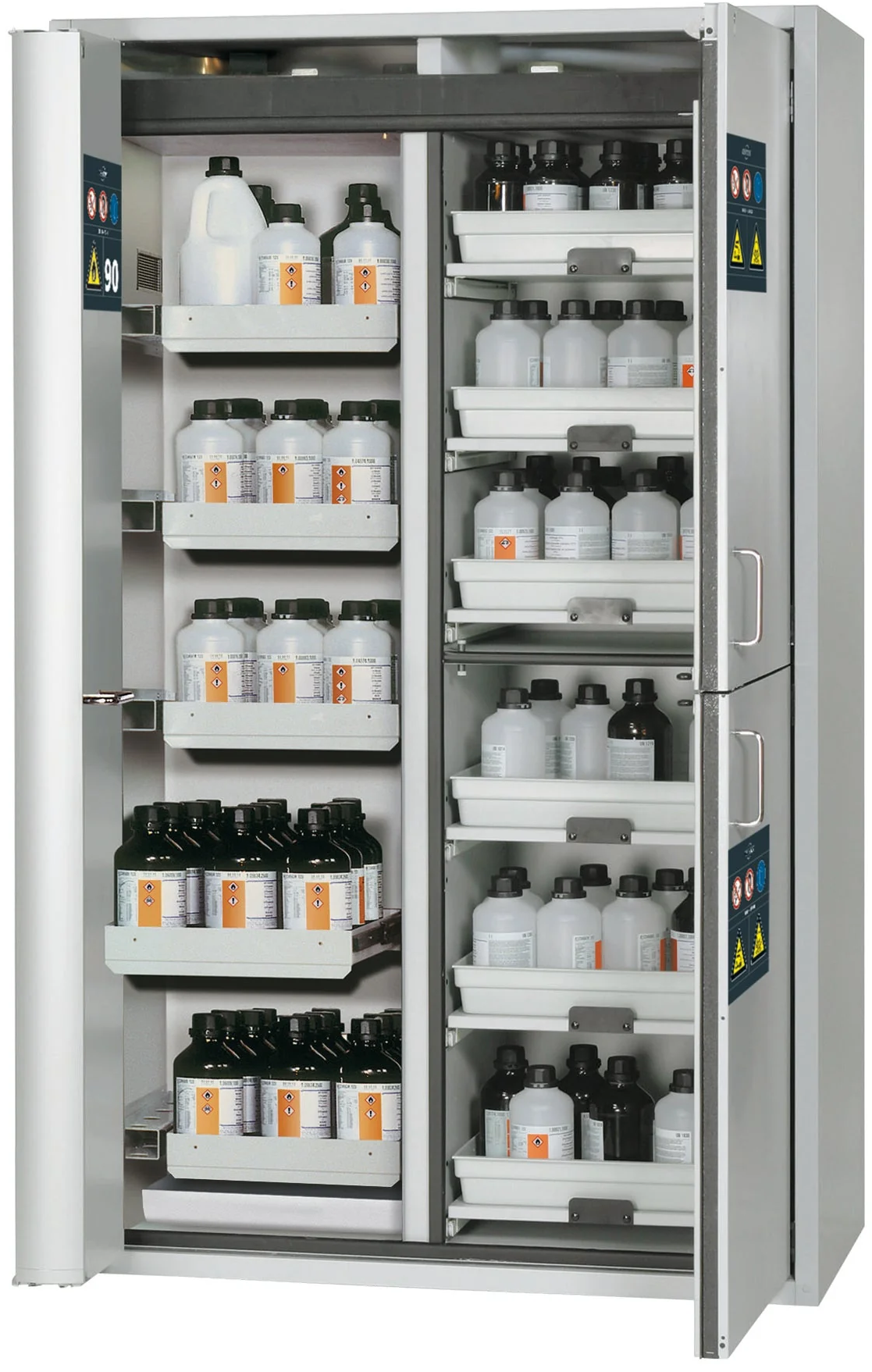
A chemical storage cabinet is designed to help contain chemical releases in the event of an incident while supporting proper segregation and management of different chemical groups.
Storing Flammable Chemicals
Solvents such as ethanol, methanol, acetone, isopropanol, and toluene are classified as flammable chemicals and should typically be stored in a flammable storage cabinet.
If these chemicals are stored together with incompatible substances or near heat sources, the risk of fire can increase significantly in the event of a leak or solvent vapor accumulation.
Storing Large Quantities of Acids and Bases
Strong acids and strong bases should not be stored in the same storage area unless they are properly separated.
If a container cracks, leaks, or breaks, these two chemical groups may react with each other, generating heat or producing hazardous reaction products.
When a Laboratory Stores Multiple Types of Chemicals
As the number of chemicals increases, open shelving is often no longer sufficient to meet safe storage and inventory management requirements.
Chemical containers should be organized according to their chemical properties, hazard classifications, and compatibility. This storage practice is widely adopted in quality control laboratories, R&D laboratories, and analytical laboratories to prevent incompatible chemicals from being stored next to each other in a laboratory chemical storage cabinet.
When Safety Audits or Compliance Inspections Are Required
Accredited laboratories, manufacturing facilities, testing laboratories, and organizations operating under management systems such as ISO, GLP, or GMP are generally required to establish dedicated chemical storage areas.
During inspections or audits, chemical storage practices are routinely evaluated. Chemicals stored on workbenches, on the floor, or mixed with general supplies often fail to meet safety and chemical management requirements.
When Unauthorized Personnel Have Access to the Storage Area
Teaching laboratories, schools, research institutes, and shared laboratory facilities are accessed by many people every day.
In these environments, chemicals should be stored in a lockable chemical storage cabinet to minimize unauthorized or accidental access. Lockable cabinets are widely used to help control chemical access and improve laboratory safety.
When Chemicals Are Stored for Extended Periods
Some chemicals are purchased in bulk and may remain in storage for several months or even years.
Without an appropriate storage cabinet, chemical containers may be exposed to temperature fluctuations, humidity, or light, increasing the risk of packaging deterioration and compromising storage conditions.
Using a dedicated chemical storage cabinet helps maintain a more stable storage environment while improving long-term chemical organization and inventory management.
Selecting the appropriate chemical storage cabinet based on the types of chemicals being stored helps organizations improve storage safety, support regulatory compliance, and establish a more effective chemical management system.