Secondary injection testing at remote wind and solar sites is simplified when the test set is practical to carry, can be operated without constant laptop use, and suits field maintenance needs. These considerations matter because technicians may travel over rough ground, work at widely distributed inverter stations, or climb within turbine towers.
Protection relays still need verification and fault-simulation testing, but equipment logistics can affect the pace of commissioning and maintenance. A compact field test setup can help reduce the burden of moving tools alongside laptops, safety equipment, and test leads.
Summary: Remote renewable sites place a premium on low equipment weight and straightforward operation. A visible built-in interface can reduce laptop dependence in challenging weather. The supplied information describes KFA320 as weighing under 4 kg, with 0.05% accuracy and a modular channel design.

Why is secondary injection testing more difficult at remote wind and solar sites?
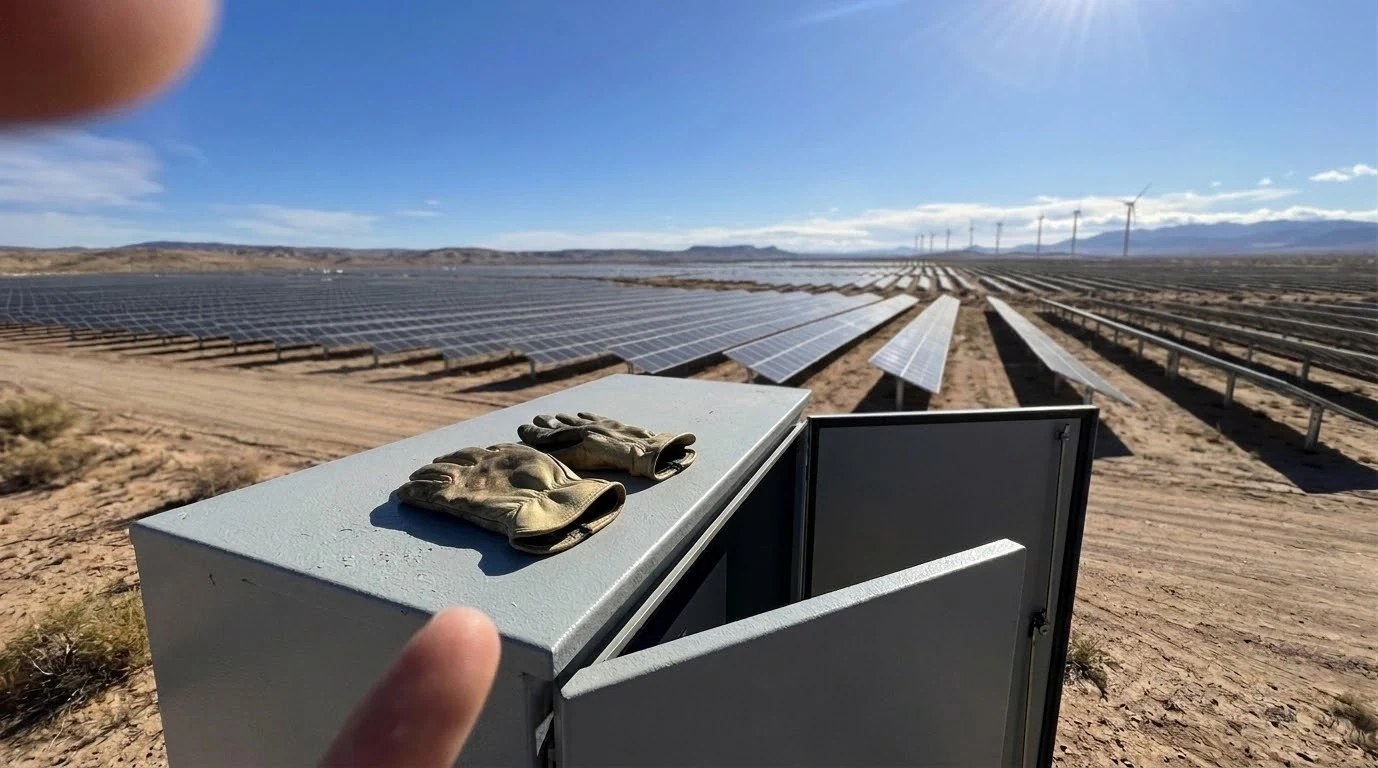
Remote renewable locations can make transport the main challenge of relay testing. Solar inverter stations may be spread across large areas, while wind-turbine work can require technicians to carry equipment where elevator access is limited or unavailable.
In these conditions, a conventional, heavier protection tester may add physical effort before testing begins. Carrying a tester over loose gravel, muddy ground, or internal tower ladders can contribute to fatigue and slow site work.
What should a portable relay tester provide for renewable field work?
A portable relay tester for renewable field work should balance transportability, usable operation in outdoor conditions, and the required protection-test capability. The supplied information identifies stable operation with generator-supplied power, a high-visibility touch interface, and low weight as practical priorities.
- Portable power tolerance: Remote work may rely on a portable generator rather than stable auxiliary power.
- On-unit operation: A built-in touch interface can make it possible to run predefined test templates without relying on a laptop at the test point.
- Lower carrying weight: The source frames equipment below 10 kg as a useful target when technicians must walk between assets or climb a turbine tower.
How can a built-in touch interface help during relay testing?
A built-in touch interface can make test execution more direct where sunlight, rain, and screen glare make laptop use inconvenient. According to the supplied information, technicians can connect test leads and run predefined templates from a capacitive screen.
This approach does not remove the need for correct test preparation or safety procedures. It can, however, keep the operating controls with the tester rather than requiring a separate computer at every test location.
What information is provided about the KFA320 relay test set?
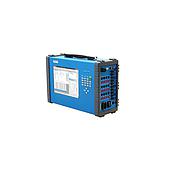
The supplied product information describes the KFA320 from Kingsine as a compact relay test set for field use. It states that the unit weighs under 4 kg, has an accuracy class of 0.05%, supports predefined templates on a capacitive screen, and uses a plug-and-play module design.
| Characteristic | Information provided for KFA320 |
|---|---|
| Weight | Under 4 kg |
| Accuracy class | 0.05% |
| Interface | Capacitive screen for predefined test templates |
| Maintenance approach | Plug-and-play module design for channel replacement |

Can portable equipment be used for differential protection testing?
The supplied information says that modern digital amplifiers can provide high output power in a small package and can inject the six phases used for transformer differential relays. This addresses a traditional trade-off in which greater portability was associated with reduced output capability.
Test requirements should still be matched to the protection scheme and the equipment available for the job. The source specifically contrasts standard overcurrent testing with distance and differential protection schemes when discussing portable high-accuracy test equipment.
How can modular design reduce commissioning maintenance delays?
A modular test-set design can reduce downtime when a channel requires replacement because the affected module can be changed on site. The supplied information contrasts this with sending an entire conventional unit back for repair.
For commissioning teams working far from service facilities, this can limit disruption caused by a single channel issue. The practical benefit depends on having the appropriate replacement module available at the site.
How do protection-class and metering-class accuracy differ?
Protection-class accuracy focuses on capturing faults quickly under extreme overcurrent conditions. Metering-class accuracy focuses on highly exact measurement under normal load conditions.
The supplied information notes that high-precision field testers may bridge both needs in one unit. Selection should therefore start with the relay test objective rather than portability alone.