During machining, surface roughness determines the actual contact area between components. If the roughness is not properly controlled, contact stress increases, lubrication performance deteriorates, and wear occurs more rapidly. As a result, bearing assemblies may experience vibration, excessive heat generation, or premature failure even when operating within their designed load limits.
Using surface roughness meter after machining processes is an important step in ensuring component quality and maintaining reliable system performance.
What Is Surface Roughness ?
Surface roughness refers to the microscopic irregularities that remain on a component after machining. Under magnification, a metal surface is never perfectly smooth; it contains countless peaks and valleys created by cutting tools, grinding wheels, and other manufacturing processes.
In precision engineering, roughness is commonly expressed using parameters such as Ra and Rz. Lower values indicate a smoother surface. Depending on the intended function of a component, manufacturers specify acceptable roughness limits to ensure proper fit and long-term reliability.
For bearing mounting surfaces, roughness affects not only machining quality but also load transfer, concentricity, and lubrication performance throughout the service life of the equipment.
Why Does Surface Roughness Affect Bearing Life ?
When the inner ring is mounted on a shaft or the outer ring is installed in a housing, the load is not distributed evenly across the entire surface. Instead, it is concentrated at the actual points of contact. The rougher the surface, the fewer the contact points and the higher the pressure at each location.
Over time, these roughness peaks are subjected to elevated stress and tend to deform or wear first. Even minor changes in the mounting surface can reduce bearing accuracy, generate vibration, and negatively affect the entire drive system.
Increased Wear at the Mounting Surface
A shaft surface that is too rough concentrates loads on the highest asperities. During continuous operation, these areas become zones of elevated stress and are more susceptible to localized wear.
Wear at the interface gradually changes the original dimensions of the shaft and bearing inner ring, resulting in a loose fit. As clearance increases, vibration levels rise, operating accuracy declines, and bearing life is significantly reduced.
Impact on Lubrication Performance
Lubricating oils and greases create a protective film that separates metal surfaces. When roughness is excessive, surface peaks can penetrate this lubricant film and cause direct metal-to-metal contact.
The resulting increase in friction raises operating temperatures. Lubricants degrade more quickly, their protective capability diminishes, and wear rates continue to accelerate.
This is one of the most common causes of abnormal bearing overheating in high-speed rotating equipment.
Reduced Bearing Assembly Concentricity
Concentricity between the shaft and bearing is essential for proper load distribution. Uneven machining or roughness values outside the specified range can introduce small alignment errors during assembly.
When a bearing operates under misaligned conditions, the load is concentrated on only a portion of the rolling elements rather than being distributed evenly. Material fatigue develops more rapidly, increasing the risk of surface spalling and premature bearing failure.
Is a Smoother Surface Always Better ?
The objective of machining is not to achieve the smoothest possible surface, but to obtain a roughness level that meets the manufacturer's specifications.
Certain mounting surfaces require enough texture to retain lubricating oil or grease. Excessive polishing may reduce the surface's ability to hold lubricant, particularly in applications involving variable loads or high rotational speeds.
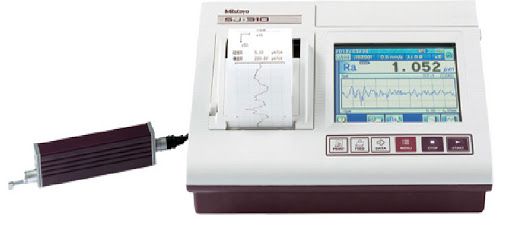
Typical Roughness Requirements for Bearing Mounting Surfaces
The appropriate roughness value depends on the bearing type, accuracy class, and operating conditions.
In many industrial applications, shaft surfaces intended for bearing mounting are maintained within a roughness range of approximately Ra 0.2 to 1.6 μm. Equipment requiring higher precision, such as electric motors, machine tool spindles, and measuring instruments, often demands even stricter roughness control.
In addition to surface roughness, roundness, concentricity, and dimensional tolerances must also be carefully controlled to ensure stable bearing performance.
Controlling Roughness During Manufacturing and Maintenance
Using surface gloss tester is commonly performed after finishing operations such as fine turning, grinding, or polishing. Measurement results confirm whether components meet technical requirements before assembly.
During maintenance, roughness inspection can also help identify early signs of shaft surface wear. In many cases, repeated bearing failures occur because the mounting surface has deteriorated, even though new bearings have been installed.
Surface roughness testers provide a fast and reliable method for evaluating both machining quality and component condition. The collected data can be used to determine whether corrective actions such as regrinding, polishing, or remachining are required before installing replacement bearings.
Surface Roughness and Maintenance Costs
Many manufacturing facilities have incorporated surface roughness inspection into mandatory quality control procedures for rotating components.
The effects of roughness extend beyond bearing life. Premature bearing wear can lead to unplanned downtime, increased replacement costs, and potential damage to related components such as shafts, couplings, and gearboxes.
Surface roughness is one of the key factors influencing bearing service life, yet it is often overlooked during machining and maintenance activities. Excessively rough surfaces increase contact stress, friction, and wear. Conversely, an unsuitable surface finish can also affect the ability to maintain a stable lubricant film.
Maintaining surface roughness within specified engineering standards helps bearings operate more smoothly, reduces vibration, limits heat generation, and extends the service life of the entire drive system. This is why manufacturers are placing greater emphasis on use roughness tester in the the machining process.