
Thermal roof inspection can help inspectors identify temperature abnormalities that may be associated with poorer insulation, heat escape, or moisture accumulation. These patterns can make potential roof-area concerns more visible before they become serious and obvious.
For property owners and building inspectors, the value is early visibility: thermal findings can support timely precautions and make repair decisions easier to justify. They should be considered alongside the building context and the comparison of roof areas.
Summary: Thermal imaging can make insulation-related conditions visually detectable. Poorer insulation may show temperature abnormalities compared with other roof regions. Regular inspections can support earlier precautions against weather-related damage and possible moisture accumulation.
Why is thermal roof inspection useful for building condition monitoring?
Thermal roof inspection is useful because roof structural integrity is important to building safety, yet minor issues can be difficult to recognize through ordinary observation. Roof areas also need to withstand harsh and unpredictable weather, which can worsen an existing problem over time.
When a small concern is not identified until it is serious and obvious, repair may be more costly and the building may be more susceptible to additional weather damage. Thermal imaging provides another way to review conditions that may not be visually apparent at an early stage.
What can a thermal camera indicate during a roof inspection?
A thermal imaging can indicate temperature abnormalities in areas with poorer thermal insulation when compared with other regions. According to the application information, defective areas may allow heat to escape or permit moisture to accumulate, and these conditions can develop different thermal patterns over time.
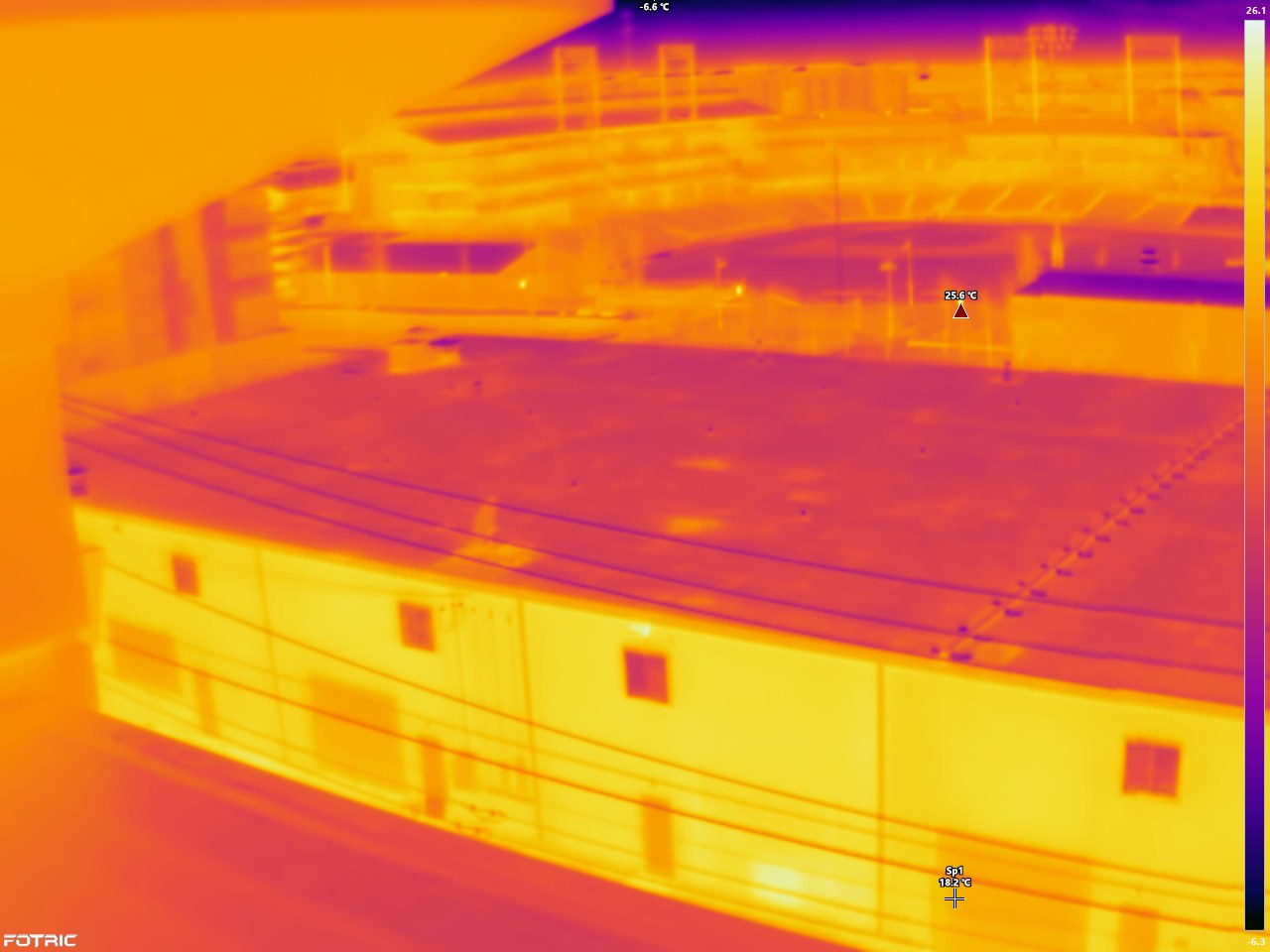
These patterns are useful as early indicators for inspection planning. They help direct attention to areas that may need further evaluation rather than making minor conditions wait until they become visibly severe.
How do insulation issues relate to temperature abnormalities on a roof?
Thermal insulation is presented as an important indicator of roof-area structural condition because defective insulation can be linked to heat escape or moisture accumulation. A region with poorer insulation may therefore appear thermally different from surrounding areas.
| Roof-area condition described | Potential thermal inspection observation | Why it matters |
|---|---|---|
| More consistent insulation condition | Temperature pattern can be compared with nearby regions | Provides a reference for identifying differences |
| Poorer or defective insulation | May show a temperature abnormality over time | Can point inspectors toward an area for precaution or further review |
| Possible moisture accumulation | May be associated with a thermal difference | Supports earlier attention before the issue becomes more obvious |
Note: A temperature abnormality is an inspection indicator. The available information associates it with insulation condition, heat escape, and possible moisture accumulation, but does not establish the specific cause of every thermal difference.
When should building owners consider regular thermal roof inspections?
Building owners can consider regular thermal inspections when they want to monitor roof conditions and look for early signs of deterioration. This approach is particularly relevant where roof areas are exposed to harsh or unpredictable weather and small issues may be hard to detect early.
Regular checks can help owners spot concerns sooner, take precautions, and potentially mitigate damage associated with weather conditions. The source information also identifies prevention of possible moisture accumulation as a benefit of this monitoring approach.
How can the FOTRIC 340/320 support roof insulation inspection?
The FOTRIC 340/320 is identified as a thermal camera that can make thermal insulation conditions visually detectable during building inspection. In this application, it can help inspectors recognize areas with thermal differences and spot potential structural concerns at an earlier stage.
Its stated role is to support inspection decisions: visually detectable insulation conditions can help justify precautions and make repairs easier to plan. No performance specifications, measurement limits, or diagnostic guarantees are provided in the available information.
What actions can follow a thermal finding on a building roof?
A thermal finding can support a decision to take precautions earlier, especially when a roof area differs from nearby regions. The practical purpose is to address a potential concern before deterioration becomes serious and more costly to repair.
Thermal camera can also help organize maintenance attention around areas where heat escape, poorer insulation, or possible moisture accumulation may be relevant. The available information supports using these findings for early condition awareness, not as a standalone determination of roof damage.




