If you only look at the external water source and try to fix it directly, you'll almost certainly have to redo it many times. It's more effective to understand the water flow within the house and its configuration, and then identify the source of the leak.

Water doesn't appear out of nowhere; it always follows a certain path
A simple but often overlooked principle is that water always flows from high to low, following existing gaps in the structure. When a pipe leaks, water doesn't immediately gush out but seeps into the mortar, then spreads along the floor or wall before finally escaping.
This explains why, in some cases, the base of the back wall of a house is always damp, but the rest of the interior shows no obvious signs. The actual water source is in the nearest area of use, such as the kitchen or bathroom, not where the water is actually leaking. This is especially important for houses with pipes running under the floor.
Small joints are the most common places for leaks
Contrary to popular belief, pipes rarely crack midway; most problems occur at the joints. After a period of use, the rubber gaskets harden and lose their elasticity, causing water to leak very slowly—enough to seep down but not forming noticeable drips.
In the kitchen, the siphon under the sink is a common source of this problem. Even a small gap in the threaded connection is enough to cause water to leak with each flush, accumulating and spreading onto the floor. The same mechanism applies to washing machines or toilets, where the water supply hoses and connectors operate.
The distinctive feature is that these areas are usually not noticeably wet, but only feel slightly damp or have stubborn stains from continuous water seepage.
Follow the water trail to pinpoint the area
Instead of directly locating the leak, a more effective approach is to make the water path visible. A simple method is to use colored water, flush it through the suspected area, and then observe where the water seeps out.
When a colored streak appears, the direction of water flow can be determined, thus identifying the area that needs focused treatment. This method is particularly useful for drainage pipes, where the flow is not under high pressure and is therefore difficult to detect with the naked eye.
Additionally, shutting down the water system for a period of time and then flushing each area separately can help to correlate the discharge source with the appearance of dampness.
When is it necessary to use assistive devices?
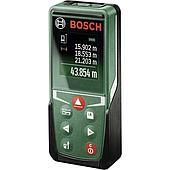
In cases where water has seeped deep into walls or foundations, the surface no longer accurately reflects the water's path; in such situations, measuring devices can help clarify the problem.
Some handheld thermal cameras, such as the FLIR C5, can display damp areas through temperature differences. Areas with water seepage typically have lower temperatures than the surrounding areas, creating easily identifiable zones when scanned.

In addition, flexible cable endoscopes connected to smartphones are also a popular choice for households, allowing direct observation inside pipes or behind hidden areas.
The important point is that these devices are only effective when initially oriented. If used randomly, the results obtained will be very difficult to interpret.
Read more related articles: Could unusually high electricity and water bills be due to a water leak?
Signs that you should stop self-treating
When water seeps into the floor for many days, gradually spreading over time, or the water meter continues to change even when not in use, it's highly likely the pipe is located deep beneath the floor or inside the wall.
At this stage, self-treatment is often ineffective because the internal structure cannot be directly observed. Continuing to act on impulse can easily damage unrelated areas.
At this point, the sensible approach is to stop at the localized area and let an experienced professional determine precisely which part needs intervention, avoiding unnecessary costs.