An insulation resistance tester is an important instrument for testing and maintaining electrical equipment. Insulation is designed to limit leakage current between energized parts and the equipment enclosure, ground, or other conductive components. When insulation deteriorates, the equipment may be exposed to electrical leakage, short circuits, and safety hazards during operation.
Periodic testing not only helps assess the current condition of equipment but also supports the early detection of abnormal signs so that appropriate corrective measures can be taken. Measurement results should be evaluated together with operating conditions, the actual condition of the equipment, and the manufacturer's technical guidelines.
What Is an Insulation Resistance Tester ?
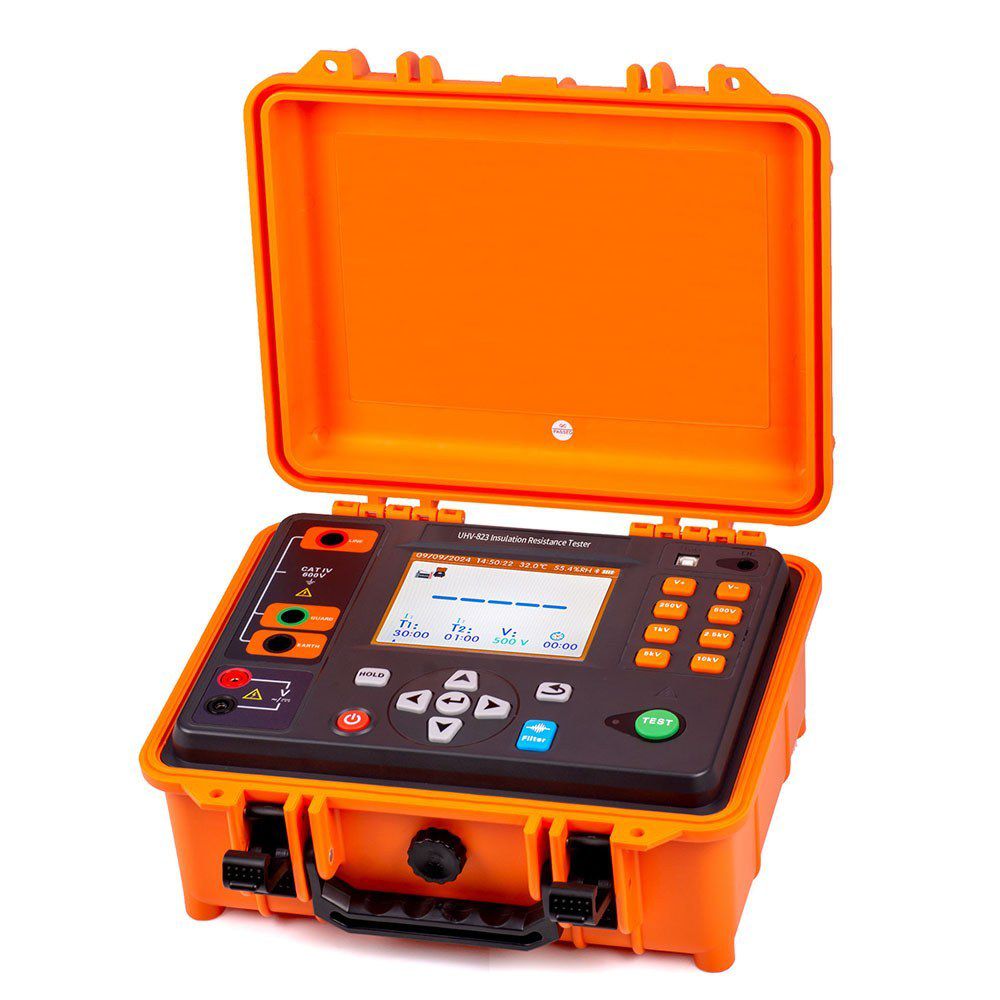
An insulation resistance tester is an instrument used to measure the resistance of insulating materials between conductive parts or between a conductive part and ground. In electrical equipment, components such as conductors, windings, and terminals are separated by insulating materials to reduce the possibility of current flowing along unintended paths.
A low insulation resistance value may indicate deteriorated insulation. However, the condition should not be assessed based on a single measurement alone. The result should be compared with the applicable requirements for the equipment, relevant technical specifications, and measurement trends from previous tests.
Operating Principle
Unlike a conventional multimeter, an insulation resistance tester applies a relatively high DC test voltage to evaluate the electrical insulation of a material or device. Measurement results are typically expressed in MΩ, GΩ, or TΩ.
During testing, the test leads are generally connected between the energized part being tested and ground or the equipment enclosure, depending on the test object. The connection method, testing sequence, and measurement conditions should follow the instrument's operating instructions and the applicable technical procedures at the workplace.
Basic Insulation Resistance Testing Procedure
Requirements may vary depending on the type of equipment, but a basic megohmmeter generally includes the following steps:
Prepare the work area and equipment: Identify the equipment to be tested, inspect its external condition, and ensure that the work area is suitable.
Isolate the power supply: Disconnect the equipment from the power source and verify that it is de-energized in accordance with applicable safety procedures.
Check the connections: Clean the connection points when necessary and connect the test leads to the correct positions according to the instrument's operating instructions.
Perform the measurement: Operate the tester according to the manufacturer's instructions, and record the measurement result and conditions at the time of testing.
Evaluate the result: Compare the data with applicable technical requirements or previous measurements to identify any changes or abnormal trends.
Complete the test safely: After testing, follow the required procedures to ensure that the equipment and work area are safe before returning the equipment to its next operating state.
Factors That Can Cause Insulation Deterioration
Insulation performance can change over time and under different operating environments. Identifying the factors that affect insulation helps support more proactive maintenance planning.
Humidity: Moisture can reduce the resistance of insulating materials by providing conditions that facilitate leakage current.
High temperature: Prolonged operation at elevated temperatures can affect the durability of insulation.
Dust and contaminants: Dust accumulation on surfaces, particularly when combined with moisture, can adversely affect insulation properties.
Material aging: Over time, insulating materials may become brittle, crack, or deteriorate due to environmental exposure and operating conditions.
Overload or overvoltage: Operation under unsuitable conditions can place additional stress on insulation and accelerate deterioration.
Mechanical stress: Impact, compression, or damage during installation or maintenance can directly compromise insulation.
Safety Precautions for Insulation Testing
Personnel performing insulation resistance tests should have appropriate knowledge, use the correct equipment, and comply with the safety requirements of their organization.
Do not touch the test leads or test terminals during measurement.
Perform testing only after the power source has been isolated and the equipment has been verified to be de-energized according to the applicable safety procedure.
Do not use the tester if the test leads, probes, or instrument housing show signs of damage.
Record environmental conditions because humidity, temperature, and surface cleanliness can affect measurement results.
Refer to the equipment manufacturer's instructions before drawing conclusions about its insulation condition.
Equipment Maintenance
Proactive maintenance helps reduce factors that may contribute to insulation deterioration. Equipment should be kept clean, protected from excessive dust, and, where possible, prevented from operating for extended periods in humid environments. Operating the equipment within the specifications stated on its nameplate also helps reduce the risk of prolonged overload.
In addition, pay attention to abnormal signs such as unusual odors, abnormal noise, or unexpected temperature increases. These signs do not replace insulation resistance testing but can indicate that an earlier inspection may be appropriate. For critical equipment, the inspection schedule should be determined based on the equipment type, operating environment, and service duration.
Frequently Asked Questions
What Does Low Insulation Resistance Mean ?
A low value may indicate deteriorated insulation and an increased risk of leakage current. The result should be evaluated against the equipment's technical requirements, measurement conditions, and historical data before determining the appropriate corrective action.
Is Periodic Insulation Resistance Testing Necessary ?
Yes. The testing interval depends on the equipment type, criticality, operating environment, and service life. The instrument operating in humid, hot, or dusty conditions may require closer monitoring.
How Does Humidity Affect Insulation Resistance Measurements ?
Humidity can reduce the resistance of insulation and affect measurement results. Therefore, recording environmental conditions at the time of testing is useful when comparing data from different measurements.
Why Do Measurement Results Differ Between Tests ?
Humidity, temperature, measurement timing, the quality of contact between the test leads and the test points, and the actual condition of the equipment can all affect the results. The measurement conditions should be recorded to allow differences between tests to be evaluated more accurately.
When Should an Insulation Resistance Tester Be Calibrated ?
The calibration interval depends on the manufacturer's recommendations and the frequency of use. Checking the instrument's accuracy before testing is an important step in ensuring reliable measurement data.
What Value Is Considered a Safety Risk ?
There is no single threshold that applies to every situation. The measured value should be compared with the applicable standards, technical requirements, or regulations for the specific type of insulation tester and corresponding voltage level.