Measuring COD and TOC in Electroplating Wastewater Using Benchtop Meters: How to Ensure Reliable Results & Avoid Sources of Error
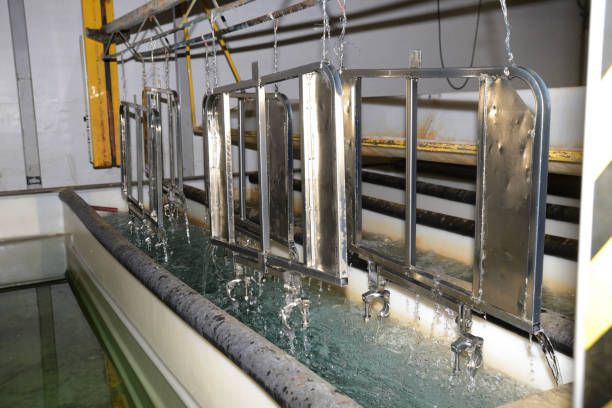
Why Do Internal Benchtop COD Readings Discrepate from External Monitoring Centers?
QA/QC departments frequently encounter situations where internal data diverges from certified external test results. The root cause rarely lies solely in the instrument itself, but rather in six common factors:

Impacts of Chloride, Chromium, Colored Heavy Metals & Interference Elimination
1. Chloride Ions Causing Falsely Elevated COD & Elimination Methods
Acidic plating baths such as zinc chloride and nickel plating contain extremely high levels of chloride. Inside the reagent vial at 150°C under strongly acidic conditions, chloride ions (Cl⁻) are oxidized by potassium dichromate (K₂Cr₂O⇇), releasing chlorine gas. This side reaction consumes oxidants intended for organic compounds, producing a reading higher than the true COD.
- Using Mercuric Sulfate (HgSO₄): Reagent vials integrated with HgSO₄ form a stable complex with chloride ions, masking their interference.
- Accurate Sample Dilution: Dilute the sample to bring chloride concentrations below the masking threshold of the reagent vial. Concentrated plating bath effluents must still be diluted even when mercury-containing reagents are used. It is recommended to measure the sample's chloride concentration independently and cross-reference it with the reagent manufacturer's limit specifications.
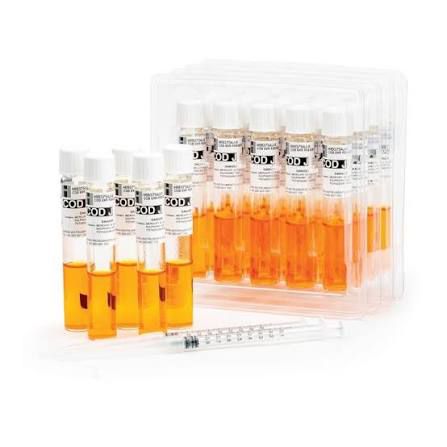
2. Impacts of Chromium, Colored Metals & Inorganic Reducing Agents
Photometers measure the light absorbance of digested solutions. Hexavalent chromium (Cr⁶⁺) exhibits a yellow-orange color, trivalent chromium (Cr³⁺) is green, and copper and nickel also display distinct background colors, distorting photometer absorbance readings. Control this by following reagent manufacturer instructions regarding wavelength selection and background color correction (Blank Sample adjustment), while periodically validating results against external accredited laboratories.
Inorganic reducing agents are a frequently overlooked factor. Many plants reduce Cr⁶⁺ using sodium bisulfite, metabisulfite, or iron(II) sulfate. Water downstream of the chromium reduction tank often contains residual reducing agents, which react with dichromate similarly to organic matter, artificially driving COD up. For samples collected after this process step, cross-validate results using TOC analysis or measure residual reducing agents separately.
Standard 6-Step Benchtop COD Measurement Procedure for Electroplating Wastewater
- Step 01. Representative Sampling & PreservationShake samples thoroughly to prevent solids from settling. If not analyzed immediately, acidify with sulfuric acid (H₂SO₄) to pH < 2 and store under refrigeration according to COD preservation protocols.
- Step 02. Pretreatment & HomogenizationGently neutralize samples with extreme pH values. Samples containing large suspended particles should be homogenized using short-duration stirring or grinding. Do not filter out suspended solids, as filtration removes particulate COD, yielding results that deviate from total COD regulatory requirements.
- Step 03. Reagent Range Selection & DilutionUse low-range vials for dilute rinse water and high-range vials for concentrated plating effluents. Adjust dilution so the final concentration falls near the midpoint of the measuring range where analytical error is lowest.
- Step 04. Digestion at 150°C for 120 MinutesAdd sample into the reagent vial, invert gently to mix, and place into a dedicated thermoreactor preheated to 150°C. Perform sealed dichromate digestion for 120 minutes. Ensure the block reaches target temperature before inserting vials and verify heater calibration regularly.
- Step 05. Cooling & Vial Surface CleaningTurn off the reactor, allow vials to cool, invert gently per protocol, and wait 30–45 minutes until reaching room temperature. Hot vials cause optical absorbance errors, while unsettled precipitates introduce turbidity. Thoroughly wipe the exterior glass surface of the vial before photometric reading.
- Step 06. Photometric MeasurementSelect the matching program for the specific reagent type, read the result in mg/L O₂, and multiply by the dilution factor.
Total analytical time is approximately 2.5 to 3 hours including digestion, cooling, and reading. Operators must wear safety goggles and chemical-resistant gloves, as vials contain hot concentrated sulfuric acid at 150°C.
Comparing TOC and COD Methods in Electroplating Plants
| Analytical Parameter | COD Method (Sealed Tube Dichromate) | TOC Method (Total Organic Carbon) |
|---|---|---|
| Measurement Principle | Oxidation via Potassium Dichromate at 150°C. | Catalytic combustion of sample into CO₂ with NDIR detection. |
| Turnaround Time | 2.5 - 3 hours (requires digestion). | Only a few minutes per sample. |
| Chloride Ion (Cl⁻) Interference | Severe interference; requires HgSO₄ masking. | Completely immune to Chloride interference. |
| Hazardous Chemical Waste | Generates waste containing Chromium, Mercury, and Silver. | Eco-friendly; requires no toxic chemical reagents. |
Note on BOD₅: Electroplating wastewater typically exhibits a very low BOD₅/COD ratio due to high concentrations of refractory organic compounds, which makes biological treatment systems prone to shock loads when influent concentration increases.
6 Steps to Validate Reliable Data & Hazardous Used Reagent Management
- Blank Sample Analysis: Run a reagent blank with each batch and subtract background absorbance.
- KHP Standard Solution: Check accuracy against a known Potassium Hydrogen Phthalate standard. Investigate digestion blocks, reagents, or photometers if deviation exceeds internal limits.
- Duplicate Testing: Evaluate repeatability across multiple vials.
- Matrix Spike Testing: Assess whether the electroplating sample matrix induces recovery interference.
- External Inter-Laboratory Cross-Check: Send parallel samples to certified external laboratories periodically.
- Reagent Storage & Expiration: Protect reagents from light and high temperatures, and verify expiration dates.
You may also be interested in: How to Quickly Reduce COD in Domestic Wastewater?
Selecting Benchtop Measurement Systems at EMIN
Laboratory environments in electroplating facilities contain high levels of acid vapors; prioritize instruments with corrosion-resistant housings and spill-proof keypads. Photometers, thermoreactors, and reagent vials should be chosen as an integrated system to ensure built-in calibration curves match vial optical characteristics. Ensure reagents cover required measurement ranges, include chloride-masking options, and come with check standards. Plants requiring high screening frequency should consider adding a benchtop TOC analyzer.