
Using a coating thickness gauge helps identify wear on an OPC printer drum rather than relying solely on visual inspection of the surface. The service life of an OPC drum is often considered to have significantly declined when the coating has worn by approximately 5 to 15 μm. When the wear approaches half of the original coating thickness, the drum may be removed from service depending on the remanufacturer’s quality control procedures.
Measuring OPC drum wear is a useful inspection step when evaluating and reusing printer and copier toner cartridges. OPC (organophotoconductor) drums have a non-conductive organic coating over an iron-free aluminum substrate. This component plays a direct role in the printing process and operates in an abrasive environment involving toner, cleaning blades, and paper dust.
Why OPC drum coating wear matters
OPC coating thickness varies by manufacturer and product, but a typical coating thickness is around 50 μm (2 mils). Wear of only a few microns may be important for reuse analysis. The source data notes that drum life may be considered depleted after 5 to 15 μm (0.2 to 0.6 mils) of coating has worn away. When wear approaches approximately half of the original coating thickness, scrap decisions are often made.
These figures should be interpreted within the requirements of the particular drum and remanufacturing process. The core objective is to make a consistent assessment based on measured coating condition rather than visual inspection alone.
Measurement challenges on curved OPC drums
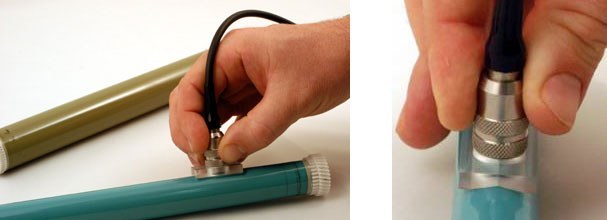
OPC drum wear measurement is a non-destructive task, so the measurement method must avoid damaging the coating while delivering repeatable readings. Curvature is a key consideration: a probe that is not placed consistently on the drum surface can affect the result. Existing base coating on the aluminum drum can also influence the reading.
The drum surface should be smooth, clean, and free of toner before measurement. Surface contamination may interfere with stable probe contact and make comparisons between readings less meaningful. Preparing the same way for every inspection also improves process consistency.
Using PosiTector 6000 NAS for OPC coatings
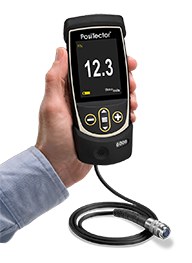
PosiTector 6000 NAS1 is a non-destructive coating thickness gauge designed to measure OPC printer drum coatings. The NAS probe is designed for high-resolution measurement of non-conductive coatings on non-ferrous substrates, such as an OPC coating on an aluminum substrate. The NAS probe can measure up to 625 μm (25 mil). However, its highest accuracy and resolution are achieved below 100 μm (4 mil). This range is suitable for typical OPC coating thicknesses, helping monitor small changes in the coating during use or testing.
PosiTector 6000 NAS3 uses the Advanced body, adding graphical display, greater data storage and management capacity, Wi-Fi/Bluetooth connectivity, and Scan mode for continuously collecting multiple measurements. The Advanced body can also be used with other compatible PosiTector probes, expanding inspection capabilities without replacing the entire instrument. This makes it a suitable option when manufacturers need to perform a large number of measurements, monitor coating uniformity, and store data for quality control.
Recommended OPC drum measurement workflow
- Prepare the drum surface. Confirm that the OPC surface is smooth, clean, and free of toner.
- Zero the probe. Before measuring the coated surface, zero the probe on an uncoated drum. This minimizes the effects of drum curvature and any existing base coating on the aluminum drum.
- Use consistent positioning. Keep the probe perpendicular to the surface. Where applicable, use the V-Groove adapter to support stable placement.
- Measure several locations. Record readings at multiple positions along the length of a new drum.
- Repeat at the same locations. After experimental testing or actual use, measure the same areas again and record the new values.
- Calculate coating wear. Subtract the after-use thickness from the initial thickness to determine the amount of OPC film thickness wear.
Applying Measurement Data in Toner Cartridge Remanufacturing
When comparing measurements taken at the same locations and under the same inspection conditions, manufacturers have a stronger technical basis for evaluating wear. It is important to maintain consistent cleaning procedures, probe settings, and measurement locations. This approach makes coating thickness data more meaningful for quality control and decisions regarding OPC drum processing.
An OPC drum wear gauge can help remanufacturers assess whether a drum is suitable for reuse. In addition, tracking changes in coating thickness over time makes it possible to observe the effects of factors such as cleaning blades, lubricants, toner, additional OPC coatings, and paper type.




