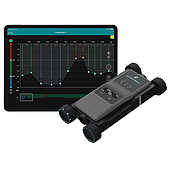
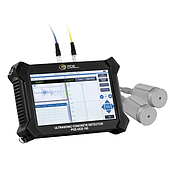
Anti-static torque meter help reduce electrostatic discharge (ESD) risk in electronics assembly by managing charge on the tool itself. This matters because wrist straps and heel straps address people, while an ungrounded electric screw or nut driver can also become a discharge source.
ESD prevention in electronics manufacturing must begin with controlling both operators and tools capable of holding a charge. Maintaining a continuous grounding path for hand tools, torque wrenches, and screwdrivers is a key factor in protecting sensitive circuit boards and components from ESD risks throughout the manufacturing process.
Summary: ESD can damage sensitive semiconductor components. Personnel controls alone may not address charge on production tools. Anti-static torque tools are intended to provide a continuous ground path from the tip to earth ground. Both immediate and latent failures are relevant when evaluating ESD risk.
What is ESD, and why is it a concern in electronics manufacturing?
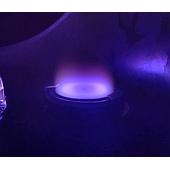
Electrostatic discharge is the rapid release of an accumulated electrostatic potential, described in the supplied material as occurring over microsecond-to-nanosecond intervals. In microelectronics production, this event can affect product integrity, manufacturing yield, cost, and reliability.
Static charge can arise through triboelectric charging: contact and separation between dissimilar materials. As devices become smaller and operate at lower voltages, the margin for overlooking ESD control may become narrower.
How can an electric assembly tool create ESD risk?
An assembly tool can accumulate charge and discharge it into an ESD-sensitive part if it is not properly grounded. The supplied material specifically identifies electric screw and nut drivers as tools that should be considered alongside human-sourced ESD controls.
A tool may therefore be part of the discharge path even when operators use wrist straps or heel straps. Assessing ESD risk only around the person can leave the bench tool itself unaddressed.
What are the Human Body Model and Machine Model in ESD?
The Human Body Model and Machine Model are two discharge models referenced in the supplied material. The Human Body Model concerns charge associated with a person, while the Machine Model concerns charge that can build on equipment or bench tools.
This distinction is useful because each model points to a different potential source. Personnel grounding measures address the first case, while grounded production tools help address the second.
| Discharge model | Potential charge source described | Relevant control focus |
|---|---|---|
| Human Body Model | Personnel | Wrist straps and heel straps |
| Machine Model | Bench tools or equipment | Proper grounding of production tools |
What damage can ESD cause to semiconductor components?
ESD may cause semiconductor damage, including gate oxide destruction and junction failure. The supplied material notes that damage can occur even below 200 V, so a discharge may not be obvious to an operator.
Failure can be catastrophic, meaning the component fails immediately, or latent, meaning damage remains and may affect reliability later. Both outcomes make prevention relevant before a product leaves the assembly environment.
What makes a torque tool properly grounded for ESD control?
Proper grounding requires an uninterrupted ground path from the tool tip to the power outlet and earth ground; simply adding a pigtail to a power cord is not presented as sufficient. The housing material also matters because it can affect static buildup on the tool.
According to the supplied Mountz material, its anti-static tools use conductive housing materials and are designed for less than 1 ohm resistance between the tool tip and earth ground. This is a manufacturer-specific design statement, not a general specification for every torque tool.
When should manufacturers consider anti-static torque tools?
Torque meter should be considered when electric fastening tools are used around ESD-sensitive microelectronic products. They are part of a broader approach that addresses both people and equipment as possible sources of discharge.
Selection should focus on whether the application needs a continuous ground path through the tool and whether the relevant tool construction supports static-charge control. The supplied information does not provide application-specific tool models, torque ranges, or selection parameters, so those details should be confirmed for the individual assembly process.
Note: A low-resistance grounding figure applies only to the Mountz anti-static tool design described in the supplied material. It should not be assumed for other tools without their own documentation.