On February 14, 2025, the Ministry of Science and Technology issued Circular No. 01/2025/TT-BKHCN, promulgating the National Technical Regulation QCVN 25:2025/BKHCN on electrical equipment for household electrical installations and compatible installation systems. The regulation encourages voluntary application starting April 1, 2025, and mandates compliance from April 1, 2027, for the electrical equipment listed in Annexes A and B of the standard.
The scope of QCVN 25:2025/BKHCN is limited to electrical equipment designed for installation in AC power distribution systems of up to 440V in civil structures such as socket outlets, plugs, switches, miniature circuit breakers (MCBs), residual current devices (RCCBs, RCBOs), and compatible equipment. This regulation does not supersede regulations regarding electrical safety in the construction of power lines and electrical equipment (which fall under the management of the Ministry of Industry and Trade); rather, it serves specifically for product certification prior to market circulation.
Many businesses are currently concerned with how to conduct tests, select the appropriate equipment, and establish testing procedures that consistently yield results meeting the required standards.
This article focuses on the most critical tests typically required for the conformity certification of electrical installation equipment and similar devices based on the technical standards referenced in QCVN 25:2025/BKHCN while also suggesting equipment models frequently chosen by factories and testing laboratories.
On which electrical safety tests does QCVN 25:2025/BKHCN base its requirement for conformity certification?
Conformity certification for electrical equipment intended for household and similar installations in accordance with QCVN 25:2025/BKHCN is based on test results derived from technical standards (TCVN/IEC) specific to each equipment type listed. Although assessment requirements vary by product group, the testing process primarily focuses on three critical aspects: the voltage withstand capability of the insulation system, the quality of the protective earthing system, and the level of leakage current generated during operation.
These tests are widely featured in international standards (such as IEC) to ensure that equipment does not pose risks of fire, explosion, or electrical leakage during prolonged use. Beyond facilitating the acceptance process, the test results enable enterprises to finalize technical documentation and demonstrate product quality to customers and regulatory authorities; furthermore, investing in comprehensive testing equipment allows businesses to proactively control quality from the production stage through to final dispatch.
What parameters can electrical safety testers measure?
For electrical equipment subject to QCVN 25:2025/BKHCN, safety testing encompasses the verification of electromechanical characteristics (such as switching endurance), temperature rise, and insulation integrity. Notably, insulation testing via the Hipot method is consistently the first step performed on many production lines and in testing laboratories.
During testing, the equipment applies an AC or DC voltage set to levels specified by the applicable standard to the insulation system for a defined duration. If the insulation contains defects such as cracks, voids, insufficient clearance, or material degradation, an abnormal current surge or dielectric breakdown will occur. Such faults are difficult to detect with standard electrical meters yet can lead to safety failures once the product is put into service.
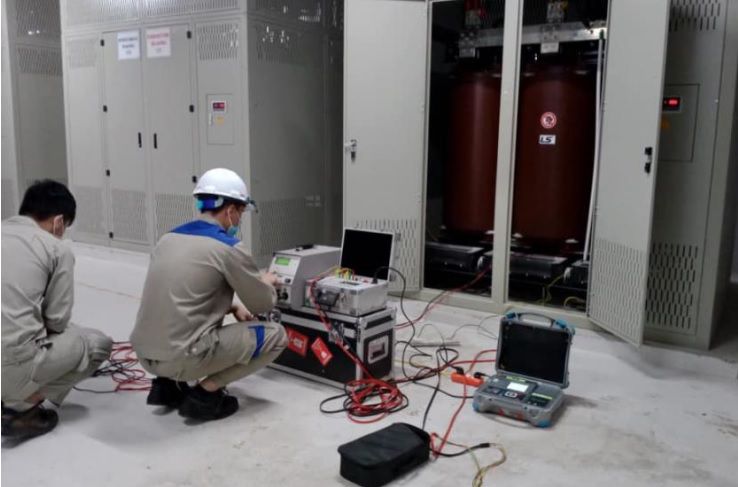
In addition to Hipot testing, many procedures also require the measurement of insulation resistance (IR). Although these two tests are often performed sequentially, they serve distinct purposes: Hipot testing evaluates the ability to withstand high voltage over a short period, whereas insulation resistance measurement assesses the quality of the insulation by measuring the resistance between live parts and accessible metal components.
This is why many modern testing units integrate AC Hipot, DC Hipot, and insulation resistance measurement capabilities into a single device. This design approach reduces testing time, minimizes the need to switch between instruments, and ensures that all data is stored within a unified system.
In the high-end segment, Associated Research (an IKONIX brand) is recognized as one of the longest-standing brands in the field of electrical safety testing. The company invented the world's first commercial Hipot tester and continues to develop comprehensive product lines including the Hypot, HypotULTRA, and HypotMAX series designed for applications ranging from production lines to research laboratories. To learn more about the specific differences between these models, please refer to ARI's article: Distinguishing Between Hypot, HypotULTRA, and HypotMAX.
Which equipment is suitable for your factory?
For businesses seeking a stable, easy-to-deploy solution for production lines at a reasonable investment cost, the GW Instek GPT-9000 Series is a widely popular choice. These units fully support AC Hipot, DC Hipot, and insulation resistance tests, feature an intuitive interface, and effectively meet high-volume testing demands in production environments.
Many businesses often wonder whether to choose equipment from Associated Research or GW Instek. The answer depends on production scale, data management requirements, and the level of automation on the production line. These factors will be analyzed in greater detail at the end of this article, following a review of the remaining test types.
Check the earth resistance
Grounding resistance is consistently regarded as a critical parameter directly influencing the protective capability of electrical equipment during an electrical leakage fault. Any generated current must be conducted via the PE wire to the ground through a sufficiently low-impedance path rather than remaining on the metal casing where a user might come into contact with it.
Consequently, numerous technical standards applicable to electrical equipment including those referenced in QCVN 25:2025/BKHCN as well as various international standards mandate the assessment of grounding resistance prior to product acceptance or factory release.
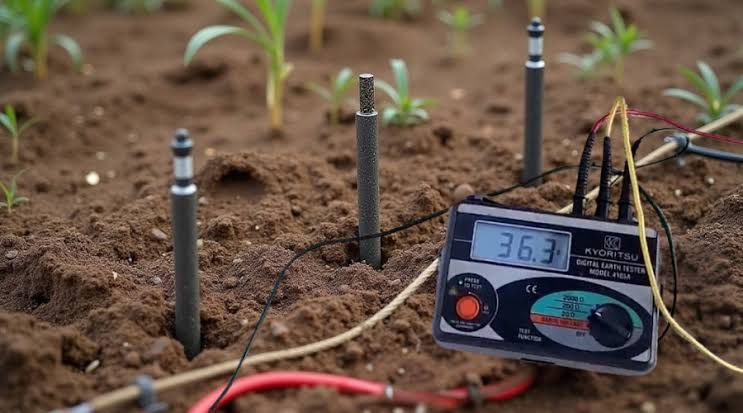
The Ground Bond Test is performed by passing a high current through the grounding path for a short duration and subsequently measuring the resistance of the entire path. The test results reflect the quality of connections, conductors, fastening points, and the equipment's internal protection system as a whole.
Even a single loose contact, an oxidized surface, or a conductor cross-section that fails to meet specifications can cause a significant increase in resistance. While the device may continue to operate normally, its ability to shunt leakage current to the ground is compromised, thereby increasing safety risks in the event of a fault.
Many enterprises currently opt for Associated Research models featuring integrated Ground Bond testing—with test currents of up to 30 A or 40 A to meet testing requirements across a wide range of industrial products. For applications requiring simultaneous Hipot, IR, and Ground Bond testing within a single cycle, the Ainuo AN9632X(F) is a popular choice among factories due to its ability to integrate multiple tests into one unit.
Measure leakage current
Leakage current occurs only when a device is powered and operating under normal conditions. Although the magnitude is typically very low, it must be monitored closely due to its direct impact on user safety and compliance with technical standards.
Leakage current testing simulates actual operating conditions to measure the current flowing from live parts to the device's enclosure or other accessible points.
Measurements exceeding permissible limits often stem from degraded insulation quality, poor circuit layout, or component aging following production.
For sectors with stringent requirements such as medical equipment, industrial electronics, and testing laboratories the LINECHEK II from Associated Research (ARI) is recognized as a highly stable, specialized instrument for leakage current measurement.
What criteria must electrical safety testing equipment meet?
Generating test voltages or measuring leakage current represents only one part of the electrical safety assessment process; measurement results are valid only when the equipment has undergone periodic calibration and all test data is traceable for inspections or quality assessments. Such requirements are increasingly common in internal audits, customer assessments, and audits conducted by certification bodies.
Modern testing systems typically allow for the storage of all test parameters linked to specific product codes, timestamps, and operators. This greatly simplifies subsequent data reconciliation, particularly for high-volume production lines.
Beyond data storage capabilities, many factories also prioritize safety-enhancing technologies during the testing process. Two features frequently highlighted in Associated Research equipment are SmartGFI® and Arc Detection.
SmartGFI® facilitates rapid power cutoff upon detecting abnormal conditions during testing, while Arc Detection monitors for arcing phenomena to halt the test immediately if irregularities arise. These two technologies enhance measurement stability while minimizing potential risks during the testing process.
To learn more about the development of these technologies and why Associated Research is regarded as a leading brand in the electrical safety testing industry, please refer to the article: Why Associated Research Is Considered an Icon of Hipot Technology.
EMIN specializes in providing current electrical safety testing solutions
EMIN distributes a comprehensive range of electrical safety testing solutions from various international brands, including Associated Research, GW Instek, Ainuo, and others. The product portfolio covers everything from Hipot, insulation resistance, Ground Bond, and leakage current tests to integrated testing systems designed for automated production lines.
Beyond equipment selection, EMIN’s team of engineers assists businesses in configuring systems tailored to specific testing processes and provides consultation on solutions that meet QCVN, IEC, or other relevant standards, while also offering calibration and technical support throughout the product's lifecycle.