This simple yet profound knowledge applies when the voltage at the beginning and end of a power line is no longer equal. The further electricity travels, the more the voltage can decrease, reducing losses along the conductor.
For household electrical systems, solar power systems, or factory electrical networks, a thorough understanding and application of this knowledge can help avoid many operational problems and significantly save electricity.
What is hypotension?
Voltage drop is the phenomenon where the voltage at the end of a power line is lower than the voltage at the power source.

When current flows through a conductor, some of the energy is dissipated due to the resistance of the wire. This energy is converted into heat, causing the voltage at the end of the line to decrease.
A simple example in a household:
The electrical outlet near the control panel might provide 220V, but when you run a long power cord to supply a garden pump, the voltage reaching the device might drop to around 210V or even lower.
That difference is known as voltage drop.
Signs that the power system is experiencing a voltage drop.
Voltage drops aren't always immediately noticeable. However, during electricity use, there are a few clear signs:
- Dim or flickering lights: This is the most obvious sign. When the voltage is low, light bulbs will be dim or flicker.
- Weak electrical appliances: Pumps, electric fans, or other motorized devices often rotate slower when the voltage is insufficient.
- Electronic devices display voltage errors: Some solar inverters or power supplies will display a low voltage warning when a voltage drop occurs.
- Devices run hotter than usual: When the voltage drops, devices may have to draw more current to compensate, causing the temperature to rise.
Reasons for voltage drop
In practice, voltage drops often stem from a few fairly common causes.
Excessively long power lines: The longer the conductor, the greater the resistance. When current travels a long distance, more energy is lost and the voltage at the end of the line drops.
This is very common when supplying power to factories or extending power to distant areas within a house.
Insufficient conductor cross-section: If the wire core is too small for the load capacity, the current flowing through it will cause significant losses. This is a fairly common problem in older electrical systems or when users add extra equipment themselves.
Increased electrical load: When many devices operate simultaneously, the total current increases. This causes the voltage on the line to drop more sharply than when the load is low.
Poor electrical connections: Loose, oxidized, or poorly connected wire connections also create additional resistance, causing a voltage drop during transmission.
Formula for calculating voltage drop on a power line
In basic electrical calculations, voltage drop is usually determined based on Ohm's law.
The simple formula is as follows:
V = I × R
Where:
- V is the voltage drop across the line
- I is the current flowing through the wire
- R is the resistance of the conductor
The resistance of the wire depends on the wire length, the conductive material, and the cross-sectional area of the core.
Therefore, the longer or thinner the wire, the greater the voltage drop.
How to check for voltage drop in an electrical system
The simplest way to identify voltage drop is to measure the voltage at two different points along the line.
For example:
Measure the voltage at the main switchboard.
Measure the voltage at the equipment at the end of the line.
If the voltage difference is too large, the system is experiencing voltage drop.
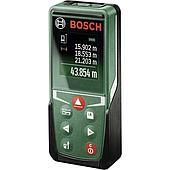
Some common voltage meters that technicians often use for quick voltage checks include:
Hioki DT4256 Digital Multimeter
Kyoritsu 1012 Digital Multimeter
These meters can measure AC and DC voltage quite quickly, making them suitable for checking voltage at multiple points in a system.
How to fix voltage drop
Depending on the situation, several simple methods can be applied to reduce voltage drop.
- Use wires with a larger cross-sectional area
This is the most effective method. Larger conductors will reduce resistance and limit voltage loss.
- Shorten the power line
If possible, repositioning the power supply closer to the equipment will significantly reduce voltage drop.
- Check the connections
Loose or oxidized connections should be tightened or replaced to ensure good contact.
- Use a voltage stabilizer when necessary.
In areas with weak power grids, installing a voltage stabilizer can help appliances operate more stably.
Conclude
Voltage drop is a fairly common phenomenon in electrical systems, especially with long power lines or heavy loads. While it cannot be completely eliminated, selecting appropriate conductors, conducting regular electrical system inspections, and measuring voltage at critical points can significantly reduce this problem.
In many cases, simply measuring the voltage with a multimeter and comparing it between the source and the end of the line is sufficient to detect voltage drop and address it promptly.