The EV Boom in Vietnam Drives Stanley Torque Wrench Demand
Electric vehicles are dominating the streets of Vietnam in 2026, especially compact models designed for narrow alleys. With leaders like VinFast surpassing sales of 147,000 units in late 2025, the focus has shifted heavily toward A00 segments and small, affordable SUVs.
Consequently, the demand for small Stanley torque wrenches has skyrocketed. Instead of heavy-duty tools, you only need a torque range of 20 - 200 Nm to handle delicate bolts on batteries and EV frames. A small Stanley torque wrench fits perfectly, saving time and preventing damage to sensitive electronic components.

Why Small Stanley Torque Wrenches are the Perfect Match for EVs
Small Stanley torque wrenches have made a strong comeback due to high precision and ergonomic design. Take the STANLEY 73-589 Adjustable Torque Wrench (1/2"; 20-100 Nm): at just 409 mm long and lightweight, it features a dual Nm/ft-lb scale with ±4% accuracy. The adjustment knob is easy to turn, and the distinct "click" signals when the target torque is reached - ideal for tightening EV bolts.
Following that, the STANLEY 73-590 (40-200 Nm, 1/2”) stands out with its 48-tooth ratchet, offering a slim 5° swing arc and a compact 519 mm length. In tight garages in Hanoi or Ho Chi Minh City, you can comfortably maneuver the handle into small EV engines without obstruction. The ±4% accuracy helps avoid over-tightening, protecting fragile composite bolts found on modern EVs.
In terms of durability, Stanley torque wrenches can withstand a 20% overload without losing calibration - consistent with torque tool research from industry leaders like Wiha. For the Toyota hybrid models becoming popular in 2026, applying a safe torque of 50-150 Nm reduces the risk of battery-related fire hazards.
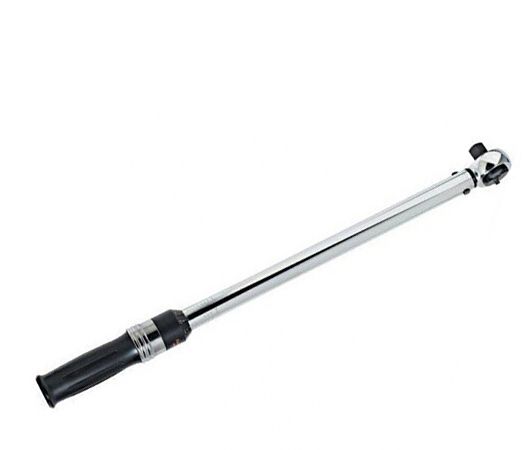
Moreover, the non-slip rubber grip and durable Cr-Mo square drive make the Stanley torque wrench superior to others in its class. Professional mechanics praise them for being easy to calibrate, extending their service life to 50,000 cycles.
Furthermore, the eMobility trend emphasizes compact tools for EV motor repairs, such as 5-25 Nm wrenches. The Stanley 73-589 fits this niche perfectly, allowing you to change EV tires yourself without needing a large-scale workshop.
Finally, an affordable price point of approximately 5-7 million VND makes Stanley torque wrenches accessible to amateur enthusiasts. It is a one-time investment that serves long-term needs, including the booming electric motorbike market.
Operating Notes for Optimal Performance
When using a Stanley torque wrench, always check the "zero" setting before each use by turning the knob to the minimum value. With the 73-589, the 1 Nm graduation allows you to set exactly 30 Nm for small VinFast wheel bolts. Avoid applying excessive force beyond the click to maintain long-term accuracy.
Next, store the tool in a dry place and avoid impacts to the clicking head. Clean off grease after use and calibrate annually according to ASME B107.14 standards - especially critical for sensitive EVs.
Additionally, when using short extension bars in tight spaces, be aware of a potential 10% torque loss. With the Stanley 73-590, always tighten clockwise first and stop immediately upon hearing the clear "click" sound.
Finally, wear anti-static gloves when working on EVs to prevent battery damage. A small Stanley torque wrench ensures smooth operation, but always log your torque values for vehicle warranty purposes. Correct application ensures your Stanley torque wrench will be a reliable companion through thousands of repairs.