OWON Tablet Oscilloscope in Volkswagen PASSAT B7 Maintenance
In automotive maintenance, many vehicle control units communicate through field-bus systems. For the Volkswagen PASSAT B7 example discussed here, the communication network includes two CAN field-buses: CAN DRIVE and CAN CONFORT. In addition, communication between control units and sensors or actuators also uses the LIN field-bus.
This article focuses on CAN CONFORT waveform measurement. It follows the same general diagnostic direction as the earlier CAN DRIVE example and shows how a tablet oscilloscope can help observe the signal behavior of the comfort-bus circuit.
Where the measurement is taken
The measurement point is set at the driver-side auto door control unit. From there, the captured waveform can be observed on the TAO3104A display. The article also notes the sleep status of the CAN_L field-bus during measurement.
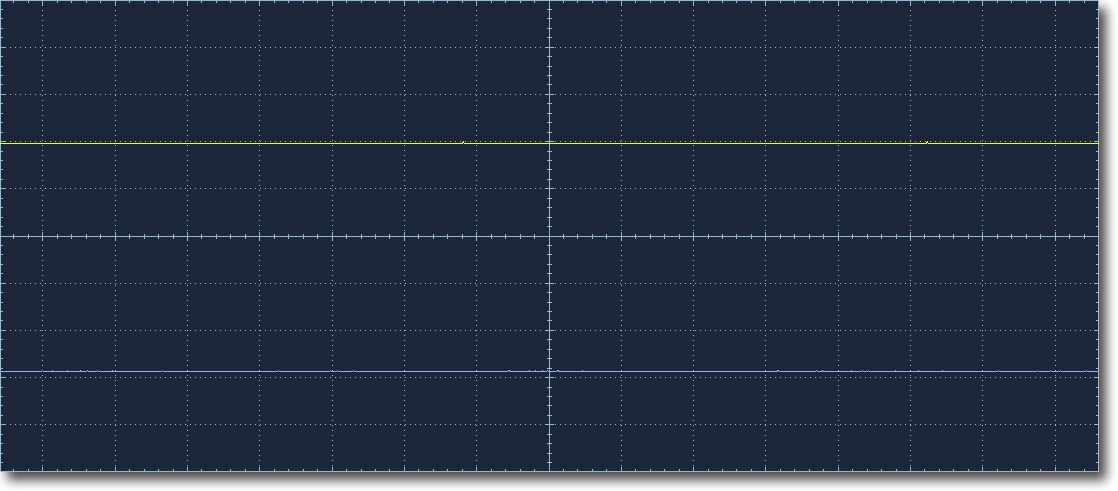
Waveform notes from the PASSAT B7 example
The source content highlights several observations from the displayed waveform. When CAN_H jumps from 0V to 3.9V, the average voltage reads 0.9V. When CAN_L drops from 5V to 1.14V, the average voltage reads 4.1V. The article also notes that CAN_L may work by single-bus.
During sleep status, CAN_H stays at 0V while CAN_L remains at 11V. The original note also recommends pulling out the ignition key after the measurement is completed.
Why the TAO3000 series is suitable for this kind of work
The TAO3000 series tablet oscilloscope is presented as a tool for detailed waveform observation and small-signal measurement. The source describes the 4-channel TAO3000 series with bandwidth up to 120MHz, a maximum real-time sampling rate of 1GSa/s, 14-bit vertical resolution, a record length of 40M, and a waveform refreshing rate of 75,000 wfms/s.
These features are positioned to help users capture low-level signal changes, longer signal segments, and short abnormal events more clearly. The article also mentions low base noise, miscellaneous triggering and decoding functions, SCPI and LabVIEW support, and an 8-inch 800 x 600 multi-point touch screen.
For car maintenance testing, the product's multiple trigger modes are especially relevant. According to the source, the TAO3000 series supports Edge, Video, Pulse, Slope, Runt, Windows, Timeout, I2C, SPI, RS232/UART, CAN, and Nth Edge triggers. Serial bus coding is available for I2C, SPI, RS232/UART, and CAN.
Convenience features for diagnostic workflows
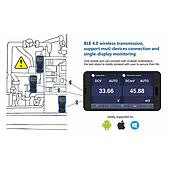
The source also highlights built-in Wi-Fi on the TAO3000 series. This allows a user to connect through a mobile device, view the same screen, control the oscilloscope, store waveform data, and view it through the app. The text presents this as a practical way to support collaborative analysis.
In addition, the 2-channel TAO3000 series is described as a 2-in-1 device that combines a DSO and a multimeter. The built-in 4½-digit multimeter appears on the same screen as the oscilloscope, and its data logging function can record data over a long period and export it to a CSV file.
Takeaway for automotive technicians
From this PASSAT B7 maintenance example, the main value of the OWON tablet oscilloscope is its ability to help technicians observe CAN CONFORT signals, compare waveform states, and work more conveniently in field diagnostics. The combination of waveform capture, trigger options, touch operation, and multimeter functions makes the TAO3000 series a practical tool for automotive electrical testing.
For maintenance work involving CAN and LIN communication, the ability to see signal detail clearly and record data efficiently can improve the diagnostic process. The article therefore presents the OWON tablet oscilloscope as a useful instrument for vehicle network testing in service environments.