Do you know why in a blood test, components such as plasma and blood cells can be clearly separated? That is thanks to the centrifuge that separates the mixture based on the difference in density. When spinning at high speed, the centrifugal force will push the heavier components to the outside, while the lighter components will concentrate in the center. Thanks to this principle, centrifuges are widely used in medicine, biology, chemistry and many other fields.
Centrifuge Operation Method in Laboratory
Check centrifuge tube before use
Before starting, it is necessary to carefully check the centrifuge tubes. Tubes with signs of cracks should be removed immediately, because when the machine operates at high speed, the centrifugal force can cause the tube to break, causing the sample to spread out, causing cross-contamination between samples, which can affect the safety of the operator.
Centrifuge operation steps, we have 4 steps
Step 1: Prepare the sample before starting the machine. The sample should be loaded into the centrifuge tube with a capacity of about ⅔ to ensure optimal separation performance. Then, tighten the tube cap and place it in the rotor in the centrifuge chamber, ensuring that the tubes are symmetrically placed and balanced in weight.
Step 2: Close the machine lid firmly, when you hear a "click" sound, it is a sign that the lid is securely locked.
Step 3: Set the appropriate working mode. The centrifugation process has two most important parameters: speed and time. These parameters need to be set at the beginning and can be adjusted during operation if necessary.
Step 4: Start the machine, gradually increase the motor speed to the desired value and monitor the operation to ensure stable operation.
Stop the centrifuge properly
To ensure safety and keep the device running durably, stopping the centrifuge also needs to be done correctly.
Step 1: When the machine finishes operating time, the meter will automatically turn off the power. At this time, the motor is still rotating by inertia, so it is necessary to use the brake to stop completely.
Step 2: Press the switch to open the machine cover, wait for the indicator light to turn on, then carefully open the cover by hand.
Step 3: Turn off the power, check all switches before removing the sample from the machine. After collecting the sample, close the machine cover to protect the equipment and ensure the working environment is always neat and safe.

Basic requirements for centrifuge quality
Laboratory centrifuge is indispensable equipment serving many purposes such as cell analysis, plasma separation, DNA separation, etc. To ensure stable and accurate operation, the machine needs to meet the following important quality standards:
High speed and flexible adjustment for each type of test or different centrifugation process.
Control working time, helping the operator to set up according to each specific requirement.
Equipped with a measuring and indicating system, helping to monitor the operating status of the machine during operation.
Smooth operation, no vibration, ensuring sample accuracy and the ability to stop the motor immediately when necessary.
RPM vs. RCF: Which Parameter Determines Separation Performance ?
When operating a centrifuge, RPM is the parameter typically set directly on the instrument. When transferring a centrifugation procedure from one centrifuge to another, however, it is better to compare RCF rather than simply keeping the same RPM. This helps ensure that the centrifugation conditions between the two instruments are more comparable.
RPM Indicates Rotor Speed
RPM (revolutions per minute) indicates how fast the centrifuge rotor is spinning.
RCF (×g), or Relative Centrifugal Force, indicates the centrifugal force acting on the sample. RCF depends on both the rotational speed and the rotor radius.
Therefore, two centrifuges operating at the same 5,000 rpm can generate different centrifugal forces if they use rotors with different radii.
The formula for calculating RCF is:
RCF = 1.118 × 10⁻⁵ × r × RPM²
Where r is the rotor radius in centimeters (cm).
Rotor Design Directly Affects Separation Results
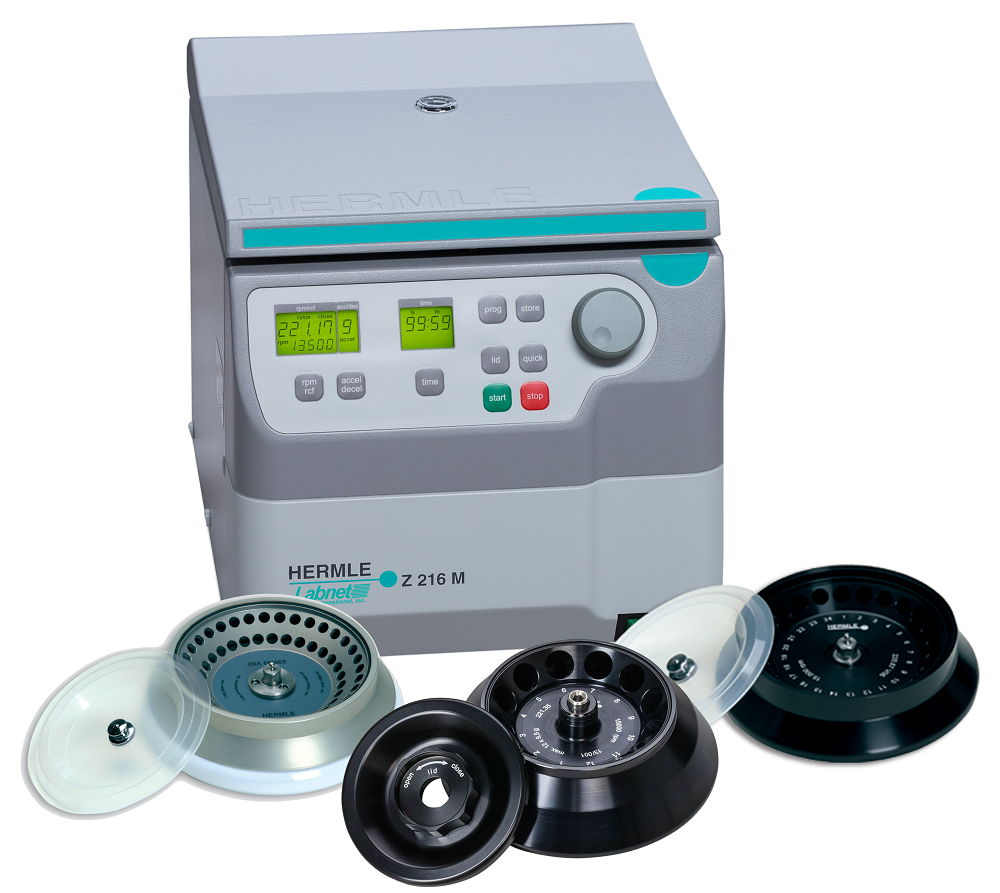
Even on the same centrifuge, changing the rotor can change the centrifugation conditions. Fixed-angle rotors, swing-out rotors, and specialized rotors produce different separation conditions.
Each rotor also has its own maximum RPM and RCF limits. The maximum speed of the centrifuge itself cannot be applied to every rotor. The tubes, adapters, and tube capacity must also be compatible with the rotor being used.
At the same RPM, a larger rotor radius produces a higher RCF. This is why the centrifugation parameters should be reviewed whenever the rotor is changed.
Different rotor configurations allow a centrifuge to be adapted to different sample types and separation requirements. When selecting or replacing a rotor, users should check its maximum RPM, maximum RCF, compatible tube types, and capacity to ensure that the centrifugation protocol can be performed safely and correctly.
Frequently Asked Questions About Centrifuges
Does a higher RPM always provide better separation ?
Not necessarily. Separation efficiency depends on RCF, centrifugation time, sample characteristics, and rotor type. Increasing RPM beyond the required level can place additional stress on the rotor and sample tubes without necessarily improving separation.
Can the same RPM be used when changing the rotor ?
No. The centrifugal force generated can change when the rotor is replaced. The RCF should be recalculated, and the RPM limits of the new rotor should be checked before running the procedure.
Can any type of tube be used in a centrifuge ?
No. The tubes must be compatible with the rotor and rated to withstand the RCF generated by the centrifugation program. Some tubes also have different operating limits depending on temperature, solvents, and centrifugation time.
Why must centrifuge tubes be balanced before centrifugation ?
A rotor spins at high speed, so even a small difference in tube mass can generate significant imbalance forces. Proper balancing helps reduce vibration, minimize stress on the drive shaft, and protect the rotor from damage.
Does the centrifugation program need to be changed when replacing the rotor ?
It should be checked. A new rotor may have a different radius, maximum RPM, and maximum RCF than the rotor currently in use. If the procedure is based on RCF, the required RPM can be recalculated for the new rotor to achieve the specified centrifugal force.
Does a centrifuge need temperature control ?
It depends on the sample and the procedure. Temperature-sensitive samples such as proteins, cells, and other biological materials, as well as procedures requiring stable temperature conditions, may require a refrigerated centrifuge.
For routine samples that are not particularly sensitive to temperature, a non-refrigerated centrifuge may be sufficient.