GT-C09 Button Snap Pull Strength Tester is an important part of garment quality control because buttons, push-buttons, and other fixed accessories must remain securely attached during normal handling and use. When an accessory detaches, it can affect the appearance and function of a garment. For infant and children’s garments in particular, loose small components can create an additional safety concern. A structured pull test helps manufacturers examine the attachment strength of these components before garments move further through production or release.
What is snap button testing ?
Snap button testing is a tensile evaluation for accessories attached to fabric. It is commonly used for buttons, snaps, push-buttons, and similar fixed ornaments on garments. The purpose is to determine whether an accessory stays in place when a controlled force is applied, or whether it comes off or is damaged.
A snap button tester, also called a button pull test machine or snap button pull tester, is designed to support this type of assessment. The test focuses on the connection between the accessory and the garment material rather than on visual inspection alone. An accessory may look correctly installed but still have insufficient fastening strength, so a pull test provides a more direct way to check the attachment.
Why garment manufacturers use button pull testing
Garment production involves multiple variables that can influence how securely an accessory is fixed. Fabric type, accessory design, installation method, and the condition of the finished attachment can all affect the result. Snap button testing gives quality teams a repeatable process for checking whether a button or other component remains attached under a specified pulling action.
The test is particularly relevant where garments contain many attached components or where a detached part would be unacceptable. By evaluating buttons and fixed accessories as part of inspection, manufacturers can identify attachment issues before the product reaches later stages of handling. This supports a more consistent approach to garment accessory testing and helps teams document how a sample responded to the applied force.
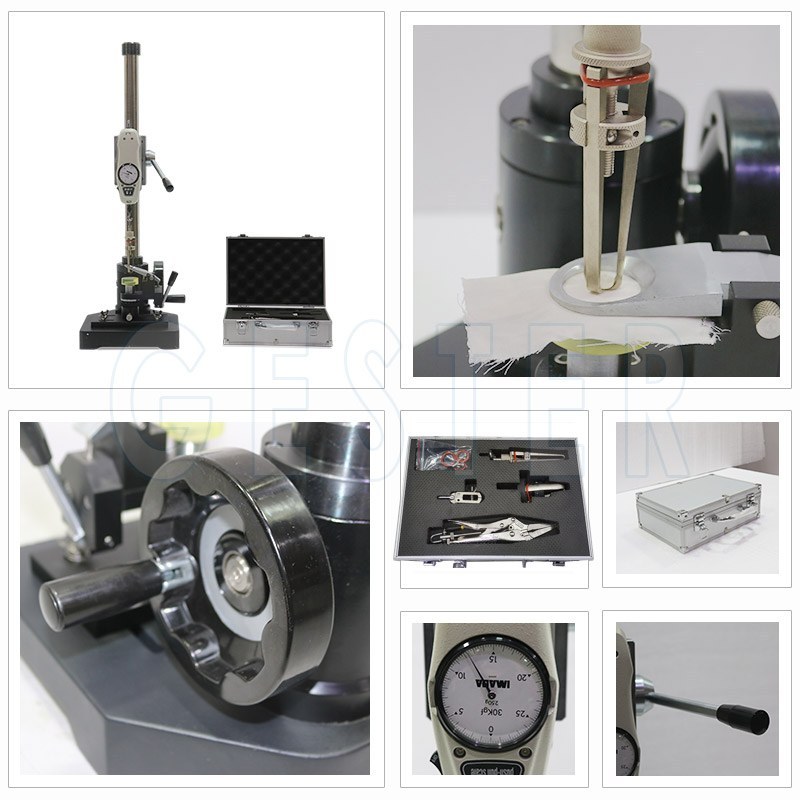
How a snap button pull tester works
A snap button pull tester is a portable tensile testing device used to carry out a vertical pull test. The garment sample is held in a lower grip, while a suitable upper grip is selected for the accessory being assessed. The accessory is clamped, and force is applied through the gauge arrangement. The operator then observes whether the accessory remains attached, becomes damaged, or pulls away from the fabric.
This setup allows the sample to be held while the pulling action is directed at the attached component. A high-precision gauge is used to indicate the applied force. The equipment described for this application may also include a standard weight for regular checking of the tester’s condition. The exact gripping arrangement should suit the type and shape of the button, snap, or ornament so that the test addresses the actual attachment point.
Two practical test approaches
One approach applies a selected force for a defined period and then checks the condition of the accessory and garment. The result is evaluated by observing whether the component has detached or suffered damage. This approach is useful when an inspection procedure calls for a controlled force and holding time.
A second approach pulls the ornament until it comes off and records the pull-off force. This method provides a direct indication of the force associated with detachment. In either case, the testing process should follow the applicable internal procedure or relevant requirement for the garment being evaluated.
Building snap button testing into quality control
For useful results, testing should be performed on representative garment samples and on the accessory types used in the product. Inspectors should confirm that the sample is positioned securely, the selected grip fits the accessory, and the test result is recorded clearly. Notes can include the accessory type, sample condition, applied test approach, observed damage, and whether the component remained fixed.
Snap button tester does not replace careful accessory installation, but it is a practical verification step. Used alongside visual checks and controlled production practices, a button pull test machine helps manufacturers assess button attachment strength and make more informed quality decisions. The central objective is straightforward: verify that fixed garment accessories are attached suitably for their intended use and identify potential detachment issues early.