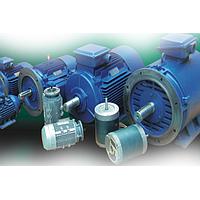
Pump Motor
Reliable pump performance starts with the right drive. In industrial systems, the motor does more than simply turn an impeller—it affects starting behavior, energy use, operating stability, and how well the pump handles continuous duty in demanding environments. For buyers, maintenance teams, and project engineers, selecting a suitable Pump Motor means looking at the complete operating context rather than only matching power ratings.
This category focuses on motors used to drive pump systems across industrial and utility applications. Whether the requirement is a low-voltage solution for general pumping duties or a high-voltage motor for larger installations, the right choice depends on load profile, installation method, protection level, and the operating environment around the pump package.
Where pump motors fit in industrial pumping systems
A pump motor is the prime mover that converts electrical energy into mechanical rotation for the pump. In practice, motor selection is closely tied to the pump type, starting method, and site conditions. A mismatch can lead to excessive current draw, unstable starts, overheating, or inefficient operation under real process loads.
In many installations, the motor is selected alongside the pump and its control strategy. For example, systems paired with a pump control panel may require attention to starting mode, protection coordination, and compatibility with frequency conversion. This is especially important where pumps operate continuously, cycle frequently, or must respond to changing process demand.
Common selection factors for pump motor applications
Choosing a motor for pump duty usually starts with the mechanical load, but it should not end there. Engineers often review rated power, voltage class, frame size, pole configuration, insulation class, and enclosure protection together, because these factors influence both installation and long-term reliability.
For industrial use, operating conditions matter just as much as electrical data. Ambient temperature, site altitude, dust or moisture exposure, and the required duty cycle all affect suitability. In pump rooms, water treatment plants, process lines, and utility systems, an appropriate protection grade and cooling arrangement can help support stable operation over extended service periods.
Low-voltage and high-voltage pump motor options
Different pump systems call for different motor classes. For general industrial duties, transfer pumps, circulation systems, and many packaged skids, a low-voltage motor is often the practical choice because it integrates easily into standard power distribution and common starting arrangements.
A representative example in this category is the Bangpu YE3 Low voltage motor (0.75-375KW). Its power range makes it relevant for a wide span of pump applications, from smaller utility services to larger process duties. Features such as IP55 protection, F-class insulation, continuous S1 duty, and support for direct, Y/△, step-down, or frequency conversion starting are all meaningful in pump-driven systems where operating flexibility is important.
For larger pumping stations or heavy-duty industrial facilities, high-voltage motors become more relevant. The Bangpu YKK High voltage motor (160-2500KW) illustrates the type of motor used where higher power demand and medium-voltage infrastructure are already part of the project. In these cases, buyers typically evaluate voltage level, insulation system, enclosure rating, and mounting arrangement as part of the overall pump train design.
Why starting method matters in pump motor selection
Pumps do not all start under the same conditions. Some applications can use direct-on-line starting without difficulty, while others benefit from reduced inrush current, smoother acceleration, or variable speed control. The correct approach depends on motor size, supply network capacity, hydraulic behavior, and how sensitive the process is to pressure changes during start-up.
Where a system must reduce mechanical stress or adapt to variable flow demand, frequency conversion can be particularly useful. It may improve controllability and support more efficient operation in applications where throttling would otherwise waste energy. By contrast, fixed-speed operation may remain fully appropriate for steady-duty pumps with consistent operating points.
Application context across different pump systems
Pump motors are used in a wide variety of services, and the application strongly influences the motor specification. In process industries, motor choice may be shaped by the requirements of a chemical process pump, where operating continuity and environmental conditions are important. In building services or emergency systems, motor characteristics may need to align with reliability expectations and site-specific standards.
Likewise, pumps for firefighting, construction dewatering, utility water transfer, and gas-related support systems each create different operating demands. That is why pump motor selection is rarely a one-line specification exercise. It is usually part of a broader decision that includes the driven equipment, controls, installation constraints, and maintenance strategy over the equipment lifecycle.
Brand context and product range
This category includes solutions from Bangpu, a manufacturer represented here with both low-voltage and high-voltage motor options relevant to pump applications. The available examples show coverage from smaller general-purpose duties up to large industrial power ranges, which is useful when project scope spans multiple pump packages within one facility.
Rather than focusing only on a brand name, buyers should review how a given motor fits the real operating profile: required output, voltage supply, enclosure needs, mounting arrangement, and starting method. This approach helps create a more reliable match between motor and pump while reducing avoidable issues during commissioning and operation.
Practical buying considerations for B2B sourcing
For procurement teams and system integrators, a pump motor should be evaluated as part of the complete equipment package. Confirming electrical compatibility is only the first step. It is also useful to check installation space, frame and mounting requirements, site environment, and whether the motor will operate with a variable frequency drive or another defined starting method.
When comparing options, focus on the data that affects deployment and service life: duty type, cooling method, insulation class, ingress protection, and power range. A well-matched motor can support smoother commissioning, more predictable maintenance planning, and better alignment with the pump’s intended operating point over time.
Finding the right pump motor for your system
The most suitable pump motor is the one that fits the application as a whole, not just the nameplate target. Low-voltage and high-voltage designs each have their place, and the decision should reflect process demand, electrical infrastructure, environmental conditions, and control strategy.
If you are sourcing motors for new pump installations or replacement projects, this category provides a practical starting point for comparing industrial motor options used in pumping systems. Reviewing the motor together with the pump type, control method, and site conditions will usually lead to a more dependable and efficient result.
直接联系认证专家