Understanding the Color Temperature Chart to Choose Suitable Lights
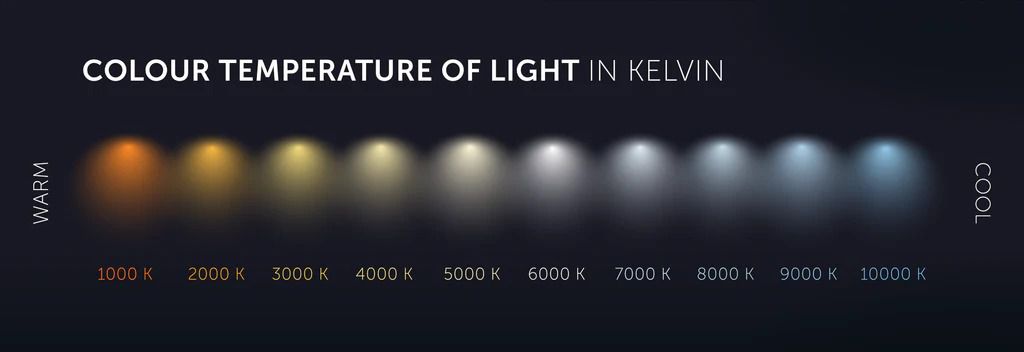
The color temperature chart is a simple yet extremely useful tool that measures light color in Kelvin (K). You will see ranges from a warm 2700K to a cool 6500K. Thanks to this chart, choosing lights becomes easy, avoiding the mistake of buying types that make a space look gloomy or glaring.
First, grasp the basic levels in the color temperature chart. Light at 2700K–3000K has a warm yellow tone, like a burning candle. Meanwhile, 5000K–6500K is blue-white like noon sunlight. You just need to look at it to know immediately which light fits your intended use.
For example, when buying LED lights, check the Kelvin specification on the packaging against the color temperature chart. This helps you visualize the exact color before installation. It’s that simple, yet many people overlook it and regret it later.
Furthermore, the color temperature chart relates to CRI (Color Rendering Index). A high CRI (>90) combined with the appropriate Kelvin will reproduce colors authentically. From there, you can choose quality lights that don't distort the color of walls or furniture.
Practical Applications for Each Area in the House
Bedroom: Warm 2700K–3000K
For the bedroom, use 2700K–3000K from the color temperature chart to stimulate melatonin for easier sleep. Installing a 2700K LED at the bedside creates a cozy evening atmosphere. Combine with a dimmer to keep levels warm and avoid eye strain.
Living Room: Balanced 3000K–4000K
Select 3000K–4000K on the color temperature chart for the living room; an ivory white creates a spacious and friendly feel. 3500K downlights make interiors vivid and are safe for young children.
Kitchen/Dining Room: Neutral 4000K
The kitchen needs 4000K according to the color temperature chart to distinguish food clearly. The Tsubosaka TSLS-Type 110 tube light (4000K, 1100 lumens, 2367mm long) is ideal for kitchen counters, with high CRI reproducing authentic colors.
Office: Alert 5000K–6500K
Offices use 5000K–6500K from the color temperature chart to increase focus like daylight. The Tsubosaka TSLS-Type 110 at 5000K supports long tables without glare. Use only during the day; switch to warm light at night.
Bathroom: Fresh 4000K–5000K
Choose 4000K–5000K according to the color temperature chart for the bathroom to ensure accurate makeup mirrors. A 4500K ring light with CRI >95 creates freshness, with IP65 durability like a spa.

What to Notice When Choosing Colors Based on the Color Temperature Chart
Choosing lights isn't just about looking at Kelvin but also many other factors. The color temperature chart is the foundation, but you need to check carefully to avoid poor-quality goods.
First, prioritize high CRI combined with the color temperature chart. A CRI below 80 distorts colors, especially with LED tube lights. Products like the Tsubosaka TSLS-Type 110 achieve high CRI, suitable for professional applications with high durability.
Next, check lumens and lifespan. A 1000-lumen light at 4000K is brighter than a weaker type with the same Kelvin. Always read the specs according to the label table.
Furthermore, choose a reputable brand with a warranty. Test lights in-store to see if the color matches the color temperature chart. Avoid buying online without seeing clear specs.
Finally, consider smart lights that adjust Kelvin. From the color temperature chart, you can switch between warm and cool via an app, flexible for any space.
Additionally, pay attention to energy saving. LED lights with the correct color temperature consume less electricity but shine strongly. Choose types with energy certification for long-term sustainability.
In summary, the color temperature chart helps you choose reasonable lights for each area, from a warm bedroom to an alert office.