Benchtop Thermal Camera
When thermal inspection needs to be repeatable, stable, and easy to integrate into a test workstation, a benchtop thermal camera becomes a practical choice. Instead of relying on hand positioning for every measurement, this type of system is designed for fixed placement above the target, making it well suited to electronics testing, lab analysis, failure investigation, and quality control workflows.
For engineers and technical buyers, the value of a benchtop setup is not only image capture. It is the ability to inspect components, boards, and assemblies under consistent viewing conditions, compare temperature behavior between samples, and document results with less variation from operator to operator.

Where benchtop thermal cameras fit in a thermal imaging workflow
In many production, R&D, and service environments, handheld tools are useful for quick surveys, but fixed-position inspection is often better for close-up thermal analysis. A benchtop unit is typically used when the camera must remain steady over a PCB, component, or test sample while the operator powers the device, applies load conditions, or records temperature change over time.
This makes the category especially relevant for electronics labs, design validation, incoming inspection, and troubleshooting of localized heating. If the application requires a portable option for field checks or larger assets, a handheld thermal imaging camera may be more appropriate, while benchtop systems are better aligned with controlled bench environments.
Why a fixed bench setup improves measurement consistency
A key advantage of this category is repeatable thermal inspection. By mounting the camera at a known distance and angle, users can reduce variation caused by operator movement, framing changes, or inconsistent focus position. That is especially important when comparing multiple boards, checking hot spots on the same test point, or documenting pass/fail trends across a batch.
Bench-mounted thermal imaging is also useful when small targets are involved. In electronics testing, components and solder joints can produce highly localized heating, so stable positioning helps users analyze thermal distribution more reliably. This is often preferable to quick spot checks when decisions depend on trend comparison, temperature contrast, or repeatable image capture.
Typical applications in electronics, labs, and troubleshooting
Benchtop thermal cameras are commonly selected for PCB inspection, power electronics evaluation, connector heating checks, battery-related test work, and thermal behavior analysis during design verification. In these situations, users often need to observe how heat develops during operation rather than capture a single snapshot.
They are also useful for educational labs, repair benches, and engineering teams investigating failure mechanisms. A camera positioned above the sample allows both hands to remain free for probes, power supplies, or fixtures, which can make the workflow more efficient during test and debug. For permanent monitoring points in machines or production cells, a fixed thermal imaging camera may be a closer fit than a true bench analysis system.
What to look for when selecting a benchtop thermal camera
The right model depends on the size of the target, the temperature range of the application, and the level of detail required in the thermal image. Buyers often compare detector resolution, sensitivity, field of view, working distance, and how measurement data is exported to a PC for reporting or further analysis.
For electronics work, close-range imaging is often one of the most important factors. Small hot spots can be missed if the optical setup is not suitable for the target size. Measurement features such as spot reading, area analysis, emissivity adjustment, and radiometric image storage can also make a meaningful difference when results need to be reviewed later or shared across engineering teams.
Another consideration is how the camera fits into the bench itself. Some users need a simple standalone thermal imaging station, while others want compatibility with mounts, stands, or accessories for different viewing angles and test setups. In those cases, related options in thermal camera lenses and accessories can help extend the usability of the system.
Example product for electronics thermal testing
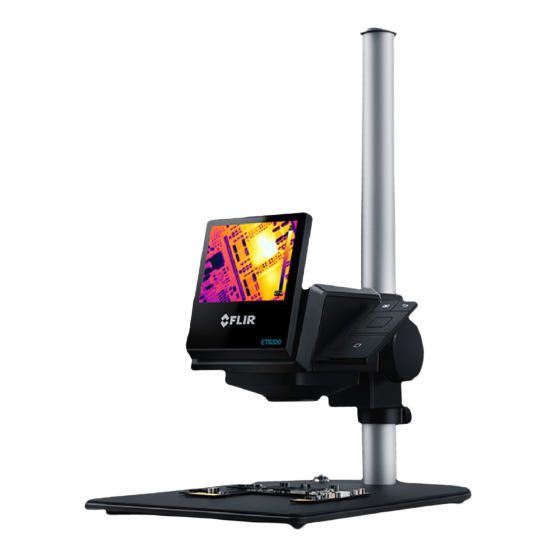
One representative solution in this category is the FLIR ETS320 Thermal Imaging System for Electronics Testing. Based on the provided product data, it is designed for bench use in electronics applications and offers a 320 x 240 thermal resolution with measurement capability up to 250°C.
This type of configuration is relevant when users need to examine temperature patterns on electronic assemblies under controlled conditions. Features such as radiometric image capture, USB connectivity, and analysis-oriented measurement functions support common bench workflows where images are reviewed on a computer, compared over time, or included in test documentation.
Why FLIR is often considered in this segment
Within this category, FLIR is a recognized manufacturer for thermal imaging applications across maintenance, testing, and measurement environments. For buyers building an inspection bench, the brand is often considered when consistent image quality, software-supported workflows, and application-specific thermal tools are part of the requirement.
That said, product selection should still be based on the actual task: target size, expected temperature range, reporting needs, mounting approach, and whether the camera will be used only at the bench or also in more mobile scenarios. The most suitable system is usually the one that fits the test method, not simply the one with the broadest general specifications.
How benchtop systems compare with other thermal camera categories
Benchtop models serve a narrower but very important role inside the wider thermal imaging ecosystem. They are optimized for structured test environments where stability and repeatability matter more than portability. This makes them different from mobile solutions used with phones or tablets, and also different from permanent industrial installations designed for process monitoring.
If your work involves quick movement between assets or large-area surveys, a different camera format may make more sense. If your workflow centers on component-level analysis, engineering validation, or routine thermal checks at a workstation, this category offers a more focused approach. In many organizations, benchtop, handheld, and fixed thermal systems are complementary rather than interchangeable.
Choosing the right setup for your bench
A good purchasing decision starts with the actual inspection task: what needs to be measured, how small the target is, how often tests are repeated, and what output is required for records or analysis. From there, it becomes easier to compare whether a benchtop thermal camera should be used as a standalone test tool, as part of a lab station, or alongside other thermal imaging categories.
For electronics inspection and close-range thermal analysis, this category is especially useful when consistency matters as much as the image itself. A well-matched benchtop system can support clearer troubleshooting, more repeatable test results, and a smoother workflow for engineering and quality teams.
直接联系认证专家