
Pen-type PC Oscilloscope
When bench space is limited or field troubleshooting needs a lighter setup, a USB-connected oscilloscope can be a practical alternative to larger standalone instruments. A Pen-type PC Oscilloscope is designed for users who want basic waveform analysis in a compact form while still benefiting from PC-based display, storage, and review.
In test, maintenance, education, and electronics development, this type of oscilloscope is often chosen for quick signal checks, portable measurement tasks, and simple waveform capture. It sits between larger bench instruments and fully mobile devices, making it useful where portability and software-based operation matter as much as measurement capability.
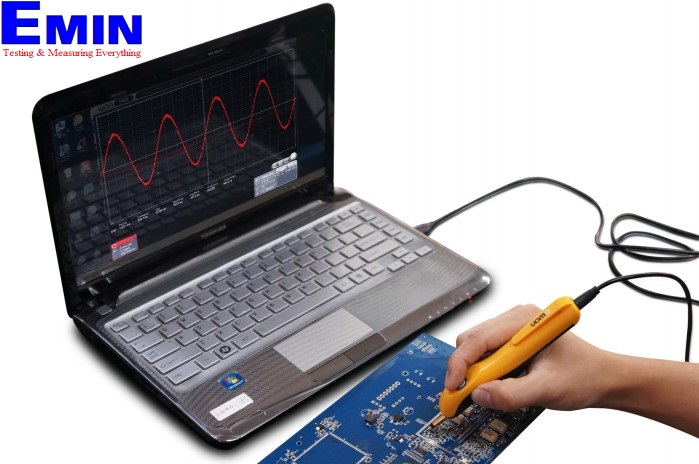
Where pen-type PC oscilloscopes fit in the measurement workflow
A pen-style unit typically connects directly to a computer through USB, using the PC screen as the main interface for waveform display and control. This approach reduces instrument size and can simplify data capture, especially when measurements need to be reviewed, documented, or shared after testing.
Compared with a traditional digital oscilloscope, a pen-type model is usually selected for convenience and portability rather than a full bench feature set. For engineers, technicians, and trainers, it can be a sensible option for routine signal observation, basic diagnostics, and compact workstation setups.
Typical applications for compact USB oscilloscopes
These instruments are commonly used in electronics labs, service environments, and production support tasks where quick measurements are more important than a large front panel or dedicated display. They can help users observe voltage changes over time, compare waveforms, and identify unstable or unexpected signal behavior during troubleshooting.
Common use cases include checking power-related waveforms, verifying control signals, observing simple communication timing, and supporting instructional demonstrations. In environments where engineers move between test points or work across multiple systems, a pen-type format can reduce setup effort and improve mobility.
What to consider when selecting a pen-type PC oscilloscope
The right choice depends on the signals you expect to measure and the working conditions around the instrument. Important factors usually include bandwidth, sample rate, input characteristics, time base range, software usability, and the physical size of the device.
Bandwidth affects how accurately the oscilloscope can display higher-frequency content, while sample rate influences the amount of waveform detail captured. Input impedance, coupling options such as DC, AC, and GND, and allowable input voltage also matter in day-to-day measurement work because they influence compatibility with the circuit under test and overall measurement reliability.
Another practical point is how the instrument will be used. If portability is the main requirement, a pen-shaped USB model may be a better fit than a larger PC oscilloscope format. If on-site operation without a laptop is more important, users may also compare this category with a handheld oscilloscope.
Example product in this category
One representative model is the OWON RDS1021 Oscilloscope from OWON. Based on the available product data, it offers 25 MHz bandwidth, a 100 MS/s sample rate, USB 2.0 connectivity, and a compact pen-style housing intended for portable measurement tasks.
Its specification set also indicates features such as selectable input coupling, standard input impedance options, and a broad time base range. In practical terms, this makes it suitable for users who need a lightweight instrument for waveform viewing, quick fault tracing, and basic educational or service applications without moving to a full-sized bench oscilloscope.
Benefits of PC-based operation
One of the main advantages of this category is the use of a computer as the operating platform. The larger screen can make waveform observation more comfortable, and software-based control often helps with screenshot capture, record keeping, and reviewing measurements after a test session.
For documentation-heavy environments, that workflow can be especially useful. Instead of manually transcribing results, users can keep measurement records directly on the connected computer, which supports reporting, collaboration, and traceability in engineering and maintenance processes.
How this category differs from other oscilloscope types
Pen-type USB models are generally chosen for compact measurement and straightforward setup. They are not intended to replace every bench instrument, but they can be very effective for routine signal checks and portable diagnostics where carrying a larger device is inconvenient.
Compared with analog models, PC-based units offer a digital workflow that is more compatible with modern recording and review needs. Compared with larger digital or standard PC scopes, the pen format emphasizes minimal footprint and mobility. This makes the category especially relevant for service engineers, training labs, and users who need a practical oscilloscope close at hand rather than a permanent bench installation.
Choosing with application in mind
Before selecting a unit, it helps to match the device to the signals, environment, and workflow you actually face. A compact USB oscilloscope is often a strong fit for low-to-medium complexity testing, mobile diagnostics, and educational use where easy transport and PC integration are clear advantages.
If your work involves broader channel requirements, more advanced analysis, or a dedicated front-panel interface, another oscilloscope category may be more suitable. For many day-to-day measurement tasks, however, pen-type PC oscilloscopes provide a balanced solution that combines portability, software convenience, and practical waveform visibility in one small device.
Get exclusive volume discounts, bulk pricing updates, and new product alerts delivered directly to your inbox.
By subscribing, you agree to our Terms of Service and Privacy Policy.
Direct access to our certified experts
