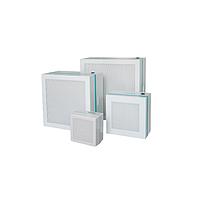
HEPA Filter Unit
Controlling airborne particles is a basic requirement in cleanrooms, localized clean zones, and many contamination-sensitive production areas. When a process needs cleaner air at the point of use rather than across an entire room, a HEPA Filter Unit is often the practical choice for creating stable, filtered airflow with compact installation and predictable performance.
On this page, you can explore HEPA filter units commonly used for clean manufacturing, electronics handling, assembly spaces, and other environments where particle control matters. The range includes compact and larger-format options from Airtech, making it easier to match airflow capacity, mounting size, and installation constraints to the actual workspace.
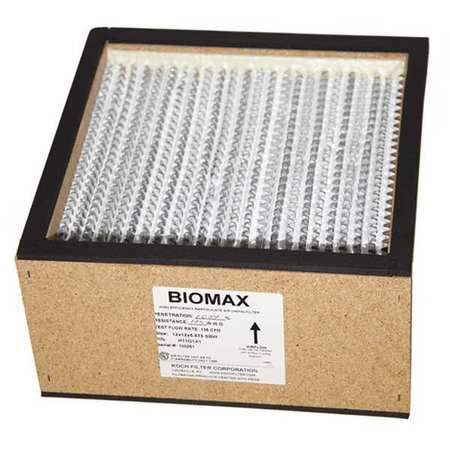
Where HEPA filter units fit in a clean environment
A HEPA filter unit is typically used to supply high-efficiency filtered air directly into a controlled area. Instead of treating the whole room in the same way, these units help create cleaner micro-environments above workstations, inside equipment, over process zones, or as part of ceiling-mounted cleanroom layouts.
This makes them useful in applications such as electronics assembly, precision component handling, inspection stations, packaging areas, and laboratory support spaces. In many setups, they are selected alongside related cleanroom equipment such as clean bench systems or installed as part of a broader airflow and contamination-control strategy.
How this category is typically used
Compared with large centralized air handling solutions, HEPA filter units are often chosen for localized deployment. They can support a cleaner working zone where product exposure is highest, helping reduce the movement of fine particles into sensitive processes without requiring a full redesign of the surrounding room.
They are also relevant when expanding an existing cleanroom, adding a controlled station to a production line, or improving airflow quality over a specific process. In facilities that already use personnel decontamination equipment such as an air shower, these units can serve a different but complementary role by maintaining cleaner air where the actual work takes place.
Key selection points before choosing a unit
The most important starting point is airflow requirement. Different installations need different air volumes depending on workspace size, target cleanliness, and how the unit will be mounted. Compact models may be suitable for smaller enclosures or local treatment zones, while larger units are more appropriate for broader coverage or higher air exchange needs.
Filter performance is another core factor. The products listed in this category include units with HEPA filtration efficiency rated at ≥99.99% at particles ≥0.3 μm, which is a common benchmark for fine particle removal in clean applications. Buyers also typically compare physical dimensions, power supply compatibility, power consumption, and acceptable noise level for the intended installation environment.
It is also worth checking whether the application requires ceiling integration, compact point-of-use mounting, or compatibility with other controlled-air equipment such as a ventilation chamber. These practical constraints often determine the right form factor as much as airflow performance does.
Examples from the Airtech range
The available lineup shows how HEPA filter units can cover different installation scales. For smaller spaces, models such as the Airtech MAC-60P and Airtech MAC-200E provide compact dimensions and lower power consumption, which may suit localized clean zones, small equipment integration, or limited mounting space.
Mid-range options like the Airtech MAC-300E, MAC-500, and MAC-600E can be more appropriate where a broader work area needs filtered airflow. For higher air volume requirements, the Airtech MAC-800 and MAC-900E illustrate larger-capacity choices that may fit larger stations or more demanding clean air coverage.
Within this range, there are also different structural types, including P Type, E Type, and Standard Type units. In practice, this helps buyers compare not only airflow and size but also installation style and how the unit will fit into a cleanroom ceiling, equipment housing, or dedicated clean-air section.
Why dimensions and installation format matter
In cleanroom and industrial projects, mechanical fit is often just as critical as filtration efficiency. A unit that performs well on paper still needs to align with the actual opening size, mounting frame, service access, and surrounding equipment layout. That is why overall dimensions and filter size are commonly reviewed early in the specification process.
For example, the products in this category range from very compact footprints to substantially larger units intended for wider coverage. This variety is useful for integrators and maintenance teams that need to match an existing structure, retrofit a workstation, or maintain consistent airflow patterns across multiple stations.
Noise and energy use should also be considered in day-to-day operation. In workspaces where operators remain close to the equipment, a balanced choice between airflow, acoustic level, and power draw can improve usability without compromising cleanliness objectives.
HEPA filter units in a broader contamination-control setup
Filtered air supply works best when combined with good process discipline and appropriate cleanroom support products. Surface cleaning tools, operator movement control, and workstation design all influence how effectively a filtered zone performs over time. For routine maintenance around clean work areas, related products such as cleanroom dustcloth and mop solutions can help support daily contamination control.
Depending on the process, a HEPA filter unit may be only one part of the system. Some applications require a clean bench for operator-facing work, while others need enclosed protection, directional airflow, or room-entry particle control. Looking at the full process rather than the filter unit alone usually leads to a more reliable equipment choice.
What to review when comparing products on this page
When narrowing down suitable models, it helps to compare a few practical criteria side by side: required air volume, available mounting space, filter configuration, electrical supply, and ongoing operating conditions. These factors usually have a greater impact on long-term suitability than selecting by size alone.
If the goal is a small localized clean zone, a compact unit may be enough. If the goal is wider coverage or stronger airflow across a work area, a larger model with a higher rated air volume may be more appropriate. Reviewing the intended use first makes it easier to choose from options such as the MAC-201, MAC-500, MAC-800, or MAC-900E without over-specifying or under-specifying the installation.
Final considerations
Choosing the right HEPA filter unit is mainly about matching filtration performance, airflow, and installation format to the actual process environment. A well-matched unit can support cleaner working conditions, more stable production areas, and better control over particle-sensitive tasks.
This category brings together Airtech HEPA filter units in multiple sizes and configurations so buyers can compare options more efficiently. If you are planning a new clean area or upgrading an existing one, reviewing airflow needs, physical dimensions, and system compatibility will usually lead to a more practical and sustainable selection.
Get exclusive volume discounts, bulk pricing updates, and new product alerts delivered directly to your inbox.
By subscribing, you agree to our Terms of Service and Privacy Policy.
Direct access to our certified experts