
Surface resistance meter
Reliable ESD control depends on more than wrist straps and grounding points. In many electronics, laboratory, and cleanroom environments, the electrical behavior of work surfaces, flooring, trays, packaging, and coatings must be checked regularly so that static charge does not build up unnoticed. That is where a surface resistance meter becomes an essential test instrument.
On this page, you can explore instruments used to verify whether a material surface falls within the expected conductive, dissipative, or insulating range. These meters are commonly used for incoming inspection, routine compliance checks, maintenance of ESD-protected areas, and troubleshooting when production quality or static-sensitive devices are at risk.
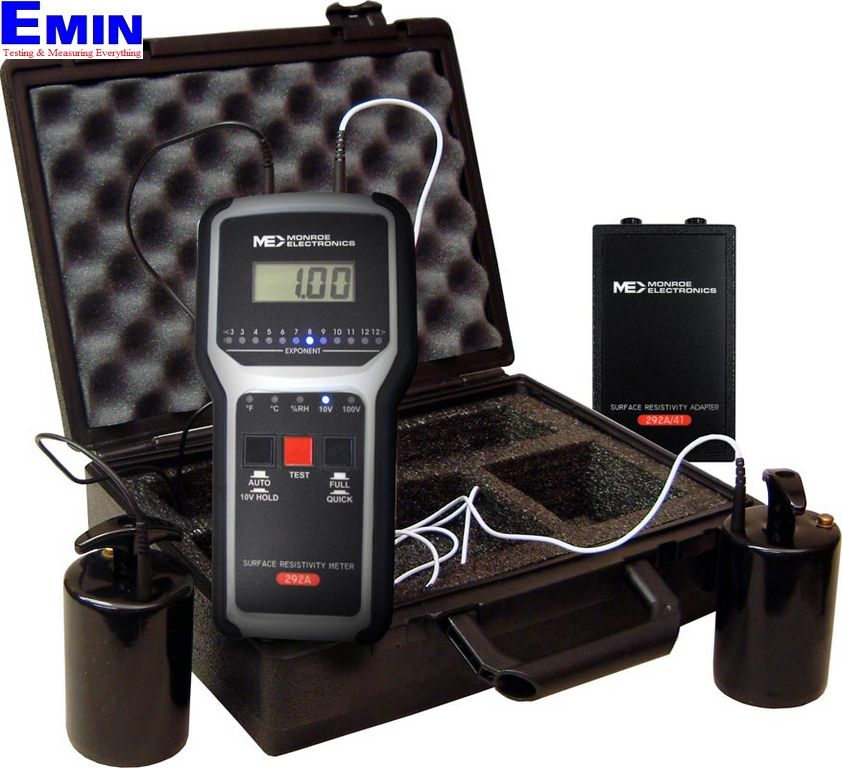
Why surface resistance measurement matters in ESD-controlled areas
Many materials used in manufacturing and clean environments look identical but behave very differently electrically. A bench mat, floor finish, table coating, tote, or garment may only perform correctly if its resistance remains within a suitable range for the application. Measuring that condition helps maintenance teams and QA personnel confirm that ESD controls are still functioning as intended.
In practice, surface testing supports preventive maintenance as much as compliance. It can help identify degraded mats, contaminated workstations, worn coatings, or process changes that affect static performance. In environments built around contamination and electrostatic control, such as areas with a clean bench, regular verification adds confidence to both product handling and operator safety procedures.
What these instruments are used to check
A surface resistance meter applies a defined test voltage and reads resistance across a material or between specified electrodes. Depending on the setup, it may be used for point-to-point checks, surface resistance evaluation, or surface/volume resistance testing with the proper probe arrangement. The goal is not just to get a number, but to understand whether a surface remains appropriate for static-sensitive work.
Typical test targets include ESD table mats, floor materials, shelves, bins, production carts, packaging materials, and coated surfaces in electronics assembly areas. They are also relevant in controlled environments where surface properties need to remain stable over time, including support spaces connected with air shower systems and other cleanroom infrastructure.
Common device configurations and measurement approaches
Not all instruments in this category are configured the same way. Some are handheld meters designed for portable use, while others are part of a broader measurement setup that includes dedicated electrodes or interchangeable probes. This is important because the measurement method affects what you can verify and how consistently you can compare results over time.
For example, the TREK 152-1 SURFACE/VOLUME RESISTANCE METER is built around probe-based testing and supports different measurement accessories for specific tasks. Accessories such as the TREK 152P-CR-1-CE Surface/Volume Concentric Ring Probe and the TREK 152BP-5P Point-to-point surface resistance probe illustrate how one meter can be adapted for different test methods rather than relying on a single fixed geometry.
Another approach is represented by instruments such as the KLEINWACHTER TOM 600 TERA Ohmmeter and TOM 610 ME TERA Ohmmeter, which combine broad resistance measurement capability with portable operation and data-oriented features. In many maintenance routines, this kind of setup is useful when teams need a practical balance between mobility, traceability, and repeatable testing.
How to choose the right surface resistance meter
The first selection point is the measurement range. Different applications may require checking lower-resistance conductive materials or much higher-resistance dissipative and insulating surfaces. A suitable meter should comfortably cover the resistance levels you expect to encounter in your ESD program, without forcing you to use borderline measurement conditions.
The second factor is test method compatibility. If your procedure requires point-to-point measurement, concentric ring testing, or specific electrode pressure and spacing, the meter alone is only part of the solution. Matching the instrument to the proper accessories is often just as important as the core meter specification.
You should also consider portability, display readability, battery operation, and data transfer. Some users need a compact meter for spot checks around the facility, while others prefer a more advanced instrument with USB connectivity and software support for record keeping. If your team works across mixed ESD areas or needs brand-specific options, it may be helpful to compare solutions from TREK and KLEINWACHTER based on the measurement workflow you already use.
Examples of meters and accessories in this category
This category includes both complete instruments and supporting accessories used in a measurement system. The TREK 152-1 meter is a clear example of a platform that works with dedicated probes, while the KLEINWACHTER TOM 600 and TOM 610 ME are often considered for broad resistance verification in ESD applications where handheld convenience matters.
Accessories also play a practical role in day-to-day testing. The KLEINWACHTER ZPE 050 2-point Measuring Electrode and ME V50 Measuring Elektrode vertical help define the contact geometry for consistent measurement. On the TREK side, items such as the TK-17530R Test Plate Set, TK-16160 CR Probe Test Ring, and TK-43378R Carrying Case support verification, setup control, and field handling of the test system.
This distinction is important for buyers: a meter is not always the whole measurement solution. In many cases, the right result depends on combining the main instrument with the correct probe, electrode, adapter, or validation accessory for the surface under test.
Where these meters are commonly applied
Surface resistance measurement is widely used in electronics assembly, PCB handling areas, semiconductor-related processes, service centers, quality laboratories, and maintenance teams responsible for ESD-protected areas. It is also relevant where anti-static floors, workstations, carts, and packaging must be checked periodically as part of documented control procedures.
In cleanroom and controlled production spaces, these instruments help confirm that cleaning, wear, humidity shifts, and material aging have not changed surface performance beyond acceptable limits. That can be especially valuable in environments where contamination control and static control must work together, not as separate programs.
Practical considerations before buying
Before choosing a model, define what you actually need to measure: work surfaces, flooring, packaging, garments, or multiple material types across the site. Then verify whether your procedure requires a simple portable meter, a meter with software connectivity, or a full set of probes and electrodes for formal testing. This step prevents under-specifying the system or buying accessories that do not match your workflow.
It is also worth checking how your team will use the instrument in the field. A service technician may prioritize quick setup and battery operation, while a QA department may care more about repeatability, documented testing, and accessory compatibility. Looking at the meter as part of a complete ESD verification process usually leads to a better purchase decision than comparing headline resistance ranges alone.
Final thoughts
Choosing a surface resistance meter is really about selecting a practical method for verifying ESD-critical materials in real working conditions. The right solution should fit your test procedure, the surfaces you need to inspect, and the level of documentation expected by your operation.
Whether you need a portable tera-ohmmeter, a probe-based resistance meter, or supporting electrodes and accessories, this category brings together tools that help maintain consistent surface performance in ESD and cleanroom environments. Reviewing the available models and their compatible accessories is the best way to narrow down a setup that suits your application.
Get exclusive volume discounts, bulk pricing updates, and new product alerts delivered directly to your inbox.
By subscribing, you agree to our Terms of Service and Privacy Policy.
Direct access to our certified experts
