
Sterile working chamber
Controlled handling environments are essential wherever operators need to work with sensitive materials while reducing exposure to surrounding contamination or process risk. In laboratories, pharmaceutical preparation areas, and clean production spaces, the right enclosure helps maintain a more stable working zone and supports safer, more repeatable operations.
Sterile working chamber solutions in this category cover different enclosure concepts, from transparent glove box systems for manual handling to more advanced barrier systems designed for controlled aseptic workflows. The goal is not simply to isolate a task, but to create a practical workspace that fits the process, the operator count, and the required level of cleanliness.
Where sterile working chambers are typically used
These systems are commonly selected for applications where direct contact with the product or process must be limited. Typical use cases include sample preparation, contamination-sensitive handling, transfer of materials into a controlled zone, and work involving powders, components, or sterile items that benefit from physical separation from the room environment.
Depending on the process, the chamber may be used as a manually operated enclosure with glove ports or as part of a broader cleanroom and containment strategy. In facilities that also use clean bench systems or biological safety cabinets, a sterile working chamber often fills a different role by emphasizing enclosed intervention and barrier-based handling rather than open-front access.
Main equipment types in this category
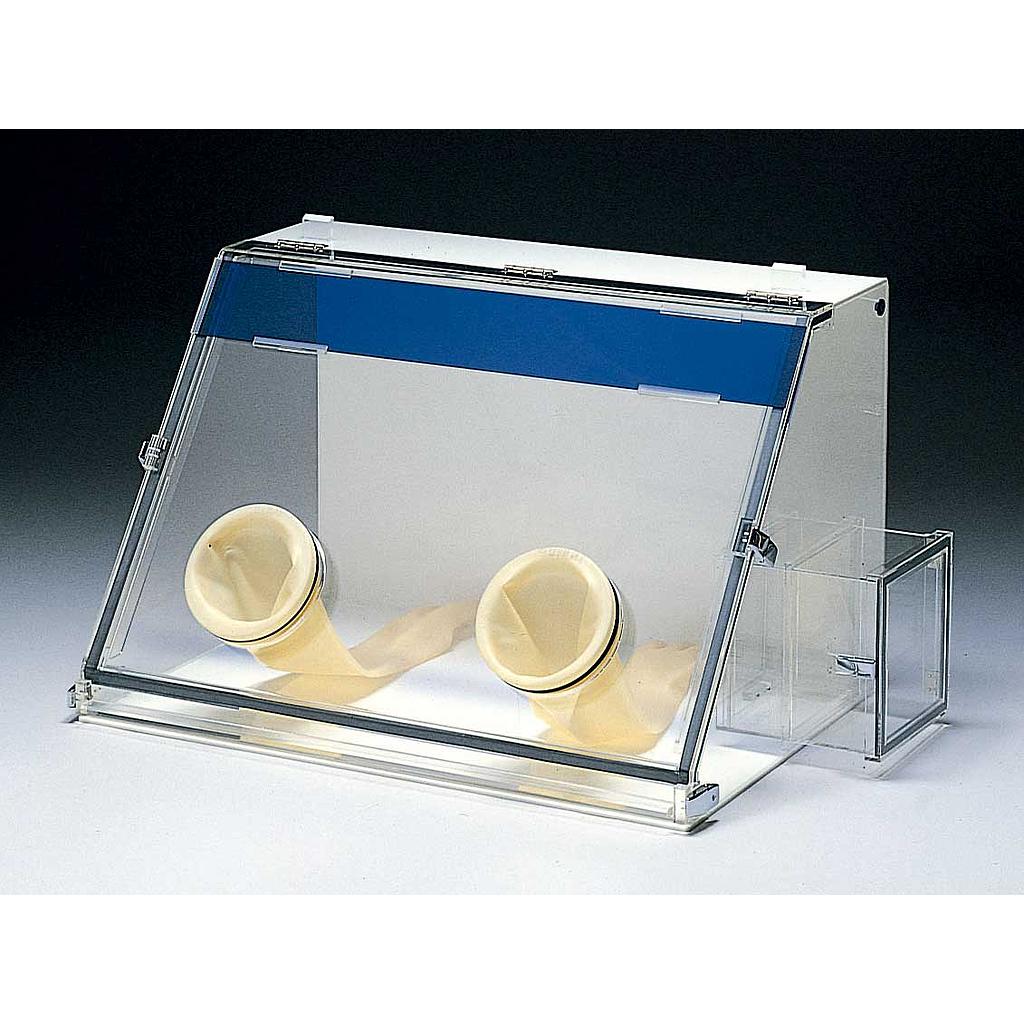
One important group is the transparent PMMA glove box style chamber. These units provide an enclosed workspace with glove ports, a viewing area, and a transfer chamber for introducing materials with less disruption to the main working space. They are practical when users need a visible, compact, and self-contained chamber for routine handling tasks.
Another group is the closed restricted access barrier system, often chosen for more demanding sterile or controlled applications. ESCO Streamline® systems listed in this category illustrate this approach, with defined work zones, pass-through sections, and configurations that vary by glove port shape, pressure scheme, and sharps provision. This makes the category relevant not only to general lab enclosure searches, but also to users comparing barrier-based clean handling solutions.
Representative product options from ESCO and DaiHan
For users looking for enclosed manual handling chambers, DaiHan offers several PMMA glove box configurations. Examples include the GLOB150 and GLOB180 for relatively compact work volumes, as well as the GLOB190 and GLOB220 for users who need a larger internal chamber or thicker wall construction. For higher-throughput or dual-operator work, the GLOB420 provides a larger chamber with four glove ports.
For aseptic barrier-style applications, ESCO provides Streamline® closed restricted access barrier systems such as the SLC-RABS-6CN1-S, SLC-RABS-6ON1-0, and SLC-RABS-6CP1-0. Within these models, the listed variations show how users may choose between circular or oval glove ports, positive or negative pressure schemes, and versions with or without sharps provision depending on process needs.
How to choose the right sterile working chamber
The first selection point is the required protection concept. Some applications focus on protecting the material from the external environment, while others also involve operator protection or stricter process separation. That distinction affects whether a basic glove box layout is sufficient or whether a barrier system with more defined clean performance and pressure control is more appropriate.
The second factor is chamber size and operator access. A small single-operator enclosure may work well for compact benchtop tasks, but larger assemblies, repetitive handling, or multi-step processes may require a bigger chamber, a pass box, or a two-operator format. The listed DaiHan models show this progression clearly, from around 150 to over 400 liters, with two-port and four-port arrangements available.
It is also important to consider transfer workflow, utilities, and ergonomics. Features such as a pass-through chamber, built-in outlets, gas inlet, vacuum interface, glove port shape, and work-zone dimensions can influence daily usability more than headline size alone. In clean production spaces, users also often compare enclosure selection with adjacent equipment such as an air shower for personnel entry control or a ventilation chamber when airflow management is part of the process design.
Important design details to review before purchase
A chamber may look suitable at first glance, but practical details determine whether it will support routine work efficiently. Buyers should review internal dimensions, glove port count, transfer chamber size, and available connections for gas, vacuum, or power. These factors affect how easily tools, vessels, and materials can be introduced and manipulated inside the enclosure.
Material and structural design also matter. The PMMA construction seen in the DaiHan glove box range supports clear visibility and straightforward observation of the work area, while the heavier-duty variants may be more appropriate when users want a more robust chamber body. In barrier systems, pressure scheme and clean performance are especially important because they directly relate to the intended containment or product protection strategy.
Why this category matters in clean and controlled environments
A sterile working chamber is rarely chosen in isolation. It usually forms part of a broader controlled-environment workflow that may include room hygiene practices, transfer procedures, cleaning tools, and other cleanroom equipment. For that reason, the right chamber should be evaluated not only by its footprint, but by how well it integrates into the surrounding process.
Well-matched enclosures can help reduce handling variability, improve operator separation from the process, and support cleaner transfers of sensitive materials. Whether the application calls for a compact glove box or a more specialized barrier system, the key is aligning the chamber design with the real operating conditions rather than selecting by size alone.
Conclusion
This category brings together enclosure solutions for users who need a controlled, enclosed workspace for sterile or contamination-sensitive handling. With options from ESCO and DaiHan, buyers can compare simpler glove box formats and more advanced barrier systems based on chamber volume, access configuration, pressure approach, and workflow requirements.
If you are narrowing down the right system, start with the process itself: what must be protected, how materials are transferred, how many operators will use the chamber, and what surrounding cleanroom equipment is already in place. That approach makes it much easier to identify a sterile working chamber that fits both technical needs and day-to-day operation.
Get exclusive volume discounts, bulk pricing updates, and new product alerts delivered directly to your inbox.
By subscribing, you agree to our Terms of Service and Privacy Policy.
Direct access to our certified experts


