
For full functionality of this site it is necessary to enable JavaScript.
EMIN.VN
0

What do you know about deadbolt pliers?

05/27/2025 14:53:50

Deadbolt pliers are metal hand tools, consisting of two beaks and two crossed pincers, capable of holding objects firmly. With a special design, this type of pliers is widely used in fields such as mechanics, industry, shipbuilding and many other technical fields. In this article, we will learn in detail about the structure, outstanding features and practical applications of deadbolt pliers in production and construction.

Basic structure of crimping pliers

The crimping pliers have a simple design with three main parts:

Handle: Usually made of stainless steel, the handle is designed to fit, easy to grip and has good heat and electrical insulation. Thanks to that, users can operate easily with just one hand, increasing flexibility when working. 
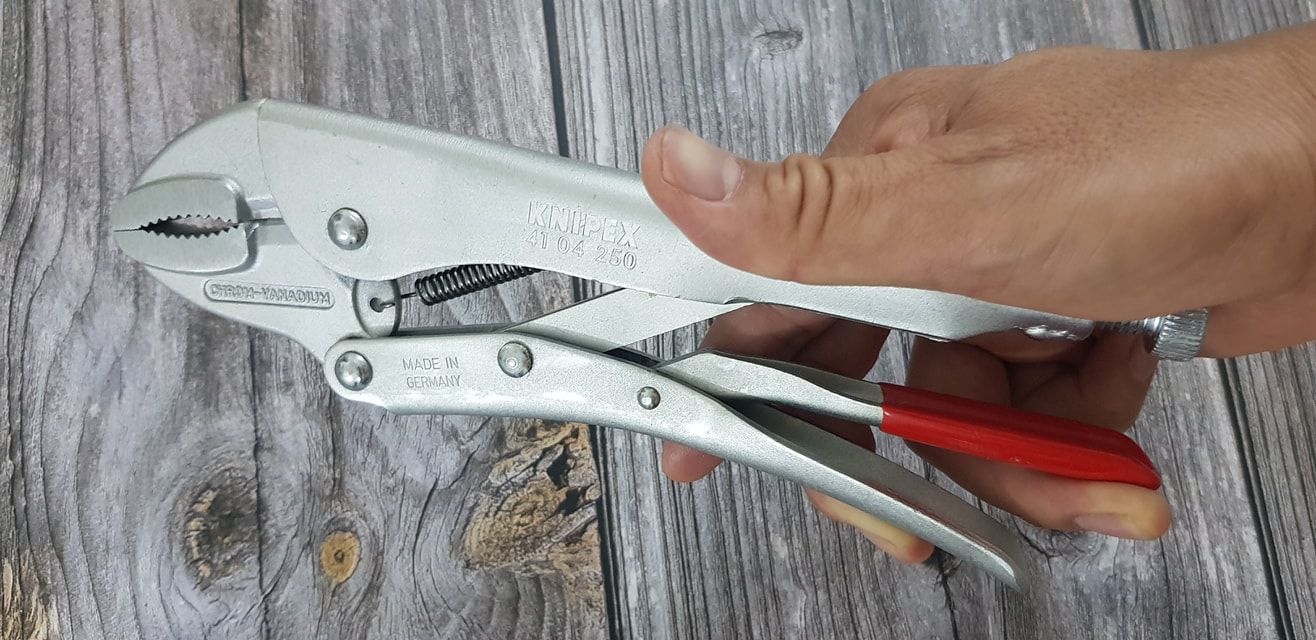
Clamp: This is the part that directly contacts the object to be clamped. The clamp is equipped with an adjustment button to suit the size of the object, and has a sturdy locking mechanism to hold the workpiece tightly. Currently, there are many different types of clamps such as semi-circular curved clamps (one side is curved, one side is straight), triangular beveled clamps, flat clamps or clamps with two curved points... Of which, the semi-circular curved clamp is the most popular thanks to its ability to flexibly adapt to many types of objects.

Pliers blade: The blade is designed with wavy serrated teeth, helping to increase grip when clamping and limit slipping during use.

Outstanding advantages of dead crimping pliers

In the toolkit of any craftsman, crimping pliers are almost an indispensable item. Although compact, this tool has many valuable advantages:

Crimp pliers are made from durable alloy steel, compact design, easy to hold and can be operated with just one hand. This makes repairing electrical, water or sanitary systems more flexible and convenient than ever.

Diverse in design, crimping pliers can adapt to many different types of workpieces - from round, flat to special details.

The clamping jaw can be flexibly adjusted according to each need, helping to hold details of different sizes, creating safety and precision when operating.

Practical applications of crimping pliers

Thanks to the ability to hold the object firmly, the worker can comfortably cut, press or edit with one hand without having to hold the object tightly.
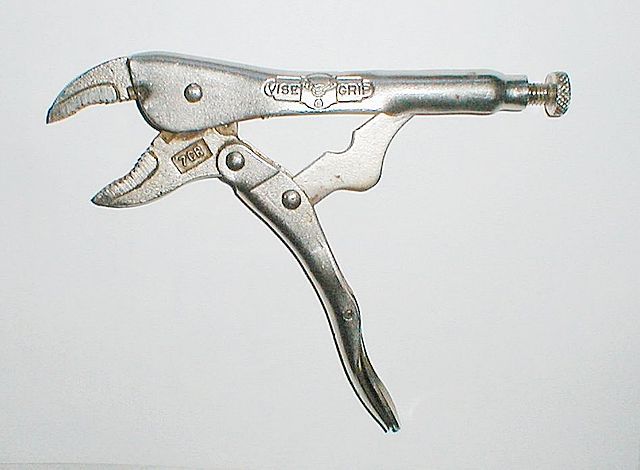
Easily clamp pipes, steel wires, round blanks of moderate size - all are locked firmly and securely.

Pliers can be used to hold the details when disassembling, or temporarily fix the parts to handle the next steps.

The dead clamp also maximizes its function when used to tighten, twist, twist, cut electric wires, thin steel wires or other small details.

Conclude:

Hopefully, the brief but practical sharing from EMIN has given you a clearer view of the uses and practical benefits of dead-end pliers. Thank you for watching!

Related News

The scent of new wood in a newly handed-over apartment: How to measure and address formaldehyde (HCHO) levels before moving in
11/14/2026 10:28:19

Many people refer to the pungent, acrid odor that emerges when opening a new cabinet as the "smell of new wood," assuming it will simply dissipate after a few days. In reality, however, what is being released could well be formaldehyde—a substance originating from the adhesives used in the pressed-wood panels—and our sense of smell is not a reliable enough gauge to determine the concentration levels present

Guide to Selecting a TCLP Toxicity Characteristic Leaching Procedure Shaker Configuration in Compliance with QCVN 07:2025/BNNMT and TCVN 9239:2012
11/13/2026 17:23:39

Regulation QCVN 07:2025/BNNMT (replacing QCVN 07:2009/BTNMT and QCVN 50:2013/BTNMT) specifies hazardous waste and sludge thresholds based on leachate concentrations. To ensure that analytical results for heavy metals and organic compounds are accepted during ISO/IEC 17025 or VIMCERTS assessments, laboratories must comply with the Toxicity Characteristic Leaching Procedure (TCLP) specified in TCVN 9239:2012, which is equivalent to US EPA Method 1311

Checking the Temperature of Paint and Coating Surfaces After Curing Using an Infrared Thermometer
11/13/2026 16:11:22

An infrared thermometer allows surface temperature measurement without direct contact, making it suitable for products coming out of curing ovens or surfaces that are difficult to access. However, to ensure reliable results for production quality control, it is important to understand the measurement principle and the factors that affect measurements on painted and coated surfaces.

Crowded Gyms and Yoga Studios: How to Manage Air Quality to Retain Members
11/13/2026 15:07:40

Around 6 or 7 in the evening, the gym becomes packed; the music drowns out the sound of heavy breathing, and the air conditioning runs at full blast behind closed doors. At first glance, everything seems fine: the room is cool, the lights are bright, and the equipment is state-of-the-art. Yet, after just a few sessions, regular members begin to feel a heavy-headedness and find themselves running out of breath more quickly eventually, they simply stop renewing their memberships. No one complains about the personal trainers or the exercise machines. The very thing that makes them feel stifled and drives them away is something entirely invisible: the air inside the room

Stay Updated with Offers

Get exclusive volume discounts, bulk pricing updates, and new product alerts delivered directly to your inbox.

By subscribing, you agree to our Terms of Service and Privacy Policy.

Quick Support

Direct access to our certified experts