Embedded Computers
Programmable and embedded semiconductor devices sit at the center of modern electronic design, bridging the gap between fixed-function components and application-specific hardware. For engineers, buyers, and OEM teams, the Embedded Computers category is where flexible processing, configurable logic, and integrated computing platforms come together for industrial control, communications, signal processing, and custom embedded systems.
This category is especially relevant when a project needs more than standard ICs but still demands compact, reliable, and scalable hardware. Whether the requirement is programmable logic, a system-on-chip architecture, or a compute-oriented semiconductor platform, these devices support a wide range of design strategies across prototyping, product development, and long-life industrial deployment.
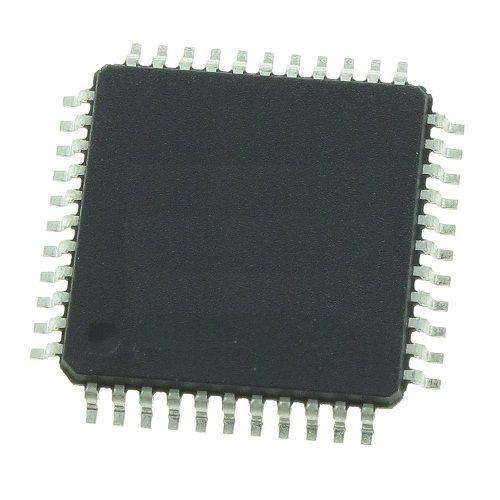
Where embedded computing devices fit in an electronic system
In practical system design, embedded computing components are used when control logic, data handling, interface management, or hardware acceleration must be implemented directly on the board. Unlike purely fixed-function parts, these devices give designers room to tailor system behavior to specific machine, instrument, or communication requirements.
They are commonly selected for designs that need deterministic operation, custom I/O handling, protocol conversion, or parallel processing. In broader hardware ecosystems, they often work alongside integrated circuits, memory devices, and power or signal-conditioning components to create complete embedded platforms.
Key product types covered in this category
This category includes several important device families rather than a single product type. FPGA solutions are widely used when designers need reconfigurable digital logic, high-speed parallel processing, or custom hardware behavior that can be updated during development. CPLDs are often chosen for simpler control logic, interface glue logic, and predictable startup behavior.
It also includes system-on-chip devices that combine processing and programmable resources in a more integrated architecture. Depending on the project, that can simplify board design, reduce component count, and support tighter coordination between software and hardware functions. For applications that require storage support or boot-related resources, related options such as memory accessories may also be relevant in the wider design flow.
Representative devices and what they illustrate
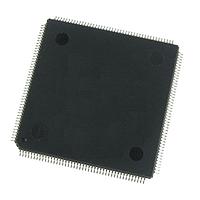
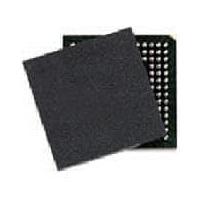
Several listed products help show the range of solutions available in this category. The Altera EP4CGX15BF14A7N FPGA Cyclone® IV GX Family and Altera 10AX022E3F27E2SG reflect the role of programmable logic in applications that need configurable I/O, hardware-level control, and adaptable digital design. Devices such as the Altera EP2S90F1020C4ES and Altera EP1S30F1020C7N further illustrate how FPGA platforms can scale toward larger logic resources and more demanding interface requirements.
For simpler programmable logic tasks, products like the Altera EPM7032QC44-15T CPLD MAX 7000 Family and Altera 5962-8946901YC CPLD Classic Family demonstrate the continuing importance of CPLDs in legacy support, control logic consolidation, and compact logic implementation. In addition, the Altera AGIC041R29D2E2VB SoC points to more integrated architectures for designs that benefit from combining processing capabilities with programmable functionality.
AMD devices in the category, including the XC4013XL-3PQ160I, XC6SLX150T-4FGG676C, and XCVU9P-2FLGB2104E, highlight another common design path: selecting programmable platforms according to logic density, package constraints, and application complexity. These examples are useful not as one-size-fits-all answers, but as reference points for matching device class to project needs.
How engineers typically choose among FPGA, CPLD, and SoC options
Selection usually starts with the functional requirement. If a design needs extensive reconfigurable logic, parallel data handling, or custom digital pipelines, an FPGA is often the logical choice. If the task is narrower and focused on control logic, decoding, or interface management, a CPLD may provide a simpler and more efficient fit.
When software and hardware need to be closely integrated, an SoC-based approach can be more attractive. This is especially true in embedded applications where processing, communication, and programmable acceleration must coexist on a compact platform. Buyers also typically consider voltage requirements, logic resources, package type, lifecycle considerations, and how the device fits with surrounding modules such as memory cards or storage-related subsystems when appropriate.
Manufacturers commonly associated with this category
Among the brands represented here, Altera appears prominently across FPGA, CPLD, embedded programmable logic, and SoC-oriented offerings. That makes it especially relevant for projects spanning both established industrial designs and newer configurable hardware architectures. AMD is another important manufacturer in this space, particularly where programmable logic is part of a larger high-performance digital design strategy.
Other manufacturers in the broader semiconductor landscape may support adjacent needs such as interface devices, signal handling, or complementary embedded hardware. However, for this category, the main value lies in comparing programmable and embedded computing platforms based on design intent rather than brand name alone.
Typical industrial and embedded applications
Embedded computing semiconductors are widely used in industrial automation, machine control, instrumentation, communication equipment, and specialized data-processing hardware. In these environments, designers often need a balance between performance, configurability, and long-term maintainability. Programmable devices are especially useful when field updates, hardware customization, or protocol-specific behavior are important.
They also play a major role in development paths that begin with flexible hardware and later move toward optimization. Teams may start with programmable logic to validate algorithms, timing, or interfaces before locking in later-stage architecture decisions. In systems that combine computing and application-specific electronics, these devices often complement categories such as discrete components for power, switching, and signal path support.
What to look for when sourcing embedded computing components
For B2B purchasing, sourcing is not only about finding a compatible part number. It also involves checking whether the device class aligns with the design stage, whether the package and supply voltage suit the PCB architecture, and whether the programmable resources match the expected workload. In legacy maintenance, package style and replacement path may matter as much as raw performance.
It is also useful to separate application requirements into logic complexity, interface count, memory dependence, and software involvement. That makes it easier to narrow the category from a broad embedded computing search toward the right family of components. A well-structured selection process helps avoid over-specifying expensive devices for simple control tasks or under-specifying hardware for data-intensive applications.
Finding the right fit for your design
This category supports a broad spectrum of embedded hardware needs, from compact CPLDs for control logic to advanced FPGA and SoC solutions for configurable, high-function systems. The most effective choice usually depends on architecture goals, integration level, and the practical constraints of the target product or production environment.
By comparing device families with the actual needs of the application, engineers and procurement teams can narrow options more efficiently and build a more reliable embedded design path. If your project involves programmable logic, board-level computing, or integrated hardware control, this category provides a solid starting point for selecting suitable semiconductor building blocks.
Get exclusive volume discounts, bulk pricing updates, and new product alerts delivered directly to your inbox.
By subscribing, you agree to our Terms of Service and Privacy Policy.
Direct access to our certified experts