
Battery Pack Drop and impact Tester
Mechanical abuse testing is a critical part of battery safety validation, especially when cells, modules, or complete packs may be exposed to accidental drops, transport shocks, or heavy external impact. For labs, battery manufacturers, and EV supply-chain teams, choosing the right Battery Pack Drop and impact Tester helps create repeatable test conditions that support product development, compliance work, and failure analysis.
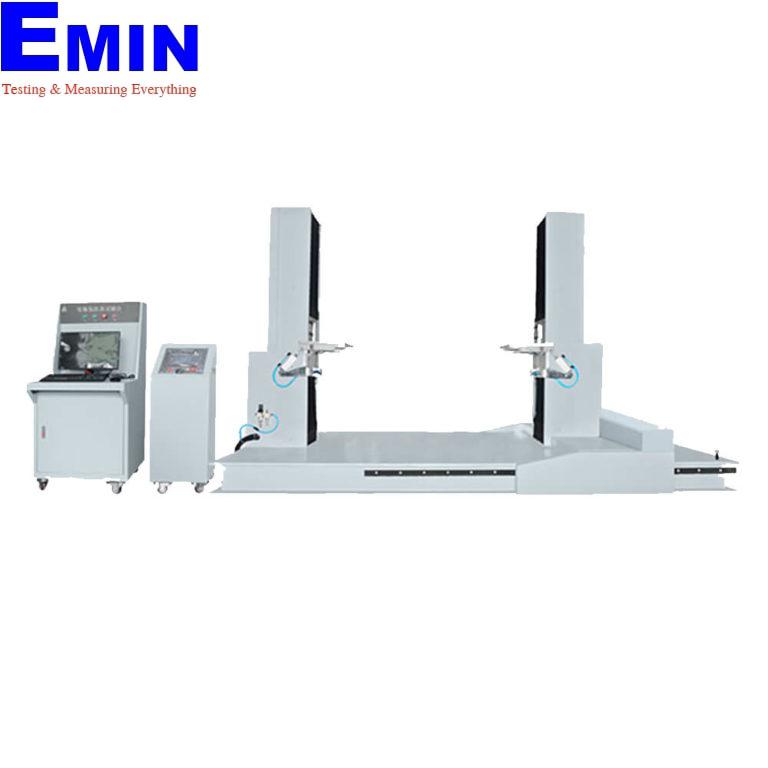
This category brings together equipment designed for controlled drop, shock, and impact evaluation across different battery formats. The range covers compact testers for smaller batteries as well as larger systems built for heavier packs, making it easier to match test capability to specimen size, load, and required test method.
Where this equipment fits in battery testing
Drop and impact testing focuses on how a battery responds to sudden mechanical stress. In practical terms, that may involve free-fall drop tests, corner or face drop conditions, controlled shock pulses, or heavy-object impact simulation. These methods are used to observe deformation, enclosure integrity, electrical behavior, and potential safety events after a defined mechanical event.
In many workflows, mechanical abuse testing is used alongside electrical and diagnostic tools. For example, teams may combine these systems with battery monitoring equipment to track test behavior, or use a battery impedance tester before and after abuse testing to assess condition changes in the specimen.
Typical test methods covered in this category
The equipment in this category supports several common mechanical evaluation approaches. Drop testing is used to simulate handling accidents, logistics events, or unintended falls during assembly and service. Depending on the fixture and machine design, testing may be performed on the face, edge, or corner of the specimen.
Impact testing is used when a concentrated external force must be applied under controlled conditions. A model such as the Jinuosh L-IP001 Battery Heavy Impact Tester is suited to this kind of evaluation, where a falling hammer and adjustable impact height help create repeatable impact scenarios. For pulse-based shock simulation, the KINGPO HSKT10 Battery Mechanical Shock Test Equipment represents a different approach, using controlled acceleration and pulse duration to reproduce short mechanical shock events.
Equipment options for small batteries and large battery packs
Test requirements can vary significantly depending on whether the target is a small portable battery, a traction battery, or a large assembled pack. Compact systems such as the TOB TOB-BE-F-315S and TOB TOB-BE-F-320S are practical when the specimen is relatively light and the required drop height falls within a smaller lab-scale setup. These machines are typically easier to place in development environments where footprint and handling convenience matter.
For larger and heavier DUTs, more robust systems are needed. The DGBell BF-F-315ST Traction Battery Drop Tester is intended for higher-load applications, while the DGBell BE-8206-1500 and BE-8206-2000 Battery Pack Drop Testers address much larger test spaces and heavier battery packs. In those environments, details such as load capacity, drop height range, control mode, and site safety provisions become especially important.
How to choose the right tester
The first selection factor is the size and weight of the battery. Small-cell testing and large-pack testing are very different in terms of structure, handling method, and required machine strength. Before narrowing down a model, it is useful to define the maximum specimen dimensions, mass, and the intended drop orientation or impact scenario.
The second factor is the actual test objective. If the goal is to reproduce accidental free-fall events, a drop tester with suitable height range and stable release control is usually the right fit. If the requirement is to apply a defined external blow, a heavy impact tester may be more appropriate. If a standard or customer procedure calls for an acceleration pulse, then a mechanical shock system is the better match.
It is also worth reviewing the surrounding test setup. Some projects need remote control, PLC or touchscreen operation, video monitoring, smoke exhaust, or protective enclosure features as part of the lab safety process. In development programs that also rely on programmable sources, a battery simulating DC power supply can support broader battery validation workflows outside the mechanical abuse stage.
Representative manufacturers in this range
This category includes equipment from established names used in battery testing and lab automation. DGBell is relevant for larger drop test systems aimed at traction batteries and battery packs, while KINGPO offers mechanical shock equipment for controlled pulse testing. Jinuosh appears in the heavy impact segment, and TOB provides compact solutions suited to smaller battery drop tests and related lab processes.
Although each manufacturer has its own product focus, the best choice depends less on brand alone and more on the test method, specimen characteristics, and safety requirements of the application. For that reason, it is often useful to compare machine architecture, usable test space, control method, and protection measures instead of looking only at headline dimensions.
Key considerations for safe and repeatable testing
Battery abuse testing should always be approached with a strong emphasis on operator safety and test repeatability. Large packs can present substantial mechanical and thermal risk, so labs typically pay close attention to protection systems, fenced test areas, exhaust handling, alarm functions, and clear operating procedures. These measures help reduce variability while improving the safety of high-energy tests.
Repeatability also depends on the consistency of the release mechanism, drop height control, impact geometry, and fixture condition. In post-test analysis, teams may combine visual inspection with electrical checks to determine whether internal damage has occurred. Where condition tracking is important, related tools such as a battery conductance tester may provide additional insight after mechanical stress testing.
Supporting battery development, qualification, and failure analysis
Battery drop and impact test equipment is relevant across multiple stages of the product lifecycle. During development, it helps engineers evaluate design robustness and packaging protection. During qualification, it supports structured mechanical abuse procedures aligned with internal methods or external standards. During failure analysis, it can be used to reproduce conditions that may have contributed to field issues.
Whether the requirement involves a compact drop tester for smaller samples, a heavy-duty pack drop platform, or a controlled mechanical shock system, selecting the right equipment starts with a clear definition of the test scenario. A well-matched system makes it easier to generate meaningful data, improve safety evaluation, and build a more reliable battery testing workflow.
Get exclusive volume discounts, bulk pricing updates, and new product alerts delivered directly to your inbox.
By subscribing, you agree to our Terms of Service and Privacy Policy.
Direct access to our certified experts
