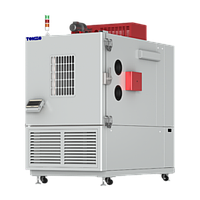
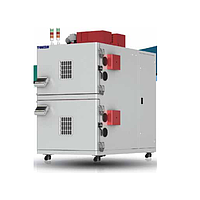
Battery test chamber
Battery testing rarely depends on a single instrument. In real production and validation workflows, engineers often need a controlled environment that supports charge-discharge cycling, safety checks, thermal evaluation, and repeatable measurement conditions. That is where a Battery test chamber becomes important, especially for labs and manufacturing teams working with lithium battery packs, modules, and related energy storage devices.
This category is intended for buyers looking at battery testing setups from a practical system perspective. Alongside chamber-based testing, many projects also require supporting equipment such as cycling systems, inspection devices, and electrical test platforms to evaluate performance, consistency, and operational safety across different battery formats.
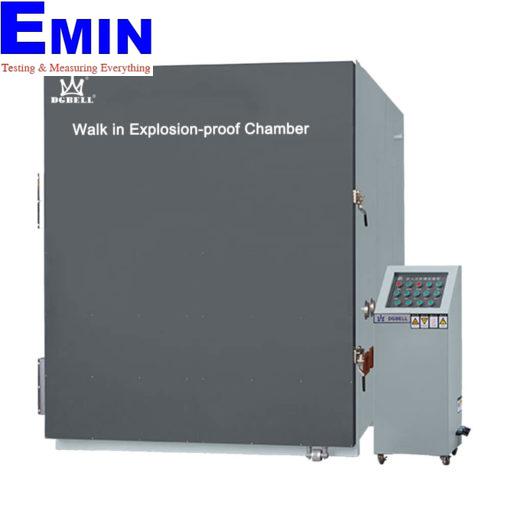
Why battery test chambers matter in battery development and production
A battery test chamber is commonly used when a cell or pack must be evaluated under controlled conditions rather than in an open bench setup. For B2B users, this matters because environmental stability can directly affect repeatability, data quality, and confidence in validation results.
In battery R&D, qualification, and manufacturing, testing often goes beyond a simple pass/fail check. Teams may need to observe behavior during charging and discharging, monitor response under load, or combine electrical measurements with environmental exposure. In these workflows, the chamber becomes part of a broader test ecosystem, not just a standalone enclosure.
Typical battery testing tasks supported around this category
Users browsing this category are often comparing solutions for different stages of battery evaluation. Some applications focus on routine production checks, while others support engineering analysis, reliability testing, or troubleshooting abnormal behavior in packs and modules.
For example, a device such as the ALIYIQI XDC-1 Battery Inspection Device can be relevant for inspection-oriented workflows, while more comprehensive charge-discharge platforms are used when electrical performance must be characterized over time. In projects where internal resistance and current handling are part of the acceptance criteria, solutions such as the ACEY ACEY-BIT100-100A500A Discharge Lithium Battery Comprehensive Tester help illustrate the type of broader battery evaluation equipment that may complement a chamber-based setup.
How to evaluate a battery test setup
Choosing the right configuration usually starts with the battery under test. Buyers should consider voltage range, current range, battery chemistry, channel count, and whether the goal is development testing, incoming inspection, process control, or failure analysis. A chamber that works well for one lab application may not fit a production environment with higher throughput or stricter automation requirements.
Another important factor is how the chamber interacts with the rest of the test bench. Many users also need dedicated power hardware, monitoring, or impedance-related measurement tools. If your workflow includes source simulation or controlled DC output, it may be helpful to review a battery simulating DC power supply or a DC power supply for battery test as part of the overall system design.
Representative equipment found in this broader testing workflow
This category sits close to several types of battery test equipment that are often specified together. Cabinet-style charge and discharge systems are a good example when users need scalable channel configurations and repeatable cycling capability. Within the KINGPO range, models such as the HD-120V240A-01CH, HD-120V120A-02CH, HD-120V60A-04CH, and HD-120V10A-16CH show how different combinations of voltage, current, and channel count can support different testing priorities.
These examples are useful because they reflect common selection logic in battery labs and production lines. Some setups prioritize higher current per channel for pack-level work, while others favor multiple channels for parallel testing or screening. In either case, a chamber-based environment is often chosen when thermal control, safety procedure alignment, or more repeatable test conditions are required.
Manufacturers commonly considered for battery testing projects
Procurement teams often compare suppliers based on application fit rather than brand name alone. In this category, manufacturers such as KINGPO, NEWARE, DGBell, Joeo, Huda, TOB, ASLI, ALIYIQI, ACEY, and Tomilo are relevant reference points for battery testing and related laboratory or production equipment.
When comparing options, it is usually more useful to look at system compatibility, control approach, throughput expectations, and serviceability than to focus only on headline specifications. For example, one project may require cabinet-based charge-discharge operation with fast response, while another may need an inspection device or a chamber-centered workflow integrated with additional monitoring hardware.
Related measurements that often support chamber-based testing
Battery evaluation rarely stops at charge and discharge curves. Engineers frequently need supporting measurements such as internal resistance, impedance, conductance, or long-term condition tracking. These data points help explain why a battery behaves a certain way under environmental or operational stress.
For that reason, some buyers also review categories such as battery impedance tester solutions or battery monitoring equipment when building a more complete workflow. This is especially relevant for users managing life-cycle studies, screening inconsistent cells, or investigating degradation patterns across multiple batches.
What B2B buyers should clarify before ordering
Before requesting a quotation, it is worth defining the test object and the expected operating scenario as clearly as possible. Key questions include whether you are testing cells, modules, or packs; whether the process is R&D or production; how many channels are needed; and what level of accuracy, response time, and current capability the application demands.
It is also helpful to confirm how the chamber will fit into the wider electrical and safety architecture. A battery test chamber is often only one part of the final solution, so integration with charging systems, discharge loads, monitoring instruments, and data collection software should be considered early in the buying process.
Finding the right fit for your battery testing workflow
The right solution depends less on a generic product label and more on the full testing objective. Some users need a controlled chamber environment for qualification and reliability work, while others are building a broader platform that combines environmental control with charge-discharge testing, inspection, and diagnostic measurement.
By reviewing this category together with representative systems from manufacturers such as KINGPO, ALIYIQI, and ACEY, buyers can better identify the combination of chamber, power handling, and measurement capability that suits their process. A well-matched setup helps improve repeatability, supports safer battery evaluation, and makes long-term test data more useful for engineering and production decisions.
Get exclusive volume discounts, bulk pricing updates, and new product alerts delivered directly to your inbox.
By subscribing, you agree to our Terms of Service and Privacy Policy.
Direct access to our certified experts