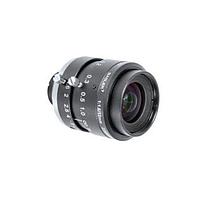
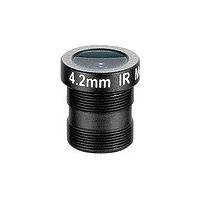
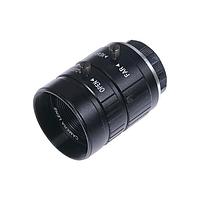
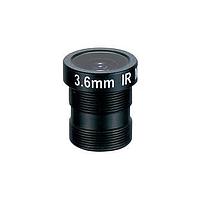
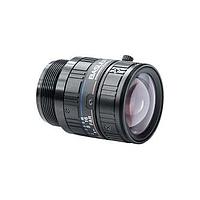
Camera Lenses
Choosing the right optics has a direct impact on image quality, measurement accuracy, and the overall reliability of a vision system. In development labs, industrial inspection setups, and embedded imaging projects, the lens is not just an accessory around the camera sensor. It is a critical part of the imaging chain that influences field of view, distortion, focus behavior, and how well the system performs in real operating conditions.
This Camera Lenses category is intended for engineers, system integrators, and technical buyers looking for optics that fit machine vision, prototyping, and imaging development workflows. Whether you are building a compact embedded camera platform or refining an industrial inspection system, selecting the right lens helps align the camera hardware with the application’s actual working distance, target size, and lighting environment.
Why camera lenses matter in imaging and vision projects
A camera sensor can only deliver useful image data when the optics are matched to the task. The lens determines how much of the scene is captured, how sharply details are resolved, and how consistently the image can be analyzed across the frame. In many engineering environments, these factors directly affect barcode reading, object detection, dimensional checks, and process monitoring.
For this reason, lens selection should be treated as an engineering decision rather than an afterthought. Teams evaluating optics often also review compatible camera modules and machine vision cameras at the same time, since sensor format, mount type, and pixel requirements all influence the final result.
Common use cases for camera lenses
Camera lenses are used across a wide range of technical applications, from proof-of-concept development to production-grade inspection systems. In embedded vision, the goal may be to capture a stable image in a compact enclosure. In industrial automation, the priority may shift toward repeatable imaging for inspection, guidance, or identification tasks.
Typical use cases include machine vision inspection, robotics, smart devices, educational development, and image-based sensing. In these scenarios, brands such as Basler, Cognex, Banner Engineering, and Omron Automation and Safety are often relevant within the broader imaging ecosystem, while optics from suppliers such as Computar help complete the camera setup where lens performance and compatibility are important.
How to choose a suitable lens
The most practical way to compare options is to start with the application itself. Consider the field of view you need, the distance between the camera and the target, and the level of detail the system must resolve. A lens that works well for a wide-area overview may not be suitable for close inspection of small components, printed codes, or surface defects.
It is also important to review mechanical and optical compatibility. Sensor size support, focal length, mounting interface, and focus adjustment all affect integration. If the project involves specialized optics across multiple setups, it may also be useful to explore related camera and module options first, then narrow lens selection based on the imaging platform being used.
Key technical factors to evaluate
Several technical parameters influence lens behavior in real systems. Focal length affects the viewing angle and how large the subject appears in the frame. Aperture influences light transmission and depth of field, which becomes especially important when the subject height varies or lighting conditions are limited. Focus range and image coverage should also be reviewed carefully to avoid edge blur or mismatch with the sensor format.
Another critical factor is distortion control. In applications involving measurement, alignment, or consistent feature recognition, lower distortion can simplify software correction and improve repeatability. For developers working on broader embedded platforms, related tools such as communication development tools may also be part of the project when the vision system needs to transmit or process data beyond image capture.
Camera lenses in embedded and industrial ecosystems
Lens selection often sits within a larger hardware stack rather than standing alone. A compact embedded platform may combine a processor board, camera module, lens, display, and connectivity layer into a single prototype or deployable product. In this context, manufacturers such as Raspberry Pi, Adafruit, onsemi, and ADLINK Technology can be relevant to teams building complete imaging solutions, from development through integration.
In industrial environments, the lens must also support stable long-term performance. Vibration, enclosure constraints, lighting variation, and working distance limitations all affect the final choice. A lens that looks suitable on paper may still require practical validation once mounted in the actual machine or workstation.
What to look for when comparing options in this category
When browsing this category, it helps to compare products based on intended application rather than just part naming. Some buyers prioritize compact integration, while others need optics better suited to inspection coverage, controlled focus, or repeatable image geometry. The best option depends on how the lens will be used with the camera, software, and mechanical setup around it.
It is also worth thinking about future scalability. If a proof-of-concept may later move into a more advanced machine vision setup, choosing optics that fit a broader development path can reduce redesign effort. That may include checking compatibility with related imaging hardware, accessory needs, and whether the system will eventually require more specialized camera or processing components.
Finding the right fit for your project
A well-matched lens helps the rest of the vision system perform closer to its intended capability. It supports clearer imaging, more reliable analysis, and smoother integration with cameras and processing hardware. For engineering teams, that often means fewer compromises during testing and a more predictable path from development to deployment.
As you review the available camera lenses, focus on the imaging task, the physical setup, and the expected operating environment. A careful choice at the optics stage can improve the effectiveness of the entire system, whether the goal is embedded development, machine vision inspection, or a custom imaging application built around industrial or development-grade hardware.
Get exclusive volume discounts, bulk pricing updates, and new product alerts delivered directly to your inbox.
By subscribing, you agree to our Terms of Service and Privacy Policy.
Direct access to our certified experts