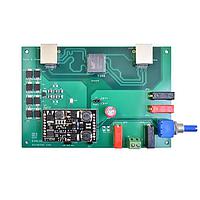
LED Lighting Development Tools
Designing or validating an LED lighting circuit usually involves more than checking whether the LEDs simply turn on. Engineers often need to evaluate driver behavior, current regulation, dimming performance, thermal impact, and supply compatibility before moving to a production-ready design. That is where LED Lighting Development Tools become especially useful across prototyping, lab testing, and application-specific design work.

Why these development tools matter in LED design
LED lighting projects can range from simple indicator circuits to multi-string drivers and higher-power lighting applications. Development boards and evaluation kits help engineers shorten the path from concept to validation by providing a known hardware platform for testing control methods, output current behavior, and power-stage interaction under realistic conditions.
In practical B2B design environments, these tools are valuable for early feasibility checks, component selection, and firmware or control testing. They also reduce risk when a team needs to assess how a particular LED driver IC or reference design behaves before investing time in a custom PCB layout.
What you can expect in this category
This category focuses on boards and kits intended for LED driver evaluation, proof-of-concept work, and development of lighting-related circuits. Depending on the platform, users may be assessing linear or switching driver topologies, white LED driver behavior, multi-string control, or application-oriented lighting configurations.
Typical use cases include bench evaluation of supply voltage range, output current setup, dimming methods, and integration with a host controller. For teams working across a wider embedded ecosystem, related platforms such as communication development tools may also become relevant when lighting control needs to interface with broader system-level electronics.
Representative platforms and examples
Several well-known suppliers appear in this category, including Infineon, Analog Devices, Adafruit, ams OSRAM, and Diodes Incorporated. Each serves somewhat different design needs, from compact demonstration boards for specific driver ICs to broader evaluation kits suited to application development.
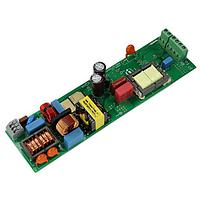
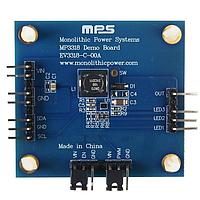
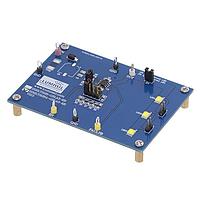
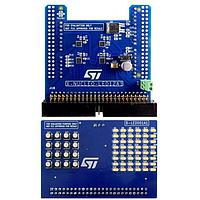
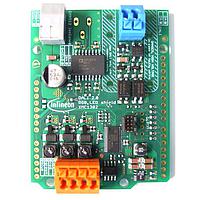
Examples from the range include the Infineon APPBOARD TLD5098EL V5 LED Lighting Evaluation Development Board Kit and the Infineon TLD5190IVREGEVALTOBO1 Evaluation Boards, both relevant when engineers want to explore LED driver behavior on established vendor hardware. Analog Devices options such as the DC824A, DC1130A, and DC1224A demonstration boards illustrate how targeted evaluation platforms can help verify current control and white LED driver operation around specific devices.
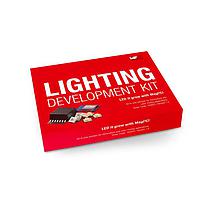
For visual or module-oriented experimentation, the ams OSRAM LB CRBP.01-GXHY-26-Y474-350-R18 kit and Adafruit 4202, 4203, and 4204 boards can be useful reference points. Meanwhile, the Diodes Incorporated AL5809Q-100EV1 board is an example of a platform intended to examine LED linear driver behavior in a more focused way.
How to choose the right LED lighting development platform
The right selection usually depends on the stage of the project and the behavior you need to validate. If the main objective is evaluating a specific IC, a demonstration or evaluation board tied to that device is typically the most direct path. If the goal is broader prototyping, a kit with easier access to connections and test points may be more practical.
It is also important to consider supply voltage, output current range, intended LED configuration, and whether the design involves white LEDs, multi-string arrangements, or higher-current operation. Engineers should also think about how the board will fit into the rest of the workflow, especially if testing includes host control, sensor feedback, or mixed-signal development alongside other platforms such as memory IC development tools.
Common engineering applications
These tools are often used in product development for architectural lighting, indicator systems, display backlighting, automotive-adjacent driver evaluation, and embedded lighting control experiments. Even when the final application differs from the reference setup, the board can still provide valuable insight into startup response, current stability, dimming behavior, and thermal considerations.
They are also helpful for educational labs, proof-of-concept demonstrations, and design reviews where teams need hardware that can be powered, measured, and discussed quickly. In many cases, a development board allows design engineers, test engineers, and purchasing teams to align on component direction before committing to a full custom implementation.
Manufacturer ecosystems and development workflow
One advantage of this category is access to ecosystems from established semiconductor and development-platform vendors. Adafruit often appeals to users who want approachable hardware for rapid experimentation, while ams OSRAM, Analog Devices, Infineon, and Diodes Incorporated are commonly considered when a project is more tightly centered on a particular LED driver architecture or reference design path.
For some projects, LED evaluation is only one part of a wider prototype. Teams working on imaging, inspection, or machine-vision concepts may eventually combine lighting with cameras and camera modules to test illumination quality, detection consistency, or scene visibility under controlled conditions.
What to review before ordering
Before selecting a board, it helps to confirm the target IC or application match, supported operating range, and whether the board is intended for demonstration, development, or deeper circuit evaluation. Review how easily the platform can be measured on the bench, whether it suits your available power sources, and whether it aligns with your intended LED load and control method.
It is also worth checking whether the board is being used as a learning platform, a fast validation tool, or a near-reference starting point for a custom design. That distinction affects how much importance to place on onboard flexibility, connector accessibility, and how closely the hardware mirrors the eventual end product.
Final thoughts
Choosing the right LED lighting development tool can make early design work faster, clearer, and less error-prone. Whether you are evaluating a specific LED driver, comparing lighting approaches, or building a proof of concept around an established vendor platform, this category brings together practical hardware for testing real design decisions before full-scale implementation.
A careful review of application goals, electrical requirements, and preferred manufacturer ecosystem will usually point to the most suitable board. For engineering teams balancing performance, development time, and validation confidence, these platforms provide a practical foundation for moving from idea to working lighting design.
Get exclusive volume discounts, bulk pricing updates, and new product alerts delivered directly to your inbox.
By subscribing, you agree to our Terms of Service and Privacy Policy.
Direct access to our certified experts