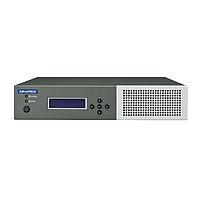
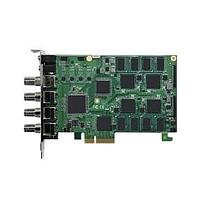
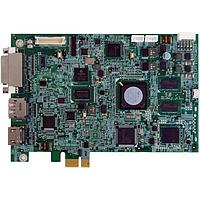
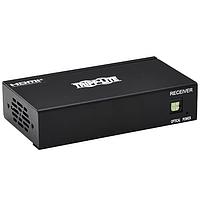
Video Modules
When an embedded system needs to capture, buffer, convert, or route high-speed image data reliably, the quality of the video interface hardware becomes just as important as the camera itself. In industrial vision, inspection, automation, and imaging workflows, Video Modules help bridge the gap between image sources and the host system by providing the bandwidth, synchronization, and signal handling required for stable acquisition.
This category brings together PCIe-based video and vision acquisition hardware for machine vision and embedded imaging applications. It is especially relevant for designers working with Camera Link, CoaXPress, GigE Vision, HDMI, DisplayPort, SDI, or mixed video environments where low latency, deterministic data flow, and integration flexibility matter.
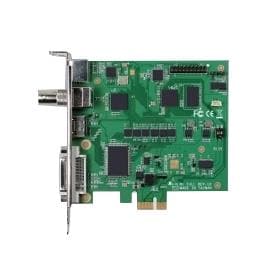
Built for machine vision and embedded image acquisition
Unlike general-purpose consumer capture devices, industrial video modules are designed for continuous operation, predictable performance, and compatibility with production systems. They are commonly used in inspection stations, automated assembly lines, laboratory imaging setups, and OEM platforms that need dependable frame capture from one or more cameras.
Many solutions in this category are built as PCIe add-in cards, allowing direct integration into industrial PCs and embedded hosts. This architecture supports high-throughput image transfer while also enabling features such as onboard memory, image buffering, auxiliary I/O, and hardware-assisted preprocessing. In broader embedded designs, these products may also work alongside Ethernet and communication modules when image data needs to move across networked systems.
Common interface standards covered in this category
A key reason engineers choose dedicated video modules is the need to support specific camera and video standards. Different imaging systems have different constraints around cable length, data rate, port count, power delivery, and synchronization, so interface selection has a direct impact on system design.
Examples in this category include Camera Link and CoaXPress frame grabbers for high-performance machine vision, as well as modules for GigE Vision and multi-format video capture. Zebra offers several representative solutions, including Zebra Rapixo CXP Vision Frame Grabbers for CoaXPress 2.0 applications, Rapixo CL Pro and Radient eV-CL models for Camera Link environments, Clarity UHD devices for mixed-format video acquisition, and GevIQ or Concord PoE models for GigE Vision deployments.
What these modules typically handle in a real system
In practical terms, video modules do more than receive a video feed. They often manage image buffering, signal conditioning, triggering, and camera-side power functions that simplify integration in industrial environments. Depending on the design, a module may support multiple independent acquisition paths, onboard memory for burst capture, and hardware support for color conversion or Bayer processing.
For example, some CoaXPress and Camera Link boards in this category support onboard lookup tables, Bayer interpolation, and color space conversion, which can reduce processing load on the host. Others focus on multi-camera networking, such as GigE Vision cards that support multiple ports or camera connections through switches. If the application also depends on image processing offload, it can be useful to review related accelerator card options as part of the overall system architecture.
Examples of product types available
This category includes several distinct product profiles rather than one single hardware format. A suitable choice depends on the camera standard, required throughput, available PCIe lanes, and whether the project needs basic acquisition or more advanced handling of multiple streams.
Zebra Rapixo CXP models are relevant for CoaXPress systems that need one, two, or four input connections, with support for high data rates and image buffering. Zebra Rapixo CL Pro and Zebra Radient eV-CL families address Camera Link installations, including base, medium, and full configurations for frame or line scan sources. For more general video capture, Zebra Clarity UHD Vision Frame Grabbers support analog, DVI via HDMI, DisplayPort, HDMI, and SDI acquisition on a single card.
For GigE Vision deployments, Zebra Concord PoE Vision Frame Grabbers provide PoE capability at the card level, while Zebra GevIQ models are positioned for higher network speeds and multi-camera connectivity. The category also includes examples from Cognex, such as the CFG-8724-100, CFG-8724-200, CFG-8724-CD-100, and CFG-8724-CD-200 card frame grabbers, which can be considered where industrial machine vision integration calls for dedicated acquisition hardware.
How to choose the right video module
The first decision is usually the camera or video interface standard. A Camera Link installation has very different requirements from a GigE Vision or CoaXPress system, and mixed-format video capture introduces another set of constraints. Matching the acquisition card to the source standard is essential not just for connectivity, but also for performance, latency, and long-term maintainability.
Next, evaluate the number of channels, bandwidth, and memory requirements. Multi-camera systems may need several independent ports, while high-resolution or high-frame-rate imaging can benefit from larger onboard memory and faster PCIe connectivity. It is also important to look at auxiliary I/O, trigger handling, and whether the board supports power over the interface, such as PoE or PoCXP, because these details affect cabinet wiring and system complexity.
Software compatibility is another practical consideration. In many deployments, acquisition hardware is only one part of the imaging stack, so driver support, SDK availability, and integration with host-side libraries can influence the final selection. Where that is a major factor, related software resources may help complete the solution.
Why PCIe video modules remain important in embedded systems
Although networked imaging continues to grow, PCIe-based acquisition hardware remains highly relevant wherever deterministic throughput and direct host connectivity are priorities. In inspection systems, robotics, medical imaging, and test environments, a dedicated frame grabber can provide better control over timing, lower overhead, and more consistent capture performance than a generic interface.
These modules are also valuable when the imaging chain includes external triggers, encoder feedback, isolated I/O, or advanced buffering requirements. That is why engineers still specify dedicated frame grabbers in systems that must run continuously, synchronize with motion, or process large volumes of image data without interruption.
Typical application scenarios
Industrial inspection is one of the most common use cases, especially where line scan or area scan cameras are used to detect defects, measure dimensions, or verify assembly quality. In these systems, stable acquisition and precise synchronization are often more important than simply connecting a camera.
Other common applications include laboratory imaging, transportation imaging, packaging verification, and embedded OEM devices that integrate one or more cameras into a larger machine. Mixed video environments may also use these modules for recording, conversion, or monitoring tasks where multiple signal types must be captured on one platform.
Choosing with the full embedded ecosystem in mind
Video acquisition hardware should be selected as part of a complete embedded platform, not in isolation. Host PCIe resources, thermal conditions, power availability, cable routing, and downstream processing all affect how well a module performs in production. A card that looks sufficient on paper may still be the wrong fit if the system needs more I/O, more buffering, or a different interface topology.
For that reason, this category is most useful when approached from the application level: source type, data rate, synchronization needs, host platform, and processing workflow. By narrowing the selection around those factors, it becomes easier to identify the right module for reliable long-term operation.
Whether the requirement is a CoaXPress frame grabber, a Camera Link acquisition card, a GigE Vision interface, or a multi-format capture solution, this range of video modules supports embedded and industrial imaging projects that demand dependable data capture. Reviewing interface standard, port count, onboard features, and integration requirements will usually point to the most suitable option more quickly than comparing model names alone.
Get exclusive volume discounts, bulk pricing updates, and new product alerts delivered directly to your inbox.
By subscribing, you agree to our Terms of Service and Privacy Policy.
Direct access to our certified experts