Mechanical calibration equipment
Reliable dimensional and force-related measurements depend on more than the measuring instrument itself. In calibration labs, quality departments, and precision manufacturing environments, the ability to verify length, dial movement, torque, bore measurement, and geometric accuracy is essential for maintaining traceability and reducing measurement uncertainty. This is where mechanical calibration equipment becomes a practical part of the workflow.
This category brings together systems used to check, compare, and calibrate mechanical measuring instruments and reference artifacts. It covers equipment for linear measurement, dial and indicator verification, torque-related testing, and dedicated setups for specific inspection tasks. Whether the requirement is a compact bench tester or a larger universal measuring machine, selecting the right solution depends on the measurement range, required uncertainty, supported instrument type, and the working conditions of the calibration process.
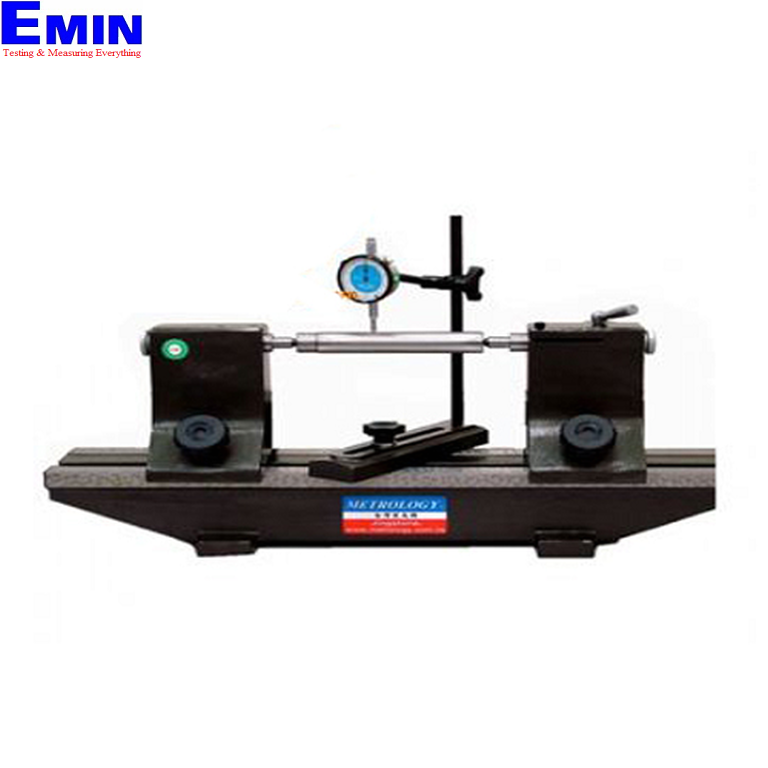
Where mechanical calibration equipment is used
Mechanical calibration is commonly required in tool rooms, metrology laboratories, inspection departments, and production facilities where dimensional accuracy directly affects product quality. Typical tasks include checking dial indicators, verifying bore gages, calibrating measuring tapes or scales, and validating torque tools used in assembly or maintenance operations.
These applications often sit alongside broader calibration activities. Facilities that also manage temperature, pressure, or electronic instrument verification may integrate this category with temperature calibrators or pressure calibration equipment as part of a complete quality system. Mechanical calibration, however, has its own priorities: stable alignment, controlled measuring force, high-resolution length reference, and repeatable positioning.
Typical equipment found in this category
The scope of this category is broad because mechanical measurement itself includes many different instrument families. Some systems are designed for direct dimensional calibration, while others are purpose-built for indicator testing, eccentricity checking, or torque verification. The right equipment is usually determined by the instrument under test rather than by a single universal specification.
For example, tape and scale verification may call for a long-range comparator such as the Octagon MSTC 1000 Measuring Scale & Tape Calibration System, which is intended for controlled length comparison over a 1000 mm range. For dial-type instruments, compact dedicated testers such as the Octagon DCT-50, Octagon DCT-100, or TECLOCK FM-10 are more suitable because they focus on fine displacement and repeatable indicator movement. For broader dimensional applications, large-format universal measuring systems such as the Octagon LMM 1500 Gold Plus, LMM 2000 Gold Plus, and LMM 3000 Gold Plus support extended measurement tasks where range and uncertainty are both critical.
Examples of instruments and reference tools
Some products in this category function as complete calibration systems, while others play the role of reference standards or supporting fixtures within a metrology setup. This distinction matters during selection. A lab may need both a main tester and the accessories or artifacts required to perform a valid inspection process.
Examples include the MITUTOYO 515-723 Check Master, which is used as a precision length reference over a wide range, and the MITUTOYO 157-101 Optical Parallel, which supports optical or contact-based verification tasks where flatness and parallelism are important. For bore gage inspection, the MITUTOYO 12AAK824 Stand for bore gages inspection serves as a dedicated support element rather than a standalone calibration platform. Likewise, the Niigata Seiki ROG-223SS Eccentricity Measuring System is aligned with roundness or eccentricity-related evaluation where fixture stability and gauge compatibility are central to the process.
How to choose the right solution
When comparing mechanical calibration equipment, the first question should be the instrument type and measurement task. A dial indicator, a tape measure, a bore gage, and a torque tool do not require the same mechanics, fixturing, or reference method. Choosing by range alone can lead to a system that technically fits the numbers but does not support the actual calibration procedure efficiently.
The next factors are measurement range, resolution, and uncertainty. For fine displacement work, sub-micron resolution may be relevant, especially in indicator calibration. For longer dimensional verification, the uncertainty model across the full measuring length becomes more important than a single nominal resolution figure. Environmental considerations also matter, including temperature stability, operator method, available bench space, and whether the system is manual or PC-based.
Another practical point is data handling. Some equipment supports internal memory or external interfaces for traceability and reporting. The PCE PCE-TCT 100, for instance, is positioned for torque-related testing with onboard storage and communication options, which can be useful where results need to be documented as part of a controlled quality procedure.
Manufacturer landscape and product ecosystems
Several established metrology brands are relevant in this category, depending on the type of calibration work being performed. MITUTOYO is widely associated with dimensional metrology and reference equipment, while Octagon appears strongly in calibration systems for length and dial measurement. Niigata Seiki, PCE, and TECLOCK also address specific needs such as eccentricity measurement, torque-related testing, and compact tester formats.
Other manufacturers listed in this category, including Mahr, MICROTECH, Kudale, METROLOGY, and Mikrometry, contribute to the broader calibration and precision measurement ecosystem. In practice, brand selection is often driven by the required application, service support, compatibility with existing lab procedures, and the level of metrological performance needed for internal verification or formal calibration work.
Bench-top testers versus large measuring machines
A useful way to think about this category is to separate compact calibration benches from full-size measuring machines. Bench-top units are well suited for routine checks of indicators, small displacement devices, and dedicated fixtures. They are easier to install and integrate into regular inspection workflows, especially when the measuring range is limited and the task is repetitive.
Larger systems, such as universal length measuring machines, are intended for more demanding dimensional calibration tasks across longer ranges. They are better suited to laboratories that need to verify external and internal dimensions, support specialized measuring heads, or work with customized applications. These machines typically require more floor space and a more controlled operating environment, but they offer greater flexibility when the calibration scope is wider.
Why calibration workflow matters as much as equipment
Even high-performance equipment only delivers consistent results when it is used within a controlled process. Fixture alignment, measuring force, reference artifact condition, ambient temperature, and operator technique all influence the final result. For this reason, buyers often evaluate not only the instrument specifications but also how easily the system fits into standard operating procedures and traceability requirements.
Mechanical calibration may also be part of a wider instrument maintenance strategy. Organizations that manage multiple calibration disciplines sometimes combine this category with tools for electrical or process verification, such as multifunction calibrators, especially when one team supports both shop-floor and laboratory instrumentation. While the measurement principles differ, the common goal is the same: dependable, documented accuracy.
Short FAQ
What is mechanical calibration equipment used for?
It is used to verify or calibrate mechanical measuring instruments and related standards, such as dial indicators, bore gages, measuring tapes, torque tools, and dimensional reference devices.
Is a reference artifact the same as a calibration system?
No. A reference artifact, such as a check master or optical parallel, supports verification as a standard or comparison element. A calibration system usually includes the mechanics, positioning, display, and fixturing needed to perform the full calibration task.
How do I choose between a compact tester and a universal measuring machine?
If the task is repetitive and limited to one instrument family, a compact tester is often more practical. If the lab handles multiple dimensional calibration tasks over a longer range, a universal measuring machine may be the better fit.
Choosing mechanical calibration equipment is ultimately about matching the calibration method to the instruments you need to verify. A well-selected system improves repeatability, supports traceable results, and helps maintain confidence in everyday measurement work across production and laboratory environments.
Get exclusive volume discounts, bulk pricing updates, and new product alerts delivered directly to your inbox.
By subscribing, you agree to our Terms of Service and Privacy Policy.
Direct access to our certified experts