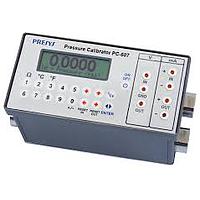
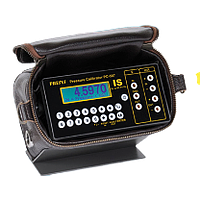
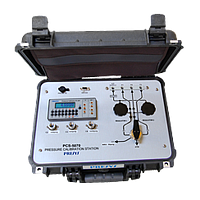
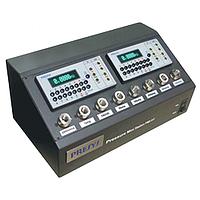
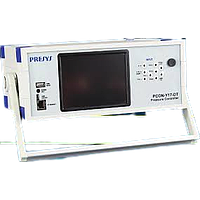
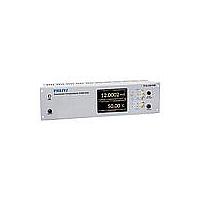
Portable Pressure Calibrator
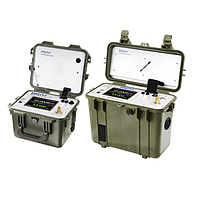
Field calibration work often happens far from a bench, in tight spaces, or directly on running process equipment. In those situations, a Portable Pressure Calibrator helps technicians verify transmitters, gauges, switches, and pressure loops without bringing instruments back to the lab.
These handheld and transportable devices are designed for on-site pressure testing, signal measurement, and loop verification. They are commonly used in process plants, utilities, oil and gas operations, water treatment facilities, and maintenance environments where speed, traceability, and reliable measurement matter.
Why portable pressure calibrators are widely used in field service
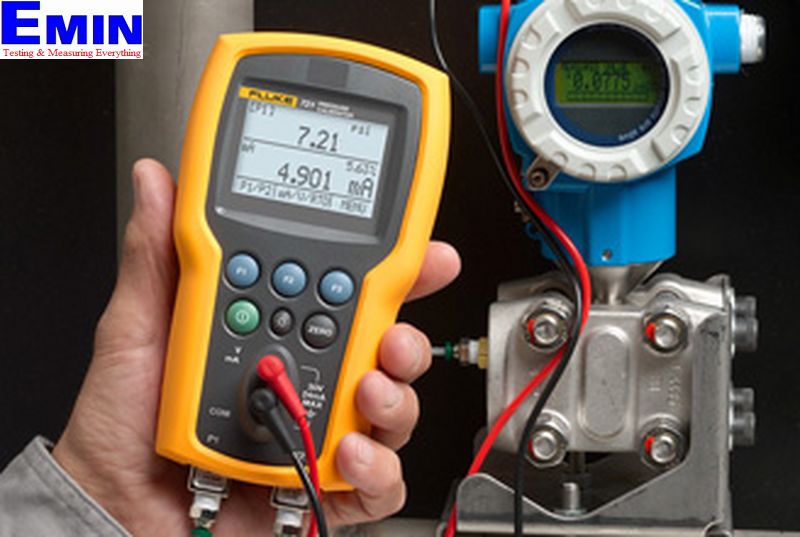
Unlike stationary calibration setups, portable instruments are built for mobility and practical troubleshooting. A technician may need to check a pressure transmitter in place, source or read mA signals, compare applied pressure against instrument output, or confirm whether a device is drifting outside tolerance. A compact calibrator reduces setup time and allows these checks to be performed closer to the actual process conditions.
Many users choose this category when they need a balance between measurement accuracy, portability, and workflow efficiency. For routine maintenance, commissioning, shutdown work, and loop checks, portable models can cover a wide range of pressure and electrical test tasks without requiring a full laboratory system.
Typical applications in instrumentation and process maintenance
Portable pressure calibrators are commonly used for calibrating pressure transmitters, testing pressure gauges, verifying pressure switches, and checking current loops. In plants that rely on 4-20 mA instrumentation, they also help maintenance teams isolate whether an issue comes from the pressure device, the loop signal, or the control wiring.
They are especially useful when service teams need to work across multiple points in one shift. A single instrument may be carried from one transmitter to another, making it practical for preventive maintenance rounds, commissioning work, and troubleshooting jobs where both pressure generation and electrical verification are required.
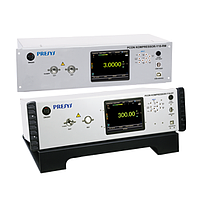
When a calibration workflow also requires stable pressure generation, users often pair these instruments with pressure calibration pumps. For higher-end reference work in a workshop or calibration lab, a benchtop pressure calibrator may be more suitable.
Key functions to consider before selecting a model
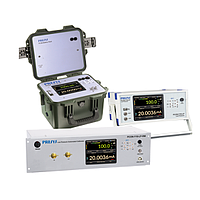
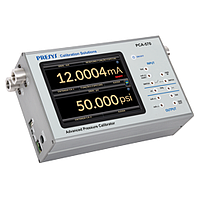
Not every portable calibrator is configured the same way. Some units focus mainly on pressure measurement, while others combine pressure with electrical functions such as mA measurement, voltage measurement, loop power, and temperature input. The right choice depends on the device under test and the calibration procedure used at your site.
Pressure range is one of the first filters. In this category, available examples span from lower pressure work up to much higher ranges, so it is important to match the calibrator to the instruments you service most often. Resolution and accuracy also matter, especially when working with tighter acceptance limits or critical process loops.
- Pressure range: choose according to the normal operating and test span of your transmitters or gauges.
- Accuracy class: important for traceable calibration and acceptance decisions.
- Electrical capability: useful for 4-20 mA loops, voltage checks, or transmitter simulation tasks.
- Portability: size, weight, battery operation, and field usability affect daily efficiency.
- Environment: consider site conditions such as general industrial use or hazardous areas.
Examples from FLUKE for different pressure testing needs
FLUKE is strongly represented in this category, with portable solutions covering both standard field work and more specialized applications. The FLUKE-721 series is a good example of a practical field calibrator family, with models such as the FLUKE-721-3601, FLUKE-721-3603, FLUKE-721-3605, FLUKE-721-3610, FLUKE-721-3615, FLUKE-721-3630, and FLUKE-721-3650 serving different high-pressure ranges while also supporting common electrical measurements used in transmitter calibration.
For users who need broader pressure capability and high precision, the FLUKE-730G31 High-precision Digital Piezometer extends into much higher pressure ranges. Where automatic pressure generation and workflow efficiency are priorities, the FLK-729 300G FC Automatic Pressure Calibrator is relevant for users looking to reduce manual pumping during repetitive calibration tasks.
There are also application-specific options within the same ecosystem. The FLUKE-721EX-3630 and FLUKE-721EX-3650 are positioned for intrinsically safe use cases, while the FLUKE-700TTH5K Premium Transmitter Test Hose Kit plays a supporting role by helping connect calibrators to transmitters and pressure test points more efficiently.
Choosing between a pressure-only reference and a multifunction field calibrator
Some maintenance teams only need a stable, accurate pressure reference for comparison against an installed gauge or transmitter. In that case, a digital reference instrument may be sufficient. Other teams need a more complete tool that can apply or measure pressure, read loop current, supply loop power, and support broader instrument verification in one handheld package.
If your workflow centers on checking a wide variety of field devices, a multifunction portable calibrator is usually more flexible. If your main objective is precise reference measurement or comparison, you may also want to explore a digital pressure calibration gauge or a pressure comparator depending on how your procedures are structured.
Portable calibration setup considerations
Good results depend on more than the instrument itself. Hose quality, fittings, leak-tight connections, and pressure generation method all affect repeatability and test time. That is why accessories can be just as important as the calibrator body, especially in field environments where setup conditions vary from point to point.
For transmitter work, technicians often benefit from having the proper hose kits, adapters, leads, and protective carrying solutions ready with the instrument. This is where supporting items such as the FLUKE-700TTH5K Premium Transmitter Test Hose Kit fit naturally into the calibration workflow rather than being treated as standalone primary equipment.
How to match the category to your maintenance strategy
If your team performs daily or weekly field verification, portability and quick setup should be high priorities. For broader maintenance coverage, choose a model that supports both pressure and electrical tasks so one tool can handle more of the work. If your site has a mix of low-pressure and higher-pressure transmitters, selecting the correct range variant is more important than simply choosing the most advanced model.
Users comparing brands may also review solutions from Fluke (Calibration), YOKOGAWA, Additel, Nagman, PRESYS, R&D Instruments, and Sansel depending on internal standards and calibration practices. The best fit usually depends on required range, target accuracy, safety conditions, and whether the instrument will be used mainly for troubleshooting, routine calibration, or documented verification.
Final considerations
A well-chosen portable pressure calibrator helps shorten downtime, improve field efficiency, and support more consistent calibration results across instruments and locations. Whether you need a compact tool for transmitter checks, a higher-range reference for demanding pressure work, or accessories that streamline site connections, this category is intended to support practical calibration tasks where mobility matters.
Review the available pressure ranges, electrical functions, and application type carefully before selecting a model. That approach makes it easier to choose a device that fits your actual field workflow rather than buying more capability than your team will use.
Get exclusive volume discounts, bulk pricing updates, and new product alerts delivered directly to your inbox.
By subscribing, you agree to our Terms of Service and Privacy Policy.
Direct access to our certified experts