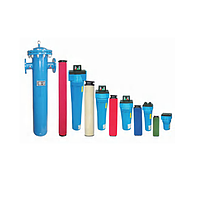
Air filter
Clean compressed air is critical when downstream equipment, pneumatic tools, packaging lines, and process systems need stable performance. In many industrial setups, the right air filter is not just a maintenance accessory; it is a practical way to reduce contamination, protect equipment, and support consistent air quality throughout the line.
This category brings together filtration solutions used in compressed air systems where particles, oil carryover, and vapor need to be controlled at different stages. Whether you are upgrading a new installation or refining an existing treatment train, choosing the right filtration grade helps improve reliability and keeps the whole air system better aligned with process requirements.
Why air filtration matters in compressed air systems
Compressed air often contains a mix of contaminants introduced by ambient intake air, the compression process, piping, and storage. These contaminants may include solid particles, condensed oil, aerosols, and vapor, all of which can affect valves, actuators, instruments, and end-use processes if they are not managed properly.
An effective filtration setup is usually selected as part of a broader treatment approach alongside an air dryer and the upstream air compressor. In practice, the required filter type depends on the contamination level, target air quality, flow demand, and the sensitivity of downstream applications.
Common filter stages and their roles
Not all compressed air filters serve the same purpose. Some are intended for particulate removal, helping capture larger solid contaminants, while others are designed for finer oil aerosol separation or vapor reduction. Understanding this difference is important when specifying a filter for production lines, workshops, or utility air systems.
Within this category, Denair models illustrate several typical filtration levels. The T series is positioned for particulate filtration, such as the Denair T-190 Air Filter, which is suited to applications where removal of solid particles is the main priority. The A series is aimed at oil removal, while the AA series supports extra fine oil removal. For applications requiring tighter control of vapor and very fine contaminants, the H series provides an even finer filtration stage.
This staged approach is common in industrial compressed air treatment. Rather than expecting one filter to solve every contamination issue, users often combine filter grades in sequence so each stage handles a specific task more effectively.
Typical Denair air filter options in this category
Denair is the main featured manufacturer in this range, with multiple models built around large-flow industrial use cases. Several listed units share a DN150 inlet and outlet connection, making them relevant for higher-capacity systems where maintaining flow while controlling pressure drop is important.
For example, the Denair T-190 and T-250 models represent particulate filtration options for systems handling 198 m³/min and 252 m³/min respectively. The Denair A-190 and A-250 models move toward oil removal, while the AA-190, AA-250, and AA-180 versions are intended for extra fine oil removal performance. If the application calls for a finer vapor filtration stage, models such as Denair H-140, H-160, H-180, H-190, and H-250 provide additional coverage across different flow capacities.
These examples are useful when matching a filter to line demand. In larger compressed air networks, physical size, connection standard, and service access are just as important as filtration grade, especially where filtration equipment is installed close to dryers, receivers, or distribution headers.
How to choose the right air filter
The first step is to define the actual air quality requirement at the point of use. A general factory air line may only need effective particle and oil control, while more sensitive applications may need a finer multi-stage arrangement. It is also important to consider whether the filter is being installed as a primary stage, a polishing stage, or a downstream protection stage.
Flow capacity should be checked carefully so the filter can handle the system demand without becoming a bottleneck. In this category, listed examples span capacities such as 144, 162, 180, 198, and 252 m³/min, which helps when comparing options for larger distribution systems. Connection size also matters; many of the featured models use DN150 ports, which can be relevant for industrial users standardizing around larger pipework.
Material and installation environment should also be reviewed. The featured models here are described as carbon steel type, which may fit many industrial settings. Buyers should also think about service intervals, differential pressure monitoring, and how the chosen filter fits with the rest of the compressed air treatment layout.
Application scenarios for industrial air filters
Air filters are used across a wide range of industrial sectors wherever compressed air is part of production, conveying, packaging, automation, or utility support. Even where the process is not highly specialized, contamination in the air line can still shorten component life, increase maintenance frequency, and create inconsistent operation in pneumatic circuits.
In systems that feed multiple end points, filtration also helps standardize air quality across the network. That is especially useful when one line supports both general pneumatic loads and more contamination-sensitive equipment. In these cases, the correct filter arrangement improves system resilience and makes downstream troubleshooting easier.
For plants reviewing the broader treatment chain, it can also be helpful to compare available options across the full air filtration range and related equipment categories so the filtration stage is selected as part of the complete system rather than in isolation.
Practical considerations for system integration
In real installations, filter performance is closely linked to system layout. A well-chosen filter should be installed where condensate load, temperature conditions, and maintenance access are all taken into account. If the line also includes drying equipment, receiver tanks, or multiple filtration stages, the order of components can affect both filtration efficiency and operational stability.
Pressure drop is another practical factor. As filters load with contaminants over time, pressure losses can increase, which may affect energy use and downstream performance. For this reason, industrial users often evaluate not only initial filtration capability but also how easy the unit will be to maintain within a scheduled service program.
When comparing models, it is useful to balance filtration grade, line capacity, port size, construction type, and maintenance requirements. This leads to a selection that fits both the technical duty and the operating realities of the plant.
Finding the right fit for your compressed air line
This category is intended for buyers who need a clearer path to selecting compressed air filtration for industrial systems. With particulate, oil removal, extra fine oil removal, and vapor filtration options represented by Denair models, the range supports different treatment stages rather than a one-size-fits-all solution.
If you are comparing options for a new project or a replacement plan, focus on the required air quality, system flow, connection size, and the role of the filter within the broader treatment train. A suitable industrial air filter helps protect downstream equipment, supports more stable operation, and makes the compressed air system easier to manage over time.
Get exclusive volume discounts, bulk pricing updates, and new product alerts delivered directly to your inbox.
By subscribing, you agree to our Terms of Service and Privacy Policy.
Direct access to our certified experts