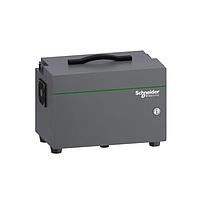
Cobot Controllers
Choosing the right control platform is often what determines whether a collaborative robot cell feels easy to integrate or difficult to maintain. In practical projects, the controller is not just a box that powers motion; it is the point where robot movement, safety logic, I/O handling, communication, and production workflow come together.
On this page, you can explore Cobot Controllers for collaborative automation environments where flexibility, compact system design, and reliable communication matter. Whether you are planning a new robot station, upgrading an existing cell, or comparing component options for OEM and factory integration work, understanding the controller’s role helps you make a more suitable choice.
Why the controller matters in a cobot system
A cobot controller acts as the central processing and coordination unit for the robot. It manages motion commands, interprets sensor and input signals, exchanges data with upstream systems, and supports the operating logic required for repeatable robotic tasks. In many applications, controller selection affects commissioning time, future expandability, and day-to-day troubleshooting efficiency.
Unlike a simple power interface, a modern cobot control architecture needs to support real production requirements. That may include communication with HMIs, PLC-based equipment, conveyors, vision devices, or external safety elements. For this reason, buyers and integrators typically assess not only robot compatibility, but also network capability, I/O structure, software environment, and serviceability over the full lifecycle of the machine.
Typical applications for cobot controllers
Collaborative robot installations are used in a wide range of industrial and semi-industrial settings. The controller helps translate the robot’s mechanical capability into a usable automation solution for tasks such as pick-and-place, light assembly, packaging support, testing assistance, machine tending, and repetitive handling processes.
In these environments, the control unit often has to coordinate more than motion alone. It may need to respond to part-present sensors, interact with peripheral devices, handle stop conditions, and maintain stable operation during repeated production cycles. If your project also requires tooling, mounting options, or complementary hardware, it can be useful to review related cobot accessories alongside the controller selection process.
Key points to evaluate when selecting a controller
The right choice depends on the intended application, system architecture, and maintenance expectations. For B2B sourcing, selection usually starts with a few practical questions: what level of motion control is required, what devices must be connected, and how will the robot cell be operated and supported after installation?
Some of the most important evaluation points include:
- Communication interfaces for integration with factory equipment, supervisory systems, and external devices.
- I/O capability for handling sensors, actuators, status signals, and interlocks.
- Programming and configuration environment that matches the skills of your engineering or maintenance team.
- Safety integration within the broader collaborative application concept.
- Expandability for future tooling changes, process adjustments, or additional peripheral equipment.
Projects with stricter process coordination may also require closer alignment between the robot controller and the broader automation platform. In those cases, users often compare controller features with adjacent system elements such as robot control platforms and external control hardware to ensure a more consistent integration approach.
Controller integration in broader automation environments
In real production cells, a cobot controller rarely operates in isolation. It typically becomes part of a wider control ecosystem that may include PLCs, operator interfaces, industrial networks, safety devices, and process-specific equipment. This is especially important in manufacturing environments where the collaborative robot must exchange status data or synchronize actions with upstream and downstream machinery.
For integrators working across mixed automation platforms, interoperability and support are often more valuable than isolated performance claims. A controller that fits well into an established automation standard can simplify engineering, reduce interface errors, and make long-term maintenance more predictable. Where system consistency is a priority, teams may also consider solutions from established automation suppliers such as SCHNEIDER as part of a broader control strategy.
How cobot controllers differ from general robot components
Many robotics projects include arms, end effectors, connection accessories, communication modules, and mounting hardware, but the controller remains the element that turns these parts into a coordinated system. It provides the execution layer for commands, process logic, and interaction with external devices. That is why controller selection should be treated as a system-level decision rather than a simple component purchase.
This also means buyers should assess maintenance access, installation constraints, and long-term spare part planning early in the project. If your application sits at the intersection of industrial deployment and training or lab-based use, it may also be helpful to compare these products with educational robotic kits to understand differences in control complexity, deployment intent, and operating environment.
Who typically buys cobot controllers
This category is relevant to machine builders, system integrators, factory engineering teams, automation retrofit specialists, and technical procurement departments. In some cases, the purchase is part of a complete collaborative robot project; in others, it supports a replacement, system upgrade, or a custom integration that requires control hardware aligned with a specific architecture.
Procurement decisions are usually shaped by more than initial functionality. Availability, compatibility with the existing plant environment, documentation quality, and support expectations can all influence the final selection. For multi-site organizations or OEM applications, standardizing on a suitable controller approach may also reduce training effort and improve spare part management.
Choosing a controller with future changes in mind
Collaborative automation projects often evolve after initial deployment. A cell that begins with a simple handling task may later require additional sensors, more advanced sequencing, a tooling change, or connection to plant-level monitoring systems. Selecting a controller with room for adaptation can help avoid unnecessary redesign work as production needs change.
It is also worth considering how service teams will interact with the controller over time. Clear diagnostics, practical access for troubleshooting, and compatibility with familiar automation workflows can make a significant difference once the robot moves from commissioning into daily operation. For industrial users, the best fit is often the one that balances integration practicality, maintainability, and application requirements rather than focusing on one specification alone.
Final considerations
A well-matched cobot controller supports more than robot motion; it supports the overall reliability and usability of the automated cell. By looking at communication needs, I/O structure, integration strategy, and future expansion, buyers can evaluate options more effectively and reduce downstream engineering friction.
If you are comparing solutions for a new collaborative robot project or refining an existing design, this category provides a focused starting point for reviewing control hardware within the wider robotics ecosystem. The most effective selection is usually the one that fits naturally into your application, your maintenance capabilities, and the way your production environment is expected to grow.
Get exclusive volume discounts, bulk pricing updates, and new product alerts delivered directly to your inbox.
By subscribing, you agree to our Terms of Service and Privacy Policy.
Direct access to our certified experts