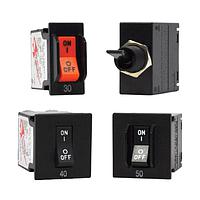
Circuit Breakers
Reliable power distribution depends on one simple idea: disconnect a fault before it spreads. In industrial panels, machinery, DC systems, and commercial electrical installations, the right protective device helps reduce equipment damage, limit downtime, and improve overall system safety. That is why choosing the correct circuit breakers is not just about current rating, but also about application, interruption behavior, and installation context.
This category brings together breaker solutions used for overload and short-circuit protection across a wide range of electrical systems. Whether you are selecting compact single-pole protection for lower-voltage DC circuits or looking for molded case solutions for higher-power distribution, it helps to compare device type, operating characteristics, and compatibility with the rest of the protection scheme.
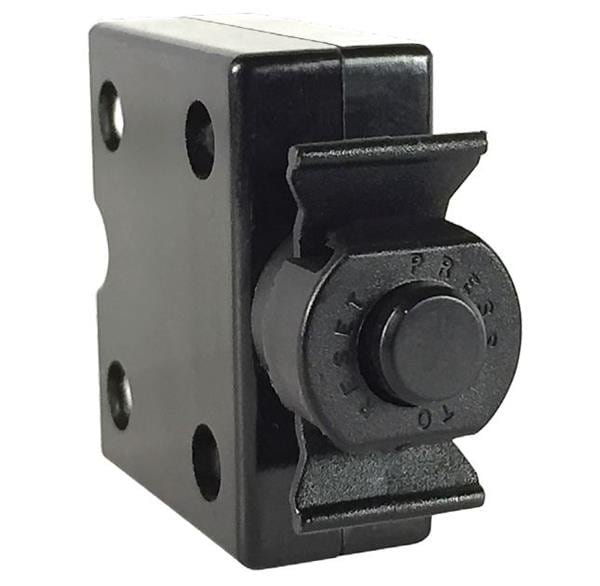
How circuit breakers protect electrical systems
A circuit breaker automatically opens a circuit when current rises beyond a safe level or when a short circuit occurs. Under normal operating conditions, its contacts remain closed and allow current to pass. When an abnormal condition is detected, the internal trip mechanism releases the contacts and interrupts the flow of electricity.
In practice, this response helps protect cables, connected loads, and upstream equipment. For engineering and maintenance teams, the key value lies in fault isolation: a properly selected breaker can disconnect the affected part of the system quickly enough to reduce thermal stress, prevent cascading issues, and simplify troubleshooting.
Common breaker types in this category
Not all applications require the same form factor or protection profile. Some installations use compact, single-pole devices for branch circuits or DC equipment, while others require larger units with higher current capacity and stronger interruption capability. This is especially important when moving from light-duty control circuits to heavier industrial feeders.
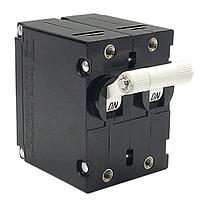
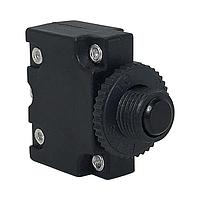
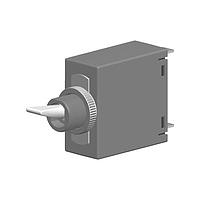
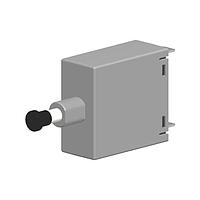
Several products in this category illustrate that range well. Eaton CBC-8, Eaton CBC-10B, and Eaton CBT-30N are examples of lower-current breaker options for more compact protection needs. For higher-current DC applications, Eaton CB285F-40 and Eaton CB187F-100 Thermal show how thermal breaker designs may be used where resettable protection is preferred over one-time replacement components. At the larger end, the ABB XT4N 250 TMA 250-2500 3p F F MCCB represents a molded case circuit breaker approach suited to higher-power distribution environments.
What to consider when selecting a breaker
The first step is matching the breaker to the electrical characteristics of the circuit. Rated current, pole count, and operating voltage all matter, but they should be considered together rather than in isolation. A breaker that is oversized may reduce protection effectiveness, while an undersized one can lead to nuisance tripping and interrupted operation.
It is also important to look at whether the circuit is AC, DC, or mixed within a broader system architecture. DC protection, in particular, demands careful attention because arc interruption behavior differs from AC applications. Where available, details such as thermal trip type, operational voltage, and intended installation role provide useful guidance. If your project also requires related parts for mounting, actuation, or integration, it can be useful to review circuit breaker accessories alongside the main device selection.
Examples from Eaton and ABB
Eaton appears prominently in this category with multiple breaker formats covering different current ranges and applications. Models such as Eaton BK/CB1911-10, Eaton JA1S-T3-AB01DAW-3-250AC-3 Circuit Breakers, and Eaton GH3-G3-U-W-50-480AC-2 reflect how breaker selection can vary depending on voltage level, installation design, and required protection behavior. Eaton PKZM0-2,5-PI and Eaton PKZM0-XDM32-PI also indicate the presence of motor-related or panel-oriented protection solutions within broader breaker ecosystems.
On the ABB side, the XT4N 250 TMA 250-2500 3p F F MCCB stands out as a more robust molded case option with 3-pole configuration and industrial-duty operating characteristics. This kind of breaker is typically relevant when system designers need higher rated current handling, stronger mechanical durability, and a solution better aligned with distribution boards or larger equipment circuits.
Where these breakers are typically used
Breaker selection often starts with the application environment. Lower-current single-pole devices may be used in compact DC panels, vehicle-related electrical systems, backup power assemblies, or auxiliary protection tasks inside equipment. Thermal breaker variants can be a practical fit where operators need a resettable protective device and clear trip behavior under overload conditions.
Larger breakers, especially molded case designs, are more often associated with switchboards, machinery feeders, building services, and industrial distribution systems. In these settings, the breaker is part of a broader protection coordination strategy that may also involve fuses, contactors, overload relays, or isolation devices. If you want to compare across the broader product range, you can also browse the main circuit breakers collection to narrow down by form factor and application.
Practical buying guidance for B2B projects
For OEM, panel building, and maintenance purchasing, a good selection process starts with the actual operating load rather than a generic replacement habit. Review the circuit’s normal current, expected inrush behavior, system voltage, available installation space, and whether manual reset capability is needed. This helps avoid choosing a device that fits physically but does not match protection requirements.
It is also useful to think in terms of the full electrical assembly. A breaker may need to fit a specific panel layout, interface with busbar or terminal arrangements, or align with the maintenance standards already used on site. In that sense, a product is not only a standalone protective device but part of a larger electrical protection system that should remain serviceable and consistent over time.
Why category-level comparison matters
When multiple current ratings, trip styles, and breaker formats are available, browsing by category helps technical buyers move beyond simple model matching. It creates a better basis for comparing compact branch protection, thermal resettable options, and MCCB solutions without losing sight of the actual operating environment.
This is especially valuable when replacing an existing unit with incomplete documentation or when designing a new panel from the ground up. By comparing representative products such as Eaton CBC-8, Eaton CB285F-40, Eaton 22320-400 Thermal, or ABB XT4N 250 TMA 250-2500 3p F F MCCB, buyers can build a clearer shortlist before moving into detailed specification review.
Final considerations
Choosing the right breaker means balancing current rating, voltage, trip behavior, installation method, and the role of the device inside the wider system. A small branch circuit, a DC load, and a three-phase industrial feeder may all require very different protection approaches, even though they fall under the same category.
This category is designed to support that comparison process with practical options from recognized manufacturers and a mix of compact and heavy-duty breaker types. If you are evaluating protection devices for new equipment, panel upgrades, or replacement planning, a structured review of the available circuit breakers can help you reach a safer and more suitable selection.
Get exclusive volume discounts, bulk pricing updates, and new product alerts delivered directly to your inbox.
By subscribing, you agree to our Terms of Service and Privacy Policy.
Direct access to our certified experts