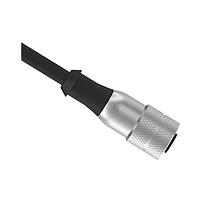
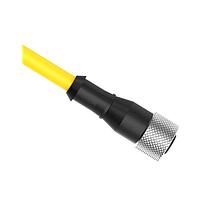
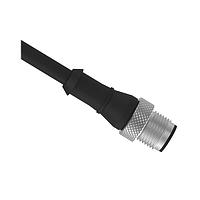
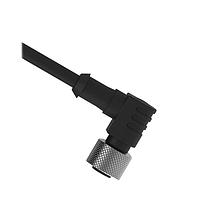
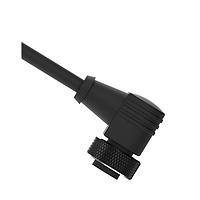
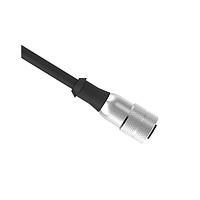
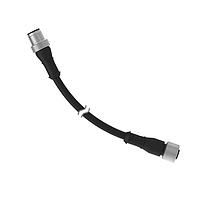
Cable Assemblies
Reliable connectivity often depends on more than choosing the right connector. In many industrial, electronic, and B2B sourcing projects, the fastest path to consistent installation is selecting Cable Assemblies that are already matched for interface, routing, and application requirements. This helps reduce wiring errors, simplify procurement, and improve repeatability across prototypes, maintenance work, and production builds.
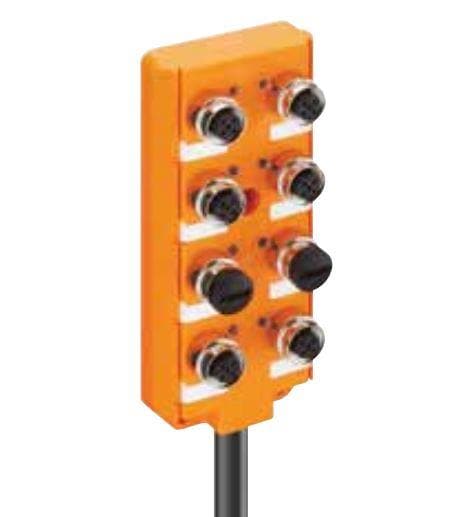
Where cable assemblies fit in a connector ecosystem
A cable assembly combines conductors, termination points, and often a defined connector format into a ready-to-use interconnection solution. Instead of sourcing each element separately and building the cable in-house, buyers can use assembled options to support faster deployment and more predictable electrical and mechanical performance.
This category is especially relevant when projects involve repeated installations, field replacement, or limited assembly time. In practice, cable assemblies often work alongside related connector components such as contacts and interface-specific terminations, helping teams build cleaner and more maintainable systems.
Common use cases in industrial and electronic applications
Cable assemblies are used wherever equipment, subsystems, or panels need dependable signal or power paths with less manual wiring effort. Typical environments include control cabinets, embedded electronics, test setups, communications hardware, and OEM equipment integration. For buyers in technical environments, the value is not only convenience, but also improved consistency from one installation to the next.
They are also useful in service and retrofit work, where replacing a complete wired assembly can be more efficient than troubleshooting individual terminations. In applications that require modular replacement, organized cable routing, or repeated mating cycles, a pre-configured assembly can help reduce downtime and support easier maintenance planning.
Key factors to consider when selecting cable assemblies
The right choice usually starts with the interface and the installation environment. Buyers should look at connector type, cable length, conductor arrangement, flexibility, expected movement, and how the assembly will be routed through the equipment. Even when two assemblies appear similar, differences in layout or intended use can affect fit, service life, and ease of installation.
It is also important to consider whether the assembly is being used for signal transmission, power distribution, or mixed requirements. In many projects, mechanical fit is just as important as electrical compatibility, especially where space is limited or connectors must align with existing hardware. If the assembly is part of a broader connector system, related categories such as keystone connectors may also be relevant depending on the final interface design.
Benefits for procurement, assembly, and maintenance teams
For purchasing teams, cable assemblies can streamline sourcing by reducing the number of separate line items needed for a connection path. Instead of managing cable, connector housings, terminations, and assembly labor independently, the bill of materials can become easier to control. This is often helpful in B2B environments where consistency, availability, and replacement planning matter more than one-off custom wiring.
For technicians and integrators, the main advantage is usually installation efficiency. Pre-assembled connectivity can cut preparation time, reduce termination mistakes, and support faster field swaps. It can also improve documentation quality, since a complete assembly is easier to identify and standardize than a collection of loose components.
Manufacturer context and sourcing considerations
This category may include options associated with widely recognized suppliers in electronic connectivity and component ecosystems, including 3M and AMP Connectors - TE Connectivity. When evaluating manufacturer-backed solutions, buyers often consider long-term supply continuity, compatibility with existing hardware, and whether the supplier supports broader connector families used elsewhere in the system.
For engineering and procurement teams, it is usually more useful to compare assemblies by application fit than by brand name alone. A strong selection process focuses on mating interface, cable construction, installation constraints, and service expectations. Brand can help narrow sourcing, but the best match is typically the one that fits the required operating context with the least integration risk.
How cable assemblies relate to adjacent connector categories
Cable assemblies rarely exist in isolation. In real installations, they are part of a larger connectivity chain that may include panel interfaces, board-level connectors, test points, or replaceable terminal elements. Understanding that broader context helps buyers avoid mismatched parts and make more informed decisions during design or maintenance planning.
Depending on the application, related products such as banana and tip connectors may be useful for test and measurement style connections, while specialized categories like LGH connectors can be relevant in high-voltage interconnect environments. Looking at the full connection path often leads to a better overall system choice than evaluating a single component in isolation.
Practical guidance for evaluating options on this page
When browsing this category, it helps to start with the intended equipment interface and the role the assembly plays within the system. Check whether the goal is replacement, new integration, prototyping, or standardized production sourcing. That context will influence what matters most, such as cable length, connector orientation, handling requirements, or serviceability.
If multiple assemblies appear suitable, narrow the list by installation constraints and lifecycle needs rather than by description alone. Teams responsible for industrial maintenance, machine building, or electronics integration typically benefit from choosing assemblies that simplify routing, reduce on-site work, and align with the rest of the connector platform already in use.
Choosing with long-term reliability in mind
A well-selected cable assembly supports more than basic connectivity. It can improve assembly workflow, reduce wiring variability, and make systems easier to maintain over time. That is why this category is often important not only for design engineers, but also for buyers, panel builders, service teams, and OEM production planners.
As you compare options, focus on application fit, connector compatibility, and the practical realities of installation and replacement. A cable assembly that matches the electrical and mechanical needs of the job will usually deliver better results than a generic substitute, especially in demanding technical environments.
Get exclusive volume discounts, bulk pricing updates, and new product alerts delivered directly to your inbox.
By subscribing, you agree to our Terms of Service and Privacy Policy.
Direct access to our certified experts