Contact Probes
Reliable temporary electrical contact is essential in test fixtures, production inspection, battery interface points, and other applications where signals or power must be transferred without creating a permanent connection. In these situations, Contact Probes help engineers and buyers build repeatable, serviceable interfaces that support consistent measurements and dependable device engagement.
This category brings together spring-loaded probe components and related accessories used in electronic testing and connector systems. Whether the requirement is low-force contact for sensitive assemblies, higher-force engagement for stable electrical continuity, or a specific tip geometry for a defined target surface, the right probe style can make a significant difference in fixture performance and maintenance intervals.
Where contact probes are commonly used
These components are widely used anywhere a circuit needs to be contacted repeatedly without soldering or permanent mating. Typical examples include test jigs, board-level inspection setups, charging contacts, functional test stations, and compact connector interfaces where spring travel helps compensate for tolerance stack-up or alignment variation.
Because the contact is dynamic, probe selection is usually influenced by more than just size. Engineers often evaluate travel distance, spring force, current handling, and the surface shape being contacted. A probe that works well on a flat pad may not be ideal for a round terminal, textured surface, or recessed point, so tip geometry is part of the electrical and mechanical design decision.
Key selection factors for this category
When comparing options in the Contact Probes range, one of the first checks is the intended electrical load. Some probes in this category are suited to lower-current signal paths, while others support higher current transfer. As an example, the Smiths Interconnect IDI D-CP-2.5-6-SC-BB probe is listed with a 15 A rating, making it relevant for applications that need a more robust current path than a typical signal-only probe.
Mechanical behavior is just as important. Spring force affects how firmly the probe engages the contact point, while available travel helps absorb assembly tolerances and repeated cycling. For instance, products such as the Smiths Interconnect IDI S-2-F-4-D and S-2-H-10-D show how different force levels and tip styles can be selected depending on whether the priority is gentle contact, better surface penetration, or improved positional stability.
Tip style should also match the mating surface. Flat tips can be useful on smooth pads, serrated styles can improve grip on certain surfaces, and concave or spear-style tips may be preferred when a more defined contact point is needed. This is why probe choice is often tied directly to fixture geometry rather than treated as a generic connector component.
Understanding probe formats and companion parts
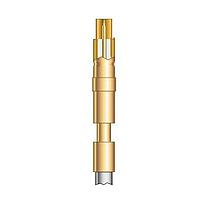
A complete solution may involve more than the probe itself. In many systems, a spring-loaded probe is paired with a receptacle, socket, clip, or installation tool to create a maintainable assembly. The Smiths Interconnect IDI R-50C-WW-025 receptacle, for example, represents the supporting hardware side of the interface rather than the moving contact element alone.
Some items in this category also serve ecosystem roles around installation and handling. The Smiths Interconnect IDI RT-WT-HT wire plug tool is a good example of an accessory that supports assembly or service work. Likewise, the Preci-Dip 0907-1-CLIP shows that not every product here follows the same probe body format; some are designed to provide spring-loaded contact through a different mechanical style.
If your application depends on broader mating hardware, it can also be useful to review related contact components or compatible cable assemblies as part of the overall interconnect design.
Examples of probe styles in this range
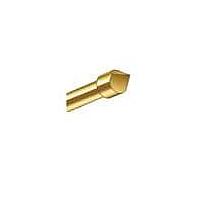
The products featured in this category illustrate how much variation exists even within a narrow component family. Smiths Interconnect IDI SHE-100-K-6.7-G uses a 45-degree four-sided chisel tip, which may be suitable where the contact surface benefits from a shaped engagement profile. In contrast, the Smiths Interconnect IDI S-3-G-4-D uses a concave tip format, while the S-100-H-17-G uses a serrated design with a comparatively high spring force.
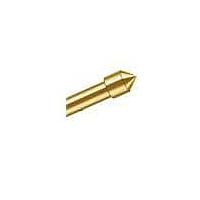
Other models emphasize compact travel and alternative contact geometry. The Smiths Interconnect IDI S-2-B-8.3-D features a 30-degree spear-style tip, while the S-2-F-8.3-G and S-2-F-4-D focus on flat headed contact styles. These examples show why buyers often begin with the target interface and cycle requirements, then narrow the choice by force, current rating, and mechanical envelope.
For projects that need brand-specific sourcing continuity, this category includes products from Smiths Interconnect IDI as well as solutions from Preci-Dip. Both are relevant references when comparing spring-loaded contact hardware for test and interconnect use.
How to choose contact probes for repeatable performance
A practical selection process usually starts with the contact target: pad, post, wire-wrap point, terminal, or custom conductive surface. From there, it helps to define the acceptable force on the mating part, the number of expected cycles, the available installation space, and whether the probe is carrying power, low-level signal, or both. This avoids over-specifying the part while reducing the risk of unstable contact during use.
It is also worth considering replacement and maintenance strategy. In fixture-based environments, probes are wear components, so standardized formats and accessible installation can simplify service. When a design includes multiple interconnect elements, related categories such as banana and tip connectors may also be relevant for bench test setups or auxiliary measurement paths.
Why this category matters in test and connector design
Contact probes occupy a small physical footprint, but they often have a direct impact on test reliability, uptime, and measurement consistency. A mismatch in force, tip geometry, or travel can lead to intermittent contact, unnecessary wear, or frequent fixture adjustment. Choosing a probe with the right balance of electrical and mechanical characteristics helps create a more stable interface over repeated cycles.
This is especially important in B2B environments where fixtures and connector subsystems are expected to support ongoing production, engineering validation, or field service. Instead of treating the probe as a minor accessory, it is better viewed as a precision contact element within a larger electromechanical system.
Finding the right fit for your application
This Contact Probes category is best approached by matching the component to the real operating conditions: contact surface, current path, force requirement, installation method, and maintenance expectations. The available range includes different probe geometries, receptacle formats, and support tools, making it easier to configure a solution that aligns with practical testing or interconnect needs.
If you are narrowing down options, focus first on tip style, spring characteristics, and the role of the part within the full assembly. That approach will usually lead to a better shortlist than comparing part numbers alone, especially in applications where repeatability and long-term serviceability matter.
Get exclusive volume discounts, bulk pricing updates, and new product alerts delivered directly to your inbox.
By subscribing, you agree to our Terms of Service and Privacy Policy.
Direct access to our certified experts