
D-Sub Adapters
When two D-Sub interfaces do not match mechanically or electrically, the right adapter can save time in panel integration, maintenance, and field replacement work. In control systems, industrial communication lines, test benches, and legacy equipment upgrades, D-Sub Adapters are often the small but essential component that makes existing hardware usable without redesigning the full connection path.
This category brings together adapter solutions used to change gender, bridge connector formats, or support interface conversion within a D-Sub-based connection environment. For engineers, buyers, and maintenance teams, the main value is practical compatibility: selecting an adapter that fits the required pin arrangement, mounting style, shielding needs, and application conditions.
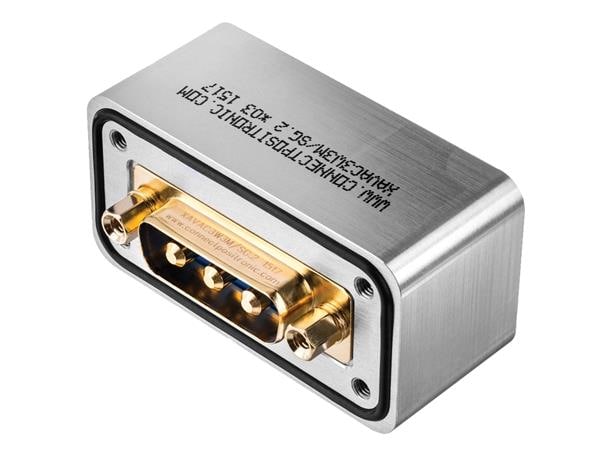
Where D-Sub adapters are commonly used
D-Sub connectors remain widely used in industrial automation, instrumentation, motion systems, telecom equipment, and serial communication networks. In many installations, a direct cable-to-device connection is not always possible because of connector orientation, gender mismatch, panel constraints, or the need to connect newer subsystems to existing hardware.
That is where interface adaptation becomes important. A D-Sub adapter can help convert one connector arrangement into another, simplify retrofit work, or create a cleaner transition between controller ports, communication modules, and field wiring. In environments where uptime matters, using the correct adapter is often more efficient than modifying cables or replacing functional equipment.
Typical adapter formats in this category
The category includes more than one adapter style, so selection should start with the actual connection problem you need to solve. Some parts are used as classic gender changers between male and female D-Sub interfaces, while others act as broader connector interface components for system-level integration.
There are also specialized options intended for communication networks and mixed connector environments. For example, PHOENIX CONTACT components such as the 2902731 SUBCON-PLUS-CAN/90X/M12 and 2902324 SUBCON-PLUS-CAN/35/PG/M12 illustrate how D-Sub-based adaptation can support CAN-related connection layouts where installation space and cable routing matter. If your requirement is more focused on standard connector conversion, you may also want to review related D-Sub connector options for complete mating compatibility.
Key selection points before ordering
The first factor is the connector interface match: pin count, gender, and mechanical compatibility on both sides of the connection. Even when two interfaces are both described as D-Sub, differences in position count or housing style can make them incompatible. Confirm whether the adapter is intended for direct mating between standard D-Sub ends or for bridging to a different connector family.
Next, consider installation conditions such as panel mounting, cable exit direction, and operating environment. Some applications need a straight interface path, while others benefit from angled designs to reduce cable stress or improve cabinet clearance. Temperature range, current rating, and shielding requirements may also influence the choice, especially in industrial enclosures or communication systems exposed to electrical noise.
It is also worth checking whether the adapter is filtered or unfiltered. In some control and signal environments, a filtered adapter may help support EMC-related design needs. The Amphenol Commercial Products FCE17C37AD4D0 is one example of a filtered male-to-female D-Sub adapter format, showing how adapter choice can go beyond simple mechanical conversion.
Examples from leading manufacturers
This category includes products from widely recognized connector suppliers, giving buyers access to different design approaches and interface ecosystems. Amphenol appears in the range with parts such as the U98-B221-1001 Connector Interface and the FWFTV21N panel-mount IEEE 1394 receptacle format, which can be relevant when a project combines D-Sub infrastructure with adjacent interface requirements.
HARTING and Molex also contribute interface-oriented products that may suit equipment integration, board-level transitions, or compact interconnect layouts. Examples such as HARTING 27-11-161-8001, HARTING 09 45 181 9001 XL, Molex 105133-0021-TR450, and Molex 105133-0031-TR450 show the variety found within adapter and interface-related connection components.
For smaller-format or specialized interface needs, Hirose Electric MQ172-3SA-CV(50) and JST Connectors MUF-PK10K-X provide additional context for applications where compact connector adaptation is part of a broader system design. Rather than choosing by brand alone, it is better to compare form factor, mating requirements, and the role each adapter plays in the final assembly.
How adapters fit into the broader D-Sub ecosystem
A reliable interconnect setup usually depends on more than one component. In many projects, the adapter is only one part of a complete chain that includes the main connector, contacts, cable accessories, and protection hardware. When troubleshooting a mismatch, it helps to review whether the issue is really an adapter need or whether the correct solution is a different connector body, replacement contact, or cable-side accessory.
For that reason, engineers often evaluate adjacent categories during specification or maintenance planning. If you are building or repairing a full assembly, related items such as backshells for cable protection or D-Sub contacts may be just as important as the adapter itself. Looking at the full interconnect path can reduce fit issues and avoid repeated ordering cycles.
Choosing for retrofit, maintenance, and new builds
In retrofit projects, the main priority is usually preserving compatibility with installed equipment. Here, D-Sub adapters are often used to avoid rewiring legacy systems, especially when replacing a controller, communication module, or panel device with a newer variant. The best approach is to map both ends of the connection and identify whether the mismatch is mechanical, electrical, or installation-related.
For maintenance teams, stocking a small range of commonly needed adapters can shorten downtime when field equipment must be restored quickly. In new builds, on the other hand, adapters should be selected carefully so they support serviceability without adding unnecessary connection complexity. A clean design uses adapters where they genuinely improve integration, not as a workaround for unclear connector planning.
Final considerations
D-Sub adapters play a practical role in keeping systems connectable across generations of equipment, mixed interfaces, and real-world installation constraints. Whether the job involves CAN communication accessories, filtered gender conversion, compact interface components, or panel integration, the right choice depends on connector compatibility, mounting requirements, and the operating context.
By comparing the intended interface on both sides and reviewing the surrounding D-Sub hardware, buyers can narrow the selection more effectively and avoid common fit or performance issues. For industrial procurement and engineering teams, that leads to a more reliable connection strategy with fewer surprises during installation.
Get exclusive volume discounts, bulk pricing updates, and new product alerts delivered directly to your inbox.
By subscribing, you agree to our Terms of Service and Privacy Policy.
Direct access to our certified experts