D-Sub Contacts
Reliable signal and power transmission often depends on a small component that is easy to overlook: the contact inside the connector. In D-sub assemblies, contact selection directly affects electrical performance, wire compatibility, serviceability, and long-term stability in industrial and electronic systems.
D-Sub Contacts are the removable or fixed conductive elements used within D-sub connector interfaces to terminate wires or support specialized transmission paths. This category is especially relevant for engineers, panel builders, maintenance teams, and procurement professionals who need to match contact style, gender, termination method, and current capability to a specific connector layout.

Where D-sub contacts fit in a connector system
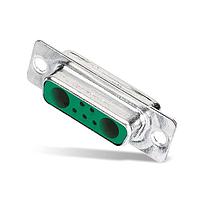
A D-sub connector is more than just the shell and housing. The contact is the electrical interface that mates with the opposing side, carries the signal or power, and determines how the cable or conductor is terminated. In practical terms, choosing the wrong contact can create issues with fit, insertion, conductivity, or wire compatibility even if the connector body itself is correct.
This is why D-sub contact selection is usually considered together with the full connector ecosystem. If you are building or repairing a complete interface, it can also help to review related D-Sub connectors and accessories that support cable routing and assembly protection.
Common contact types in this category
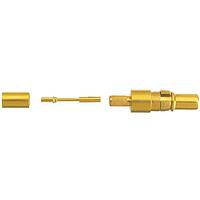
This category typically supports several application needs rather than one single contact format. Signal contacts are commonly used for lower-current data or control lines, while power contacts are selected for higher-current circuits within mixed-layout D-sub connectors. There are also specialized versions such as coax contacts for impedance-sensitive transmission and machined contacts for assemblies that require precise mating characteristics.
The product selection in this category reflects that variety. For example, Amphenol Commercial Products offers crimp signal contacts such as 86564520064LF and 86566610065LF for typical wire-based terminations, while HARTING provides power-oriented options including 09692825421 and 09691825421 for higher-current applications. For more specialized requirements, HARTING 09691817230 supports coax-style integration, and 09695812550 represents a high-voltage contact format within the D-sub family.
Key selection criteria before ordering
The first point to confirm is contact gender. Pin and socket contacts must match the connector design and the mating side of the assembly. A mismatch here can stop an installation before it begins, so buyers usually verify contact layout against the connector housing and cable-side design before placing an order.
Next, check wire size and termination style. In this category, you will find crimp contacts for ranges such as 28 AWG to 24 AWG or 24 AWG to 20 AWG, as well as larger power contacts designed for heavier conductors like 14 AWG to 12 AWG or even 9 AWG. Solder cup styles are also relevant where field termination methods or assembly preferences call for direct soldering instead of crimp tooling.
Electrical load is equally important. A 5 A signal contact serves a very different purpose from a 20 A or 30 A power contact. When comparing options, engineers should look at the expected current, conductor size, connector insert design, and whether the application involves signal integrity, power distribution, or mixed signal-and-power arrangements.
Crimp, solder, and specialized terminations
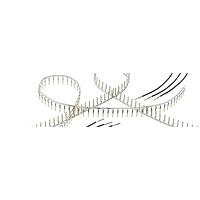
Crimp contacts are widely used in industrial cable assembly because they support repeatable terminations, efficient production workflows, and easier replacement in serviceable connector systems. Products such as Amphenol Commercial Products 86564520064LF or AMP Connectors - TE Connectivity 66504-3 and 66505-3 are good examples of contact styles suited to crimp-based assembly processes.
Solder contacts remain relevant where assembly conditions, tooling availability, or cable design make soldering more practical. HARTING 09691817421 is one example in this category for applications that require a solder-based female power contact. For specialized transmission, coax contacts such as HARTING 09691817230 are chosen when the connector must support controlled impedance paths rather than standard signal wiring.
When serviceability matters, it is also worth considering accessories that support a more durable cable exit and strain management. In many assemblies, D-Sub backshells play an important role alongside the contacts themselves.
Representative manufacturers and product examples
This category includes parts from established connector suppliers used across industrial electronics, telecom, instrumentation, and embedded systems. HARTING appears strongly in the range with signal, power, coax, and high-voltage related contact options, making it relevant for users who need application-specific D-sub configurations rather than only standard signal pins.
Amphenol Commercial Products is also a notable source for D-sub contacts, especially for crimp-based signal and power terminations. Examples such as 8638PPC3005LF for a higher-current pin contact and 86566610065LF for socket termination show how the category supports both heavier power conductors and conventional signal wiring. AMP Connectors - TE Connectivity contributes cut-strip crimp socket options that can fit production-oriented procurement needs.
Typical applications for D-sub contacts
D-sub contacts are commonly selected for control cabinets, industrial communication interfaces, test equipment, automation wiring, legacy serial interfaces, embedded systems, and mixed signal/power connector assemblies. In these environments, the contact is not just a consumable part; it is the point where electrical continuity and mechanical reliability come together.
They are also useful in maintenance and retrofit work. Instead of replacing an entire connector assembly, technicians may only need to replace damaged or unsuitable contacts to restore performance. In that context, related items such as D-Sub adapters or protective cable components can help extend or reconfigure an existing interface without redesigning the full system.
How to choose more efficiently
For faster selection, start with four checkpoints: contact gender, wire gauge, termination style, and current requirement. Then confirm whether the application is standard signal, power, coax, or another specialized use case. This simple filter process usually narrows the range quickly and reduces the risk of ordering contacts that fit mechanically but not electrically or process-wise.
If you are sourcing for production, it is also sensible to think about assembly tooling, replacement cycles, and stocking strategy. Crimp contacts may be preferred for volume cable assembly, while service teams may prioritize contact formats that are easier to replace during field maintenance. Matching the contact to the connector system, rather than treating it as an isolated part, usually leads to better long-term results.
Final notes
The right D-sub contact helps ensure dependable mating performance, appropriate current handling, and smoother cable assembly from prototype through production and maintenance. Whether you need standard signal crimp contacts, heavier power contacts, or more specialized coax and high-voltage options, this category is designed to support a wide range of D-sub connector builds.
Review the electrical and mechanical requirements carefully, then compare suitable options from manufacturers such as HARTING, Amphenol Commercial Products, and AMP Connectors - TE Connectivity. A precise contact choice at the start can save time in assembly, reduce rework, and improve overall connector reliability in the finished system.
Get exclusive volume discounts, bulk pricing updates, and new product alerts delivered directly to your inbox.
By subscribing, you agree to our Terms of Service and Privacy Policy.
Direct access to our certified experts