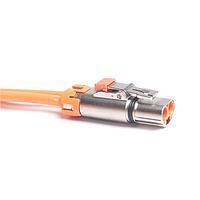
EV Connectors
High-voltage wiring in electric vehicles and battery-powered equipment demands more than a simple plug-and-socket interface. Engineers typically need secure mating, vibration resistance, appropriate insulation, and a connector system that fits the mechanical and electrical architecture of the application. That is why EV Connectors are specified with close attention to current path, cable size, mounting style, keying, and service safety.
On this page, you can explore connector options used in EV power distribution and related electrified systems, including plugs, receptacles, and multi-position formats. The range is relevant for design, prototyping, maintenance, and component sourcing where reliability, fit, and compatibility matter across the full interconnect system.
Where EV connectors are used
In electrified platforms, connectors support critical links between battery packs, inverters, charging interfaces, power distribution units, auxiliary circuits, and other high-current subsystems. Depending on the design, the connector may be used for cable-to-cable, cable-to-panel, or cable-to-busbar connection points, each with different packaging and installation constraints.
Compared with general-purpose interconnects, high-voltage connectors in EV environments are often selected for demanding operating conditions such as limited space, repeated mating cycles, shock, and temperature variation. This makes factors like sealing level, conductor size support, orientation, and locking geometry especially important during part selection.
Typical connector formats in this category
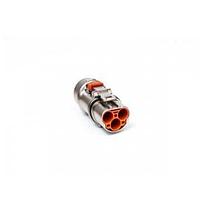
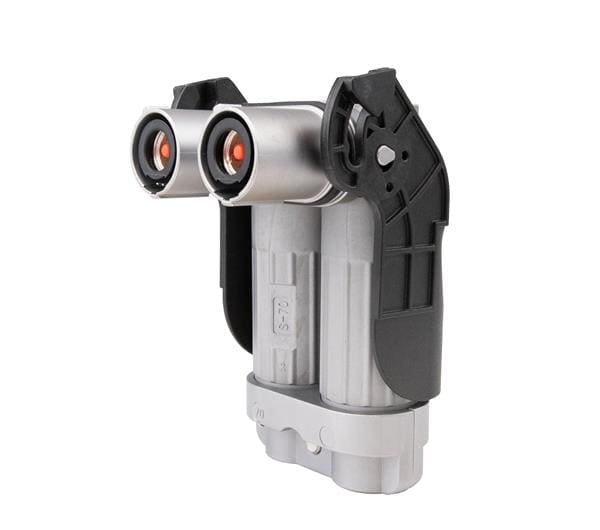
The category includes both single-position and multi-position designs, allowing engineers to match the interconnect to the electrical architecture. Single-way options are often considered where one power path must be routed cleanly and securely, while 2-way, 3-way, or 4-way designs can help consolidate connections and simplify packaging.
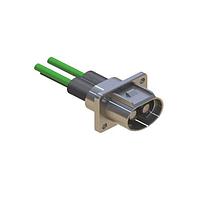
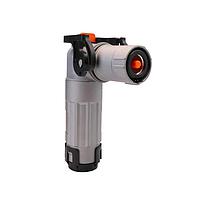
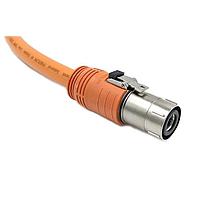
You will also find a mix of straight and right-angle configurations, along with plug and receptacle styles. For example, parts such as the Amphenol Technical Products PL18Y-201-B and PL18T-300-70-5 illustrate straight single-way formats, while the PL282X-301-50-2-5 and PL283X-301-35-2-5 show how right-angle and multi-position variants fit applications where cable routing and space management are important.
Key selection factors for EV connector sourcing
When comparing parts, it helps to begin with the basic electrical and mechanical requirements: conductor size, number of positions, mounting approach, and expected voltage and current levels. Some products in this category are intended for panel mounting, while others are designed for cable termination or receptacle integration into a broader assembly.
Environmental protection may also be a deciding factor. For instance, selected products in this range indicate IP67 protection and 1 kVDC voltage rating, which are useful reference points when evaluating suitability for sealed high-voltage interconnects. Crimp termination is another common characteristic, often chosen for robust cable attachment in production and service environments.
Keying and safety-related features deserve close review as well. Variants with different key codes help prevent mating errors between similar-looking connectors, while options with or without HVIL may be selected depending on system-level interlock requirements.
Examples from Amphenol Technical Products
A strong portion of this category is represented by Amphenol Technical Products, particularly within the PowerLok family used in EV power applications. The portfolio shown here covers several conductor sizes and layouts, which is useful when the design must balance current handling, packaging, and service access.
For compact single-position needs, examples such as PL28T-300-35-2-5 or PL19U-501-95-2-5 reflect different cable and keying combinations. For multi-way connections, parts like PL182X-300-35-5, PL083Y-40-4, and PL184X-41-4 demonstrate how the same ecosystem can support more than one circuit path while maintaining a consistent interconnect approach.
Receptacle-side options are also relevant in this category. The PL00W-301-10PM8-2 and PL082U-301-10D10-2 are examples that highlight mounting and interface differences, helping buyers evaluate how the connector integrates with a panel, flat busbar, or enclosure-side connection point.
How EV connectors fit into the wider interconnect system
Connector choice rarely stands alone. In many projects, the final solution also depends on mating interfaces, termination components, and the way the harness is built. If you are defining a complete connection path rather than a single connector body, related categories such as contacts and cable assemblies can help complete the design or procurement picture.
For teams working across multiple voltage domains, it can also be useful to compare EV-specific parts with other specialized connector families. In some high-voltage electronic environments, LGH connectors may offer additional context for insulation-focused applications, although the intended use case and system requirements should always guide the final choice.
What to review before placing an order
Before selecting a part number, confirm the required cable cross-section or wire gauge, mating style, orientation, and whether the application calls for a plug, receptacle, blind plug, or busbar-compatible interface. It is also good practice to verify if the design requires a specific keying pattern, a certain number of poles, or an HVIL-enabled version for system safety logic.
Installation method matters just as much as electrical fit. A panel-mount connector can simplify enclosure integration, while a cable-mounted crimp design may be better suited to harness builds and field serviceability. Reviewing these details early helps reduce mismatch risk and can shorten sourcing and assembly cycles.
Choosing the right EV connector for your application
The best fit usually comes from matching the connector format to the architecture of the vehicle or energy system rather than choosing only by headline rating. A compact single-position design may be enough for a dedicated power path, while a multi-position connector may improve packaging efficiency where several conductors need controlled routing in one interface.
This EV Connectors category is intended to support that selection process with practical options across plug, receptacle, straight, right-angle, single-way, and multi-way configurations. If you already know the cable size, mounting method, and whether HVIL or specific keying is needed, you can narrow the range quickly and focus on the parts that align with your design and procurement requirements.
Get exclusive volume discounts, bulk pricing updates, and new product alerts delivered directly to your inbox.
By subscribing, you agree to our Terms of Service and Privacy Policy.
Direct access to our certified experts