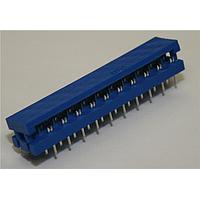
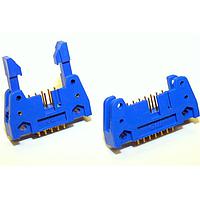
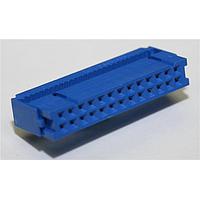
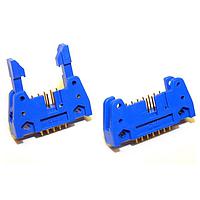
Headers & Wire Housings
Reliable board-to-board and wire-to-board connectivity starts with choosing the right interface for the electrical load, mounting method, and assembly process. In many control panels, embedded systems, and industrial electronics, Headers & Wire Housings are the practical foundation that links PCBs, cable harnesses, and modular subassemblies with consistent contact performance and serviceability.
This category is suited to design engineers, buyers, and maintenance teams who need connector options for new builds, prototyping, or replacement sourcing. It covers common interconnect needs ranging from compact signal connections to higher-current interfaces, with product examples from established manufacturers such as 3M and Amphenol.
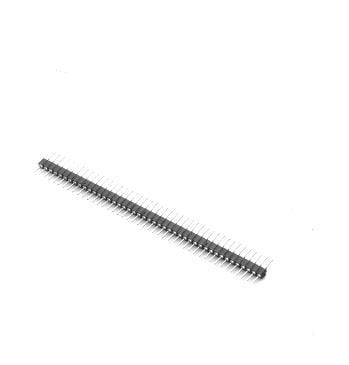
Where these connectors fit in electronic and industrial assemblies
Headers and wire housings are commonly used wherever a PCB must connect to another board, a discrete cable, or a removable harness. They help simplify assembly, improve field replacement, and support modular equipment design in automation devices, instrumentation, power distribution boards, and embedded control systems.
Depending on the connector family, the same category can support fine-pitch signal paths, standard 2.54 mm board interconnects, or more rugged power and I/O connections. That flexibility is why engineers often evaluate contact style, number of positions, current rating, orientation, and locking behavior together instead of treating the connector as an afterthought.
Common product types within Headers & Wire Housings
This category generally includes PCB headers, mating receptacles, and wire housing components used to build separable electrical connections. Some products are intended for direct board mounting, while others are selected to terminate wires and create a complete wire-to-board interface.
For example, a part such as the 3M 929710-01-31-RK is an unshrouded through-hole header with a 2.54 mm pitch for board-to-board applications, while the 3M 929838-04-14-RK represents another connector option for lower-current interconnect requirements. On the Amphenol side, parts such as AT13-1612PB-BM04 and AT13-08PD-BM01CP illustrate how this category also extends into connector solutions intended for more robust wiring environments.
Selection factors that matter in practice
The first checkpoint is usually the electrical requirement: current level, signal integrity needs, and the expected operating environment. A connector rated for a few amps in standard signal applications is selected differently from one supporting heavier load paths, especially when conductor size, temperature rise, and mating durability are part of the design review.
The second major factor is mechanical compatibility. Pitch, number of positions, shrouding, contact gender, and mounting style all affect whether the connector will align with the PCB layout and assembly method. Through-hole headers are often preferred where mechanical retention is important, while the housing and mating side must also suit the intended harness design and service access.
It is also worth considering whether the application benefits from a simple friction fit, a polarized interface, or a more secure mating concept. In systems exposed to vibration, maintenance handling, or repeated insertion cycles, connector retention and orientation features can make a noticeable difference in long-term reliability.
Examples from 3M and Amphenol
Several representative parts in this category help show the range of available formats. The 3M 929705-06-04-I is a compact unshrouded header in a 4-position, 2.54 mm format, making it relevant for straightforward board-level interconnect tasks. The 3M 929710-01-31-RK expands that concept to a much higher position count, which can be useful when multiple signals need to be routed through a single connector interface.
Amphenol products in this category demonstrate a broader mix of connector styles. The AT13-1612PB-BM04 is listed with a 25 A rated current, indicating suitability for applications where current handling is a more important design variable. Other listed products such as ELFK1G21G, ELVA021G0E, ELFB0918G, and ELFH2223GE reflect how connector families can serve different board and wiring configurations across control, power, and interface assemblies.
When comparing options, it is usually more useful to focus on fit-for-purpose criteria than on model count alone. A higher-position header, a compact breakaway style, and a higher-current receptacle may all belong to the same category, but they solve very different connection problems.
How Headers & Wire Housings support assembly efficiency
Well-matched connectors improve not only electrical continuity but also manufacturing flow. Standardized header and housing combinations can reduce wiring errors, support faster PCB replacement, and simplify maintenance in equipment that is built in modules or serviced in the field.
They also help teams separate board design from cable preparation. In many B2B environments, that means procurement and production can standardize around connector families while adapting harness lengths or pin counts to project-specific needs. If your build also requires pre-terminated wiring, related options in cable assemblies may be useful alongside board-side connector selection.
Related connector categories to consider
Headers and wire housings often sit within a broader interconnect ecosystem. In some applications, the connector body is only one part of the overall solution, and supporting items such as crimp or replacement contacts may also need to be specified to complete the mating system correctly.
For test setups, bench work, or temporary electrical interfaces, other connector formats may be more appropriate than PCB headers. In those cases, categories such as banana and tip connectors can provide a better match for accessible measurement and quick-connect tasks.
Choosing the right option for your project
A good starting point is to define the interface type first: board-to-board, wire-to-board, or a mixed harness connection. From there, narrow the shortlist by current requirement, pitch, number of positions, mounting style, and whether the design needs a shrouded or unshrouded format. This approach helps avoid overspecifying the connector while still protecting assembly reliability.
It also helps to review the total system rather than the connector in isolation. Cable routing space, PCB edge clearance, insertion access, and replacement frequency all influence the most practical choice. A simple 2.54 mm header may be ideal for one control board, while a more rugged Amphenol receptacle may better suit power distribution or field wiring interfaces.
Final considerations
For engineers and sourcing teams, this category offers a practical range of interconnect solutions for PCB and harness integration. From standard 3M headers to more robust Amphenol connector options, the right selection depends on how the connection will be built, mated, and maintained over time.
By focusing on current rating, pitch, mating format, and installation context, it becomes much easier to identify a connector that fits both the electrical design and the real assembly environment. That is the most effective way to use a Headers & Wire Housings category page: not just to find parts, but to narrow choices intelligently for dependable integration.
Get exclusive volume discounts, bulk pricing updates, and new product alerts delivered directly to your inbox.
By subscribing, you agree to our Terms of Service and Privacy Policy.
Direct access to our certified experts