Junction
When wiring density increases and reliability requirements become stricter, the way conductors are joined and distributed becomes just as important as the connector itself. In demanding electrical and electronic systems, junction components help organize signal routing, grounding, splicing, and feed-through functions in a controlled, serviceable format.
This category brings together junction modules and related accessories used in structured interconnection systems. It is especially relevant where engineers need repeatable terminations, compact packaging, and dependable performance across harsh operating environments, including aerospace, defense, transportation, and other high-reliability applications.

Where junction modules fit in an interconnection system
Junction products are used to create organized connection points between wires, circuits, and subsystems. Instead of relying on ad-hoc splices or difficult-to-service wiring layouts, these modules support a more structured approach to electrical distribution and signal management.
Depending on the design, a junction solution may be used for inline splicing, terminal distribution, grounding, feedback paths, or resistor-based functions. In many assemblies, these parts work alongside electrical contacts and harness components to simplify installation and maintenance while helping preserve system integrity.
Common product types in this category
The category typically includes several module styles, each intended for a different wiring objective. Terminal junction modules are often selected when circuits need defined connection points in a compact arrangement, while inline junction modules support splice-style interconnection where continuity and packaging efficiency matter.
There are also socket junction modules and ground modules for applications that require dedicated return paths or mixed connection formats. For example, the DEUTSCH - TE Connectivity CTJ716K01D ground module illustrates the role of a dedicated grounding element, while products such as the Amphenol PCD TJM216909 and CTJ420E330 show how terminal-style modules can support more structured circuit routing.
Accessories are equally important in real installations. Metal P-clamps such as the Amphenol PCD PCL03AEZ14, PCL03AHL32, and PCL03ANL12 help secure and manage the surrounding harness, which is critical for strain relief, vibration resistance, and cleaner cable routing.
Representative manufacturers and product families
Several established interconnect suppliers are associated with this category, with Amphenol PCD, DEUTSCH - TE Connectivity, and Eaton Souriau-Sunbank standing out in the current range. These brands are widely specified where structured junction systems are part of a broader high-performance connector architecture.
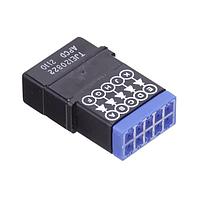
Examples in the selection include the Amphenol PCD TJE122983 terminal junction module, the TJSE20286 in-line junction module, and the SJM800200 socket junction module. Eaton Souriau-Sunbank is represented by parts such as the RBR20-9 resistor module and MDTB20-4 junction system accessory, showing that the category extends beyond simple pass-through connection and into more application-specific circuit functions.
How to choose the right junction component
Selection usually starts with the electrical role of the device. The first question is whether the application needs a feed-through path, a splice point, a grounding point, a resistor-equipped module, or a mounting and cable-support accessory. Defining that function early helps narrow down the appropriate module family without overcomplicating the design.
From there, engineers typically review interface details such as contact size, number of positions, wire accommodation, mounting style, and environmental suitability. In some cases, standards references such as SAE-AS81714 or MIL-T-81714 are also relevant because they provide context for compatibility and design expectations in regulated or high-reliability systems.
It is also important to consider how the junction element will integrate with the surrounding harness. If the project includes pre-terminated wiring or larger system routing, related items such as cable assemblies may influence which module style is the most practical from both an installation and service perspective.
Why accessories matter in junction system design
A junction system is not defined only by the module itself. Mechanical support, cable retention, and layout discipline have a direct effect on long-term reliability, especially where vibration, thermal cycling, or limited installation space are involved.
This is why accessories such as metal P-clamps should not be treated as secondary details. They help maintain bend control, reduce unnecessary stress on termination points, and support a cleaner harness path around the junction area. In many applications, a well-selected accessory improves maintainability as much as the main connection hardware does.
Application considerations for high-reliability environments
Junction modules are commonly evaluated for use in systems where downtime, troubleshooting difficulty, or environmental exposure can create significant risk. In those settings, designers often look for a balance between compact packaging, traceable circuit organization, and the ability to inspect or replace individual elements without disturbing the full harness.
Grounding, feedback routing, and controlled splicing are especially important in complex platforms with many interconnected functions. A product such as the SJM800200 mixed-size socket module or the TJE122983 resistor-equipped terminal module reflects how specialized junction components can support more than basic conductor joining.
For systems that also require broader connector ecosystem planning, related interconnect categories such as banana and tip connectors may be relevant in separate test or interface stages, although junction modules are typically chosen for more permanent and organized internal wiring structures.
What buyers and engineers often compare
On a practical purchasing level, buyers often compare junction parts by module type, mounting approach, contact arrangement, and compatibility with the rest of the interconnection platform. Engineers, meanwhile, may focus more on circuit function, packaging efficiency, and whether the part supports service access in the finished equipment.
Accessories, module format, and manufacturer ecosystem all matter because junction hardware rarely works in isolation. Choosing within a familiar family from suppliers such as Amphenol PCD, DEUTSCH - TE Connectivity, or Eaton Souriau-Sunbank can make integration more straightforward when the rest of the design already follows a defined connector standard or harness architecture.
Finding the right fit for your project
The right junction product depends on more than part availability. It should match the electrical purpose, mechanical layout, and service expectations of the system around it, whether you need a terminal junction module, an inline splice format, a dedicated ground module, or supporting hardware for cable management.
By reviewing the function of each module and how it fits into the larger interconnect design, buyers and engineers can narrow the range more efficiently and select components that support cleaner wiring, easier maintenance, and a more robust overall assembly.
Get exclusive volume discounts, bulk pricing updates, and new product alerts delivered directly to your inbox.
By subscribing, you agree to our Terms of Service and Privacy Policy.
Direct access to our certified experts