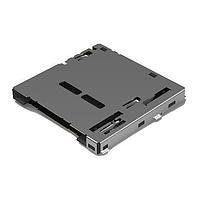
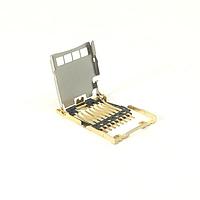
Memory Card Connectors
Reliable card-based interfaces still matter in many embedded and industrial designs, especially where removable storage, secure identification, or compact data exchange must be integrated directly on the PCB. Choosing the right Memory Card Connectors helps ensure stable contact performance, suitable mounting compatibility, and a mechanical design that fits the product’s service life and operating environment.
On this page, buyers and design engineers can review connector options used for SIM, SD, smart card, CompactFlash, PCMCIA, and related card formats. The category is especially relevant when evaluating board-level interconnects for communication modules, portable electronics, control units, access devices, and other systems that rely on dependable card insertion and retention.
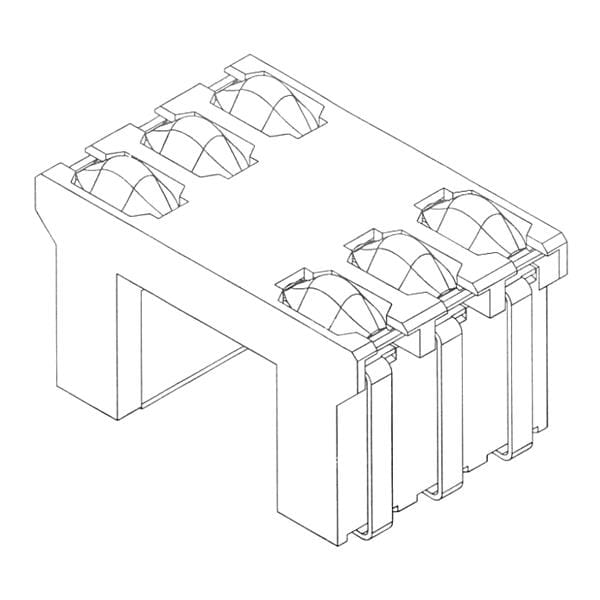
Where memory card connectors are typically used
These connectors serve as the physical interface between a card-based device and the host circuit board. In practical terms, they are selected not only by card type, but also by how the end product is assembled, how often the card will be inserted or replaced, and whether the application prioritizes compactness, serviceability, or long-term mechanical stability.
Common use cases include removable storage interfaces, SIM-based communication hardware, smart card readers, legacy embedded systems using CompactFlash or PCMCIA formats, and board designs that need controlled card guidance and reliable electrical contact. If your project is comparing broader options across this connector family, it may also be useful to review related memory socket connector solutions for adjacent designs.
Key connector formats in this category
This category covers several card-interface styles rather than one single mechanical standard. Some parts are intended for SIM or smart card applications, while others support SD, CompactFlash, or older PCMCIA-style implementations. That makes form factor compatibility the first screening step before comparing mounting style, contact count, or insertion mechanism.
For example, Amphenol Commercial Products CAD0604552 is positioned as a housing for a SIM connector, while AMP Connectors - TE Connectivity 2-1705300-8 is described as a 6-position directional push-push SIM connector. For storage-oriented designs, Amphenol Commercial Products 101009586802 represents an SD push-push style, and 3M Electronic Solutions Division N7E50-M516TC-50-WF illustrates a CompactFlash-related board connector approach. Legacy or specialized equipment may instead require options such as the Amphenol FCI 95622-003 PCMCIA receptacle.
Mechanical and mounting considerations
In many designs, the connector is chosen as much for its mechanical behavior as for its electrical interface. PCB footprint constraints, card insertion direction, board stacking height, and whether the design uses SMT or through-hole assembly all affect manufacturability and enclosure integration. A connector that fits the schematic but not the mechanical envelope often creates avoidable redesign work.
Examples in this category show that mounting approaches can vary from SMD/SMT to PCB mount and through-hole styles. Hinged or push-push insertion mechanisms may simplify user interaction, while horizontal orientation can be helpful where overall device height is limited. When removable cards are part of a frequently accessed interface, mating cycle durability and card retention style become especially important in the selection process.
Comparing contact layout, pitch, and electrical fit
Once card type and mounting style are defined, the next step is to confirm the connector’s electrical and dimensional suitability. Designers typically review the number of contacts, row arrangement, pitch, plating, and insulation characteristics to align the connector with the target board layout and expected operating conditions. These details influence signal integrity, assembly reliability, and long-term wear behavior.
Within the products shown here, you can find examples with 6-contact and 8-contact layouts, as well as higher-contact legacy formats such as the 34-contact Amphenol FCI 95622-003. Pitch values such as 1 mm, 1.27 mm, and 2.54 mm appear across different parts, which reinforces why exact mechanical matching is essential. For users comparing adjacent product groups, the broader memory card connector range can be filtered by application-specific requirements rather than by name alone.
Representative manufacturers and product examples
Several established connector suppliers appear prominently in this category, including Amphenol FCI, Amphenol Commercial Products, AMP Connectors - TE Connectivity, and 3M Electronic Solutions Division. Each may address different card standards, mechanical profiles, and board integration preferences, so manufacturer choice is usually secondary to fit-for-purpose selection.
Representative examples include Amphenol FCI 7112S0815X01LF for a 6-position SMT card connector, Amphenol FCI 7411E0225S01LF for smart card use, and Amphenol Commercial Products C00710B0120001 for a 12-position FPC-related connector format. In CompactFlash-oriented designs, 3M Electronic Solutions Division N7E50-N516TC-50-WF and N7E50-M516TC-50-WF are useful references for understanding how connector orientation and board stand-off style can differ within a similar application space.
How to choose the right part for a new design or replacement
A practical selection workflow starts with the card standard, then narrows by connector orientation, PCB mounting method, and available board space. From there, engineers typically confirm contact count, pitch, and insertion style, followed by environmental and lifecycle considerations such as operating temperature range, housing material, and expected insertion frequency. This approach reduces the risk of selecting a connector that is electrically correct but mechanically unsuitable.
For replacement sourcing, it is also important to verify whether the original part is an exact connector, a housing, or a related receptacle component within the card interface ecosystem. Product titles in this category may refer to SIM connector housings, full card connectors, smart card connectors, or memory card connector variants with different user-access mechanisms. Paying attention to these distinctions can save time during maintenance, redesign, or approved-vendor review.
Supporting reliable integration in embedded systems
Memory card interfaces often sit at the intersection of electronics, mechanics, and user handling. A small difference in contact plating, insertion method, or connector height can affect field reliability, assembly yield, or ease of service. That is why this category is best approached as an engineering selection space rather than a simple commodity list.
Whether you are sourcing an SD push-push part, a SIM connector for a communication module, or a legacy CompactFlash or PCMCIA interface, the most effective choice is the one that matches the exact card format, assembly process, and mechanical envelope of your system. Reviewing the available product and manufacturer options in context makes it easier to shortlist parts that fit both the design intent and the procurement workflow.
Get exclusive volume discounts, bulk pricing updates, and new product alerts delivered directly to your inbox.
By subscribing, you agree to our Terms of Service and Privacy Policy.
Direct access to our certified experts