
MIL Spec Fiber Optic Connectors
Reliable optical links are critical in defense, aerospace, transportation, and other harsh-environment systems where vibration, contamination, and space constraints can quickly affect network performance. In these applications, MIL Spec Fiber Optic Connectors are selected not only for fiber transmission, but also for mechanical durability, repeatable mating, and compatibility with established military-style interconnect standards.
This category brings together circular and related fiber-optic connector solutions used in demanding platforms, along with important mating and termination components. Whether you are specifying a complete connector interface, replacing a receptacle or plug, or sourcing termini for a repair or assembly process, the selection here supports practical procurement and engineering needs.
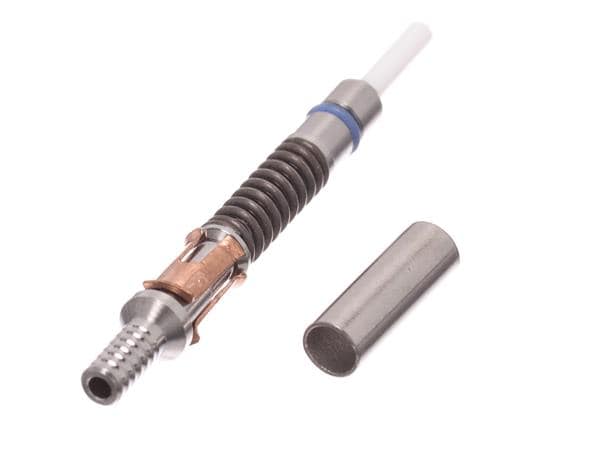
Built for harsh-duty fiber interconnect applications
Compared with commercial optical connectors used in controlled environments, military-style fiber interfaces are typically chosen when systems must tolerate shock, vibration, temperature variation, and repeated field handling. Connector families aligned with standards such as MIL-PRF-28876, M29504, and MIL-DTL-38999 are widely used where rugged packaging matters as much as optical continuity.
That is why this category includes more than one device form. You may be looking for panel-mounted receptacles, cable plugs, right-angle circular formats, or removable termini that integrate into a broader interconnect design. In many projects, connector selection is closely tied to installation method, shell style, and serviceability in the field.
Typical product types found in this category
The range commonly covers finished connector bodies as well as optical contact elements. For example, a receptacle such as the Glenair 180-040NF03-11-02-1S is suited to applications where a fixed interface is needed on equipment or enclosure walls, while a plug such as the Glenair 180-040TZ16-15-08-1-1P supports cable-side mating in portable or vehicle-mounted systems.
This category also includes fiber termini and pin components used inside the connector architecture. Parts such as the Amphenol FSI M29N0226Y and Glenair M29504/04-4043 illustrate how termini play a key role in optical performance, assembly compatibility, and maintenance workflows. If your build requires separate replacement contact elements, it can also be useful to review related connector contacts for broader interconnect planning.
Standards and formats engineers often look for
Several product examples in this category point to well-known military connector frameworks. MIL-PRF-28876 is often associated with rugged fiber-optic circular connectors intended for high-reliability communication links. The presence of plug and receptacle variants with different shell sizes, plating options, and shell styles helps engineers match the connector to both the physical layout and environmental expectations of the system.
M29504-based parts are different in role, as they focus on optical termini rather than the entire shell assembly. Meanwhile, MIL-DTL-38999-related fiber connectors, including examples from Amphenol Aerospace, Cinch, and Trompeter / Cinch Connectivity Solutions, are relevant when teams need a rugged circular connector platform already familiar within aerospace and defense harness designs.
How to choose the right MIL spec fiber optic connector
The first step is to define the connector’s role in the assembly. A wall-mounted receptacle, a straight cable plug, and a right-angle circular connector solve different packaging problems. For instance, the Trompeter / Cinch Connectivity Solutions 311P90N4OM3AMZ20AZOL shows how right-angle geometry can help when cable routing space is limited, while a jam-nut receptacle such as the Amphenol Aerospace CF-5EZ725-10S may fit enclosure-mounted designs that require secure panel integration.
After that, review the optical and mechanical match points: standard family, shell size, number of positions where applicable, and whether the design requires pin or socket-style elements. Fiber type also matters. Some products in this category reference multimode or singlemode compatibility, while others identify fiber diameter or ferrule dimensions that are important for assembly selection and maintenance procedures.
Finally, consider the complete interconnect path rather than the connector alone. If the application also needs pre-terminated jumpers or integrated harnessing, related cable assemblies may help streamline installation and reduce field termination work.
Representative manufacturers in this selection
This category features established names in rugged interconnects, including Glenair, Amphenol Aerospace, Amphenol Commercial Products, Cinch, Trompeter / Cinch Connectivity Solutions, Amphenol Fiber Optics, and Amphenol FSI. These suppliers are commonly specified in programs where connector reliability, standards alignment, and long-term maintainability are part of the purchasing decision.
Glenair examples in this category highlight multiple MIL-PRF-28876 plug and receptacle configurations, including no-backshell and straight versions. Amphenol-related products broaden the scope with MIL-spec connector bodies, termini, and optical jumper-style components such as the Amphenol Fiber Optics 943-98217-10002, which can be relevant when traceable fiber links or subsystem-level optical routing are required.
Use cases across system integration and maintenance
These connectors are relevant anywhere optical transmission must be protected inside a rugged mechanical interface. Common scenarios include communication subsystems in aerospace platforms, military vehicles, shipboard electronics, portable field equipment, test shelters, and industrial systems exposed to demanding environmental conditions. In such settings, the connector is part of a larger strategy for signal integrity, maintainability, and environmental protection.
They are also important in MRO and retrofit work. Engineers and buyers may need to replace a damaged receptacle, source matching plug hardware, or obtain M29504 termini for retermination and service operations. Because connector systems often include multiple interdependent parts, reviewing adjacent categories such as Cinch product lines or related components can help confirm compatibility before ordering.
What to review before ordering
For efficient sourcing, check the standard family first, then confirm the connector orientation, shell style, shell size, and contact or termini format. Plating and shell material may also matter when the connector must match an existing assembly or environmental specification. Even when two parts appear similar at a glance, differences in arrangement or mounting style can affect fit and interchangeability.
If you are ordering for new production, it helps to verify the entire bill of materials around the connector system: mating half, optical termini, cable type, and any jumper or harness requirement. This is especially important in mixed fleets or legacy platforms where MIL-based interfaces may share a common family name but differ in implementation details.
Finding the right fit for rugged optical connectivity
Choosing the correct MIL-spec fiber connector is usually a matter of matching optical requirements with mechanical integration and environmental expectations. This category supports that process by grouping rugged connector bodies, termini, and related optical interconnect parts used in real-world defense, aerospace, and harsh-duty installations.
If you already know the standard, shell format, or manufacturer you need, you can narrow down options quickly. If not, comparing connector style, mounting approach, and termination architecture will usually point you to the most suitable solution for your build, repair, or replacement project.
Get exclusive volume discounts, bulk pricing updates, and new product alerts delivered directly to your inbox.
By subscribing, you agree to our Terms of Service and Privacy Policy.
Direct access to our certified experts
