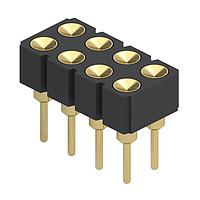
Pin and Socket Connectors
Reliable wire-to-wire and wire-to-board interconnection starts with choosing the right contact system, housing format, and termination method for the job. In power distribution, control panels, cable harnesses, and embedded electronics, Pin and Socket Connectors are widely used because they support clear mating orientation, dependable electrical contact, and flexible assembly across many current and voltage ranges.
This category brings together connector components built around mating pin and socket interfaces, including headers, crimp contacts, and plug or receptacle housings. Whether the priority is PCB mounting, free-hanging cable connection, or field assembly, the selection process usually depends on a few practical factors: contact gender, wire gauge, pitch, mounting style, and the environment in which the connector will operate.
Where pin and socket connectors fit in real applications
These connectors are commonly used where assemblies need to be mated and unmated with good mechanical alignment and stable contact performance. Typical use cases include internal wiring in industrial equipment, control cabinets, test fixtures, small power distribution modules, and harness-to-board interfaces in electronic products.
Compared with more specialized connector families, pin and socket systems are often selected for their balance of simplicity and versatility. A design may use PCB headers on one side and crimped cable contacts with housings on the other, creating a modular connection point that is easier to assemble, service, or replace during maintenance.
Typical product types in this category
A practical way to read this category is to think in terms of the connector ecosystem rather than a single standalone part. Some items are complete headers for PCB installation, while others are individual crimp contacts or empty housings intended to be assembled into a finished connector set.
For example, PCB-mounted headers such as AMP Connectors - TE Connectivity 350428-1, 3-794638-8, 1-794069-1, and 5-794630-4 illustrate how pin interfaces are available in different pitches, row counts, and mounting styles, including through-hole and SMT versions. For cable-side termination, parts such as AMP Connectors - TE Connectivity 350705-1, 1-770253-0, 770145-1, and 61117-5 show the role of crimp contacts in building custom harnesses around the required wire gauge and contact gender.
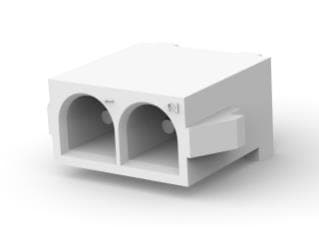
Housing components are equally important. Molex 19-09-1151 and 19-09-2069, as well as AMP Connectors - TE Connectivity 2178473-2, are examples of connector bodies that organize contact positions, guide mating, and help define how the final assembly is mounted or handled in the field.
Key selection points before you choose
The first step is to match the connector format to the application architecture. If the connection point sits directly on a PCB, header style, pitch, orientation, and termination method become central. Vertical and right-angle versions can affect board layout, cable routing, enclosure height, and assembly workflow.
The second step is to confirm the electrical and mechanical fit. Current rating, voltage rating, number of positions, and wire gauge compatibility should align with the real operating load and conductor size. Contact plating also matters: tin may suit general-purpose use, while gold-plated contacts are often preferred where stable low-resistance mating over time is important.
Finally, consider the complete mating set, not just one part number. A header, housing, and contact must work together as a system. If you are specifically sourcing loose terminals for a harness build, it may also be helpful to review the broader range of connector contacts available for related assemblies.
Comparing PCB headers, crimp contacts, and housings
PCB headers are usually chosen when the board acts as the fixed side of the connection. In this category, examples include compact 3 mm pitch options and larger through-hole variants intended for higher current or more robust mechanical retention. Engineers often compare row count, position count, and assembly method to balance density with serviceability.
Crimp contacts are used when building cable-side terminations. They provide flexibility because the same housing family can often be configured with different wire sizes or contact genders. Correct crimp tooling and conductor matching are important here, since termination quality directly affects pull strength, contact resistance, and long-term reliability.
Housings help turn loose contacts into a usable interconnect interface. Plug and receptacle formats support keyed mating and position management, while free-hanging designs are common in cable harnesses and internal equipment wiring. When the assembly will be integrated into a broader pre-wired solution, users may also explore cable assemblies for a more complete connection approach.
Manufacturers commonly used for this connector type
This category includes strong representation from AMP Connectors - TE Connectivity and Molex, both of which are widely specified for board-level and cable interconnect applications. AMP Connectors - TE Connectivity appears across headers, contacts, and housings in this selection, making it relevant for users who want consistency within one connector family during design and procurement.
Molex is also represented with receptacle and plug housing examples that fit common harness and interconnect needs. Depending on the broader project, buyers may also compare related product ecosystems from suppliers such as JAE Electronics, KYOCERA AVX, PHOENIX CONTACT, or DEUTSCH - TE Connectivity where interface style, environmental demands, or installation constraints differ.
Practical buying considerations for B2B sourcing
In industrial purchasing, the connector itself is only part of the requirement. Teams often need to confirm mating compatibility, contact gender, pitch, plating, mounting style, and whether the part is intended for board assembly or harness production. This is especially important when replacing an existing component in maintenance, repair, or low-volume production environments.
It is also useful to check whether the project needs a simple discrete connector, a contact-only replenishment item, or a housing to complete an existing inventory of terminals. For teams comparing adjacent interconnect options for bench work or test setups, categories such as banana and tip connectors may be relevant, but pin-and-socket systems remain the more typical choice for enclosed equipment and structured cable-to-board mating.
How to narrow down the right part faster
A good starting point is to define the fixed side and the cable side of the connection. From there, identify whether you need a PCB header, a crimp terminal, a housing, or a combination of all three. Position count, row configuration, and pitch usually reduce the shortlist quickly, while wire gauge and current rating help validate the final fit.
It also helps to think about assembly and service conditions. Through-hole headers may be preferred where stronger board retention is needed, while SMT headers can support compact layouts. Free-hanging housings and crimp contacts are better suited to harness builds, repairs, or modular cable routing inside equipment.
Conclusion
Pin and Socket Connectors remain a practical choice for many electronic and industrial interconnect tasks because they support modular assembly, clear mating structure, and a broad mix of board-side and cable-side configurations. With options spanning headers, contacts, and housings from recognized manufacturers such as AMP Connectors - TE Connectivity and Molex, this category supports both new designs and replacement sourcing.
When selecting parts, focus on the full interconnect system rather than one component in isolation. Matching the contact type, housing format, wire range, mounting style, and electrical requirements will make it much easier to choose a connector solution that fits the application and integrates cleanly into the wider assembly.
Get exclusive volume discounts, bulk pricing updates, and new product alerts delivered directly to your inbox.
By subscribing, you agree to our Terms of Service and Privacy Policy.
Direct access to our certified experts