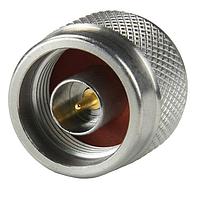
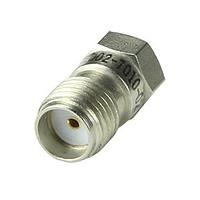
RF Terminators
Reliable signal performance in coaxial systems depends on more than cable and connector selection. When an unused RF port is left open, reflections can affect measurement accuracy, increase mismatch, and reduce overall system stability. That is why RF Terminators are a standard component in test setups, communication equipment, and RF distribution networks where controlled impedance matters.
On this page, you can explore terminators used with common coaxial interfaces and impedance values across a range of frequencies. These components are typically selected to match the connector series, impedance, and operating conditions of the application, whether the goal is protecting an unused port, preserving signal integrity, or supporting repeatable RF measurements.

Why RF terminators matter in coaxial systems
An RF terminator is designed to present a defined load at the end of a transmission path. In most practical cases, that means matching the system impedance, such as 50 Ohms, 75 Ohms, or in some specialized cases 93 Ohms, to help minimize reflections caused by an open or mismatched connection.
These parts are widely used in labs, communication racks, antenna distribution paths, and development benches. They are especially useful when equipment includes spare ports, temporary test points, or modular signal paths built with RF adapters and interchangeable coaxial connections.
Common connector series and impedance options
The category includes terminators for several well-known RF interfaces, including SMA, SMB, MCX, BNC, and N series. The right choice depends first on the mating interface, then on the required impedance and frequency range. Even when two parts look mechanically similar, using the wrong impedance can introduce measurement error or system mismatch.
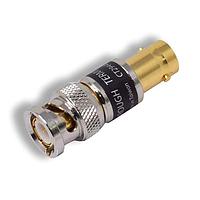
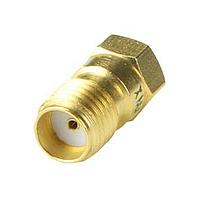
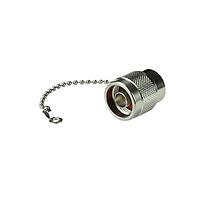
Examples from this range illustrate that variety clearly. Hirose Electric offers SMA and N-series options such as the HRM-TM-025-8(50), HRM(G)-300-467B-1, and N-TMP models, while Amphenol RF includes SMB and BNC style terminators such as 142270, 142200, and 000-46650-93RFX. For higher-frequency applications, the Mini-Circuits ANNE-50E+ supports a 1.85 mm male interface up to 65 GHz, showing how connector geometry and frequency capability are closely linked.
How to choose the right RF terminator
The first selection point is the connector interface. A terminator must match the physical series and gender required by the port, whether that is an SMA plug, N plug, SMB PCB style, MCX plug, or another coaxial format. If the assembly includes mixed interfaces, it may also be worth reviewing related coaxial connectors to confirm compatibility across the full signal path.
The second key factor is impedance. Many RF systems are built around 50 Ohms, but 75 Ohm and 93 Ohm versions are also used in certain communication and instrumentation environments. A product like HUBER+SUHNER 65_N-75-0-11/133_NE is intended for 75 Ohm use, while Amphenol RF 000-46650-93RFX represents a 93 Ohm BNC-related option, so matching the electrical environment is just as important as matching the connector body.
Frequency capability also matters. A terminator intended for a few hundred MHz may not be suitable for microwave or broadband test work. In this category, examples range from lower-frequency feed-through and standard load styles to models intended for 18 GHz, 28 GHz, and even 65 GHz operation.
Application examples across test, telecom, and development environments
In RF measurement setups, terminators are commonly used to close unused ports on instruments, splitters, couplers, or switching paths. This helps maintain predictable conditions during bench testing and can improve repeatability when a setup is reconfigured often. In these environments, parts from Mini-Circuits, Hirose Electric, and HUBER+SUHNER are often relevant because the required interface and frequency range can vary significantly from one bench to another.
In communication and installed systems, terminators may also be used on spare coaxial ports to maintain proper loading and reduce unwanted reflections. Where cable routing is part of the decision, users often review related RF cable assemblies alongside terminators to keep the entire interconnect path electrically consistent.
Examples from leading manufacturers in this category
Hirose Electric is represented here with several RF terminator formats, including SMA and N-series models. Products such as HRM(G)-300-467B-1 and HRM-TM-025-8(50) are relevant when compact coaxial interfaces and higher-frequency performance are required, while the N-TMP series fits larger N-type applications.
Amphenol RF contributes options across SMB and BNC-related formats, useful for engineers working with board-level or traditional coaxial systems. HUBER+SUHNER adds MCX and N-series examples, including standard 1 W styles and feed-through designs, while Mini-Circuits brings in a high-frequency 1.85 mm solution for demanding microwave applications. This variety makes the category suitable for both general RF interconnect work and more specialized test configurations.
Practical buying considerations
When comparing products, it helps to focus on a few core specifications rather than scanning only by part number. Start with connector series, gender, impedance, and maximum frequency. Then review construction details such as body material or plating only when they are relevant to the operating environment, mating durability, or long-term system requirements.
It is also useful to think about whether the terminator is being used as a simple port cap, a test accessory, or part of a more complex interconnect chain. In some systems, engineers may compare a fixed load with related signal-conditioning components such as RF attenuators when trying to manage level, matching, or port behavior in a controlled way.
Finding the right fit for your RF setup
A well-matched terminator helps keep an RF system stable, predictable, and easier to troubleshoot. Whether you are working with SMA, SMB, MCX, BNC, N, or precision microwave interfaces, the right selection usually comes down to three essentials: connector compatibility, impedance match, and usable frequency range.
Use this category to narrow options based on the actual port you need to terminate and the performance level your application requires. For engineering, integration, and procurement teams, that approach makes it easier to select RF terminators that fit cleanly into the broader coaxial interconnect design rather than treating them as an afterthought.
Get exclusive volume discounts, bulk pricing updates, and new product alerts delivered directly to your inbox.
By subscribing, you agree to our Terms of Service and Privacy Policy.
Direct access to our certified experts