
Sockets for IC & Component
Reliable board-level connections often depend on a small part that is easy to overlook: the socket. In prototyping, testing, maintenance, and production, the right socket arrangement can simplify replacement, protect sensitive components from repeated soldering, and make evaluation work far more efficient. That is why Sockets for IC & Component remain relevant across electronics development and industrial assembly workflows.
This category is focused on interconnect solutions used to hold integrated circuits and related components securely while supporting installation, removal, and in some cases temporary access for validation or troubleshooting. Whether the task involves standard IC mounting, device evaluation, or repeated test access, choosing the correct socket format helps improve serviceability and reduce handling risk.
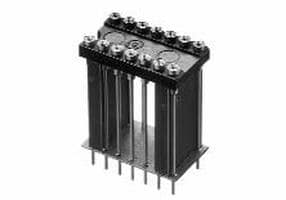
Where IC and component sockets fit in electronics work
Unlike fixed solder-only mounting, sockets create an interface between the board and the device. This is useful when components may need to be changed, tested, upgraded, or protected from thermal stress during assembly. In engineering environments, sockets are often selected to support development cycles where devices are inserted and removed more than once.
They also play a practical role in diagnostics and validation. Some products in this category extend beyond standard IC sockets and support temporary test access, helping engineers interact with packages during debug or measurement activities. In applications that also use related interconnect hardware such as contacts or preconfigured cable assemblies, sockets become part of a broader connection strategy rather than an isolated component choice.
Typical product types in this category
This category includes several functional approaches rather than one single socket style. A conventional example is the IC socket, used to mount integrated circuits while allowing replacement without direct desoldering. Products such as the 3M 100-008-050 IC socket or Amphenol RSE116680 illustrate this core use case.
There are also solutions designed more specifically for access and evaluation. The 3M 923832-RD-B FPGA/CPLD evaluation socket is an example of a socket used in development-oriented scenarios, where device handling and repeated setup changes may be part of the workflow. In addition, DIP test clips such as the 3M 923702, 923704, 923715, 923718, and 923720 provide temporary connection access for different pole counts, while long wire test clips like the 3M 923690-48 and 923690-64 support test and measurement tasks where signal breakout is needed.
How to choose the right socket for the application
The first consideration is the device format and pin count. The socket or test clip must match the target package correctly to ensure alignment, stable contact, and safe handling. For temporary access products, pole count matters directly, as seen in the range of DIP test clips from 16 to 36 positions and long wire options with higher counts.
The second consideration is the intended use over time. For permanent or semi-permanent board installation, an IC socket is often the logical choice. For engineering benches, validation labs, or troubleshooting tasks, a test clip or evaluation socket may be more appropriate because it supports repeated access without changing the PCB design unnecessarily.
It is also important to think about assembly method and mechanical layout. Some products in this category are designed for soldered through-hole implementation, while others are intended for more specialized evaluation tasks. Selection should always reflect the board architecture, service expectations, and the frequency with which the component will be handled.
Common use cases in development, testing, and maintenance
In product development, sockets help teams iterate faster. Engineers may need to swap sample devices, compare revisions, or verify behavior under different operating conditions. A socket-based approach can reduce rework effort and support more controlled handling of valuable or sensitive components.
In test environments, DIP clips and long wire test clips allow temporary access to installed devices for debugging or signal analysis. This can be especially useful when direct probing is difficult or when a temporary interface is preferred over modifying the board. For adjacent connection needs, teams may also evaluate options in banana and tip connectors when building broader test setups.
Maintenance and repair operations benefit as well. Where replacement cycles are expected, sockets can make servicing more straightforward and reduce the thermal stress associated with repeated soldering. In lower-volume industrial or lab equipment, that serviceability can be a meaningful advantage.
Brands commonly associated with this category
3M is strongly represented in this range, particularly with boardmount sockets, DIP test clips, and evaluation-oriented solutions. These products are often relevant in design verification, bench testing, and board-level access scenarios where repeatable connection matters as much as basic fit.
Amphenol is another important name in the category, with products such as the SJT510101 and RSE116680 IC sockets serving more traditional socketing requirements. Depending on the project, buyers may compare manufacturers based on product style, target package compatibility, and how the socket will be used within the assembly or test process rather than choosing on brand alone.
Selection priorities for B2B purchasing teams
For procurement, engineering, and maintenance teams, the key is not just finding a compatible part number but selecting a socket that supports the real operating context. That includes insertion frequency, assembly process, accessibility on the board, and whether the part is intended for production use, lab validation, or field service support.
It is also helpful to review whether the requirement is purely board-level or part of a larger interconnect system. In some designs, socket selection is closely linked to mating hardware, breakout methods, or specialized connector interfaces. Where panel and structured interface formats are involved elsewhere in the system, related categories such as keystone connectors may also be relevant, though they serve a different purpose.
Finding the right fit for your project
The best choice in this category depends on how the component will be installed, accessed, and maintained over its lifecycle. A standard socket may be appropriate for replaceable ICs, while a test clip or evaluation socket can be more effective when the priority is temporary access during development or troubleshooting. Looking at package style, pole count, mounting approach, and service expectations will usually narrow the options quickly.
For buyers sourcing board-level interconnect parts, this category brings together practical solutions for IC handling, device evaluation, and test access in one place. With a clear view of the application, it becomes much easier to identify a socket solution that supports reliable assembly, easier diagnostics, and more efficient long-term maintenance.
Get exclusive volume discounts, bulk pricing updates, and new product alerts delivered directly to your inbox.
By subscribing, you agree to our Terms of Service and Privacy Policy.
Direct access to our certified experts
