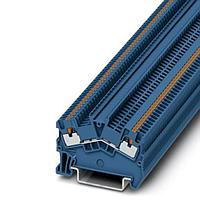
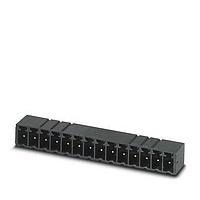
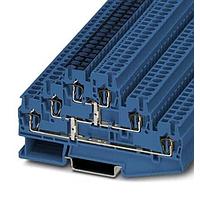
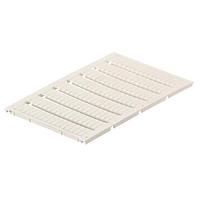
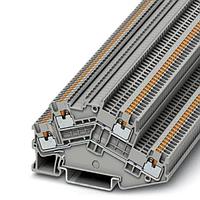
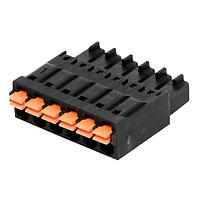
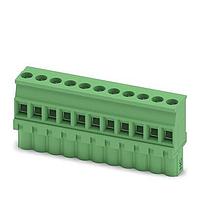
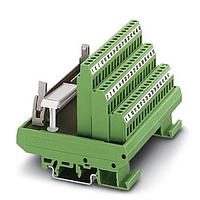
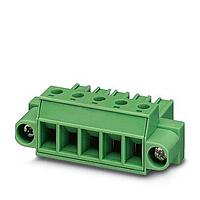
Terminal Blocks
Reliable field wiring starts with a connection method that is easy to assemble, stable in operation, and practical to service over time. In control panels, industrial equipment, building systems, and embedded electronics, Terminal Blocks help organize wire terminations in a way that supports both electrical integrity and maintainability.
This category brings together connection solutions used for wire-to-board, panel, and rail-mounted applications. Whether the goal is clean signal routing, straightforward power distribution, or simplified replacement during maintenance, terminal blocks remain a common choice across many B2B and industrial environments.
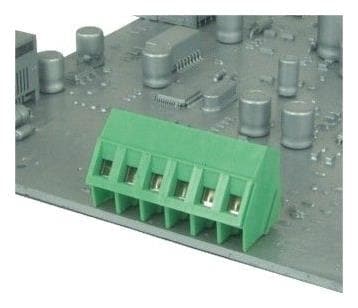
Why terminal blocks are widely used in electrical and electronic systems
A terminal block provides a structured point where conductors can be connected, secured, and identified. Compared with direct soldered wiring, this approach can make assembly more repeatable and can reduce service time when equipment needs to be modified, inspected, or repaired.
They are commonly selected when designers need modular wiring, cleaner cable management, and clearer separation between circuits. In many systems, terminal blocks also support safer troubleshooting because individual connections are easier to trace than bundled point-to-point wiring.
Typical applications across industrial and commercial environments
Terminal blocks are used in control cabinets, machine wiring, building automation panels, power interfaces, instrumentation enclosures, and PCB-based devices. Their role is not limited to high-power connections; they are also useful for low-voltage signal paths where organized termination matters for diagnostics and long-term reliability.
In broader connector ecosystems, they often work alongside items such as cable assemblies and crimped interconnect solutions. This makes them especially relevant in projects where a mix of board-level connectivity and field-installed wiring must come together in one system.
Common selection factors when comparing terminal blocks
The right product depends on the electrical load, mounting style, wire entry direction, installation space, and maintenance expectations. Engineers and buyers typically compare conductor compatibility, termination style, insulation layout, and whether the design needs fixed or removable connections.
Another important factor is the installation environment. Compact electronics may prioritize board space and ease of assembly, while industrial control panels may favor clearly labeled, accessible connection points that simplify commissioning and future service. For systems that require structured field wiring on standardized mounting hardware, rail-based interconnect approaches can be especially useful.
If your application also involves adjacent connector components, it can be helpful to review related options such as contacts when planning the full termination strategy.
Examples from this category
This category includes a range of products suitable for different connection tasks. Examples from Amphenol include parts such as ELXP041G0, ELVD405G0, ELVD265G0, SCM023100L, ELFF0824G, ELFT2016G, and ELVF204G0E, which represent board-level terminal block options used where structured wire termination is required.
For modular rail-mounted interconnection, the Amphenol ASMA41BG is a useful reference point within the category. There are also supporting examples from other manufacturers, such as Adafruit 2135 and 3M MVU14-250DMFX-A, showing that terminal block solutions can serve both practical prototyping needs and more established industrial or commercial wiring tasks.
How terminal blocks fit into a broader connector strategy
Choosing a terminal block is often only one part of a larger interconnect decision. A system may combine terminal blocks for field wiring, sealed circular connectors for detachable equipment interfaces, and specialized connectors for test access or internal module interconnection.
For example, in equipment that includes removable subsystems or external harnesses, terminal blocks may be paired with dedicated connector families rather than used everywhere. In some service and lab setups, complementary products such as banana and tip connectors may be more suitable for temporary measurement access, while terminal blocks remain the better choice for permanent or semi-permanent wiring.
Practical considerations for engineers, panel builders, and procurement teams
From an engineering perspective, terminal blocks should support the intended wiring workflow as well as the electrical requirements. Access for tools, labeling clarity, replacement convenience, and the possibility of future expansion can all affect the total lifecycle cost of the assembly.
For procurement teams, consistency matters just as much as unit price. Standardizing on compatible connection styles across product lines can simplify inventory, speed up build processes, and reduce the risk of installation errors. When evaluating suppliers, many buyers look for established manufacturers such as 3M, Adafruit, and Amphenol because brand familiarity can help align sourcing with internal technical preferences.
Choosing the right option for your project
If the application is board-centric, compact terminal blocks with straightforward wire entry may be the logical place to start. If the project is panel-based or intended for industrial control cabinets, solutions designed for structured mounting and organized conductor routing may be more appropriate. The best choice usually comes from balancing electrical demand, serviceability, and installation constraints rather than focusing on one parameter alone.
It is also worth considering how the connection will be used over time. Installations exposed to repeated maintenance, system upgrades, or field replacement often benefit from connection hardware that keeps wiring accessible and easy to identify.
Final thoughts
Terminal blocks continue to be a practical foundation for organized electrical interconnection in many industries. By focusing on connection method, mounting approach, service access, and compatibility with the surrounding wiring architecture, it becomes easier to narrow down suitable options for both new designs and replacement needs.
Whether you are sourcing for control panels, board-level assemblies, or general equipment wiring, this category supports a wide range of structured connection requirements with products from recognized manufacturers and formats suited to real-world installation work.
Get exclusive volume discounts, bulk pricing updates, and new product alerts delivered directly to your inbox.
By subscribing, you agree to our Terms of Service and Privacy Policy.
Direct access to our certified experts